
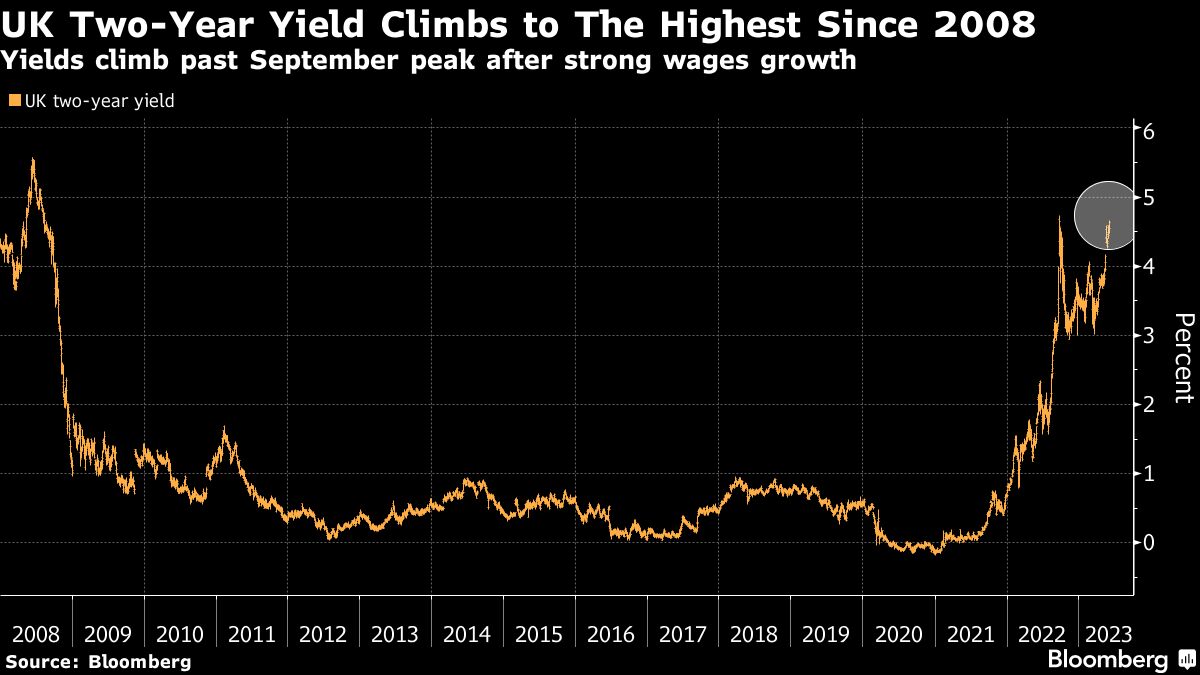
UK Two-Year Yield Rises to Highest Since 2008 After Jobs Data
(Bloomberg) — UK government bonds fell to levels last seen during the global financial crisis as traders bet the Bank of England may have to raise interest rates to as high as 6% after data showed wages rose faster than expected in April.
Money markets fully priced in one-and-a-quarter percentage points of hikes to 5.75% this year and a one-in-five-chance chance of an additional quarter-point increase by February, according to swaps tied to the BOE meeting dates.
That level was last on the cards following the fallout of then-Prime Minister Liz Truss’s controversial spending plans.
“Demand for gilts won’t return meaningfully until investors are confident that inflation is on a sufficiently downward trajectory and we are at — or at least close to — a peak in the Bank Rate,” said Imogen Bachra, head of UK rates strategy at NatWest Markets. “The more that data surprises to the upside, the further into the future that demand gets pushed.”
The yield on the two-year notes jumped as much as 20 basis points to 4.84%, the highest since 2008, and the pound extended gains to outperform all of its Group-of-10 peers on the day.
The moves were compounded by comments from the BOE’s newest rate setter, Megan Greene, who warned of the risks of persistent inflation and the difficulty of getting back to the 2% target.
The UK bond market has been one of the worst-performing across major developed economies this year, with inflation showing no signs of moderating despite more than four percentage points of tightening delivered by the BOE since late 2021.
The picture is further muddied because the central bank is selling bonds from its quantitative-easing era holdings and the government is flooding the market with gilts to fund its budget.
The repricing Tuesday further inverted the UK yield curve, suggesting the market is more concerned over the growth outlook and expects rates to fall well into the future. The 10-year yield is now more than 40 basis points below the two-year yield, the most since September, when gilt yields soared to multi-year highs after Truss’s fiscal plans put the country’s financial credibility in question and sent panic ripping through markets.
What Bloomberg strategists Say…
One place where further stimulus is clearly not forthcoming is the UK, where labor and wage data ran hot overnight.
Call it another piece of evidence that the global tightening cycle isn’t quite ready to retreat to the sidelines after its time in the limelight over the past fifteen months or so.
– Cameron Crise, macro strategist. For the full note, click here
Still, some investors say the selloff is nearing an end. Mike Riddell, a macro portfolio manager at Allianz Global Investors, said the move is starting to look overdone, while BlackRock Inc. has been dipping back into gilts, lured by some of the highest yields in the developed world.
“Valuations suggest the gilt market is in distress, but there’s isn’t any tangible distress this time,” said Riddell, when comparing UK debt to its peers. “We’ve been bearish UK government bonds relative to other markets much of the last 18 months.”
–With assistance from Alice Gledhill.
(Updates prices and adds context throughout.)
More stories like this are available on bloomberg.com
©2023 Bloomberg L.
P.