
Libya’s Second-Largest Oil Field Is Fully Halted by Protesters
(Bloomberg) — Libya’s second-largest oil field fully halted as political tensions resurface in the nation that sits atop Africa’s biggest reserves.
The Sharara deposit in the southwest of the country began halting late Thursday and was fully stopped overnight, according to a person familiar with the matter. Oil prices rose on the news.
The field was halted by protesters, who are unhappy at the arrest of an official who’s trying to become the boss of Libya’s central bank.
Waha, the top deposit, is further east. The country’s tribes have in the past formed alliances if they share political goals, although whether that’s the case this time.
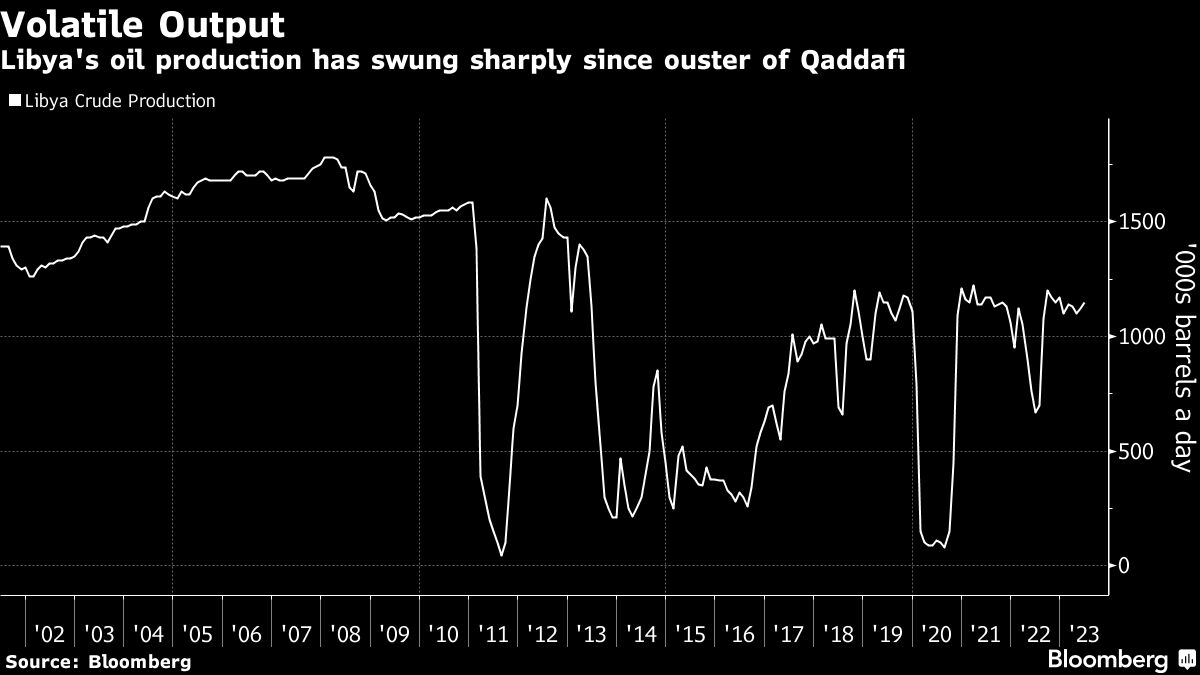
Libya has lurched from one crisis to the next since the 2011 civil war and overthrow of long-time strongman Moammar Al Qaddafi. The disruption underscores the still-precarious nature of country’s output, which had held above 1 million barrels a day for most of this year.
It also means that a swath of African oil supply got curbed over the past 24 hours.
A nearby — but smaller — Libyan field, El Feel, was halted earlier on Thursday as part of the same protest.
In Nigeria, the continent’s top producer, the Forcados terminal had to halt while the cause of a possible leak gets inspected. Together, the Libyan and Nigerian disruptions represent well over 500,000 barrels a day of oil flow — about 0.5% of global supply. In all three cases, a timeline for a full restart isn’t clear.
Sharara and the Waha field pump similar amounts of oil.
Before the disruption, Sharara was at about 250,000 to 260,000 barrels a day, and Waha was at about 280,000 to 290,000 barrels a day. The El Feel field handles about 60,000 to 70,000 barrels a day.
In addition to that, Forcados oil flows from Nigeria have averaged about 225,000 barrels a day so far this year, according to loading plans seen by Bloomberg.
–With assistance from Paul Wallace.
More stories like this are available on bloomberg.com
©2023 Bloomberg L.
P.