
Ford Beats Expectations on Strong Demand for Gas-Powered Models
(Bloomberg) — Ford Motor Co.’s profit beat expectations in the latest quarter on robust sales of its gas-fueled models even as it rushed to ramp-up electric vehicle production ahead of critical contract talks with its largest union.
The automaker on Thursday posted adjusted earnings per share of 72 cents, topping the 54 cents analysts estimated on average. That came in above the 68 cents it reported on that basis in the same period a year ago and also surpassed 63 cents in the previous quarter.
For the year, Ford raised its forecast of adjusted earnings before interest and taxes to a range of $11 billion to $12 billion, up from $9 billion to $11 billion.
Crosstown rival General Motors Co. this week also boosted its profit target for the year by at least $1 billion to a range of $12 billion to $14 billion, before interest and taxes.
Shares of Ford rose 4.2% in postmarket trading to $14.39 as of 4:09 p.m. in New York.
Chief Executive Officer Jim Farley’s $50 billion bet on EVs is confronting slowing demand for plug-in models.
The automaker aims to convince skeptical investors it can reverse $3 billion in EV losses to achieve an 8% return on battery-powered models, before interest and taxes, by the end of 2026 when it plans to be making 2 million EVs a year.
Model e, Ford’s electric vehicle unit, had a loss of $1.08 billion, more than the $871.9 million deficit analysts had expected. Its EV sales fell in the quarter as it expanded production at factories in Michigan and Mexico.
With EV inventory rising, Ford cut the price of the electric F-150 Lightning pickup last week, which caused a selloff that wiped out about $3.6 billion in market value in one day.
Ford’s price cuts are aimed at keeping pace with EV market leader Tesla Inc., which has slashed sticker prices this year.
“There is some skepticism on Ford’s EV targets,” David Whiston, an analyst with Morningstar Inc., said in an interview. “The concern is, can someone other than Tesla sell a lot of EVs?”
Labor Contract Showdown
Ford also faces a restive United Auto Workers union, with which it must reach a new — and potentially more costly — contract before the current pact expires Sept. 14.
The carmaker could also be targeted for a possible strike action.
The UAW blasted Ford for taking a $9.2 billion US government loan to help finance three battery factories it’s building with South Korea’s SK On, calling it a “massive” handout to a venture creating “low road jobs.”
The union’s new president, Shawn Fain, has declared “war” on Detroit’s automakers and accused them of engaging in a “race to the bottom” in the EV transition with factories that will employ fewer workers earning lower wages.
Ford’s revenue in the second quarter of $45 billion, surpassing the $40.16 billion analysts expected.
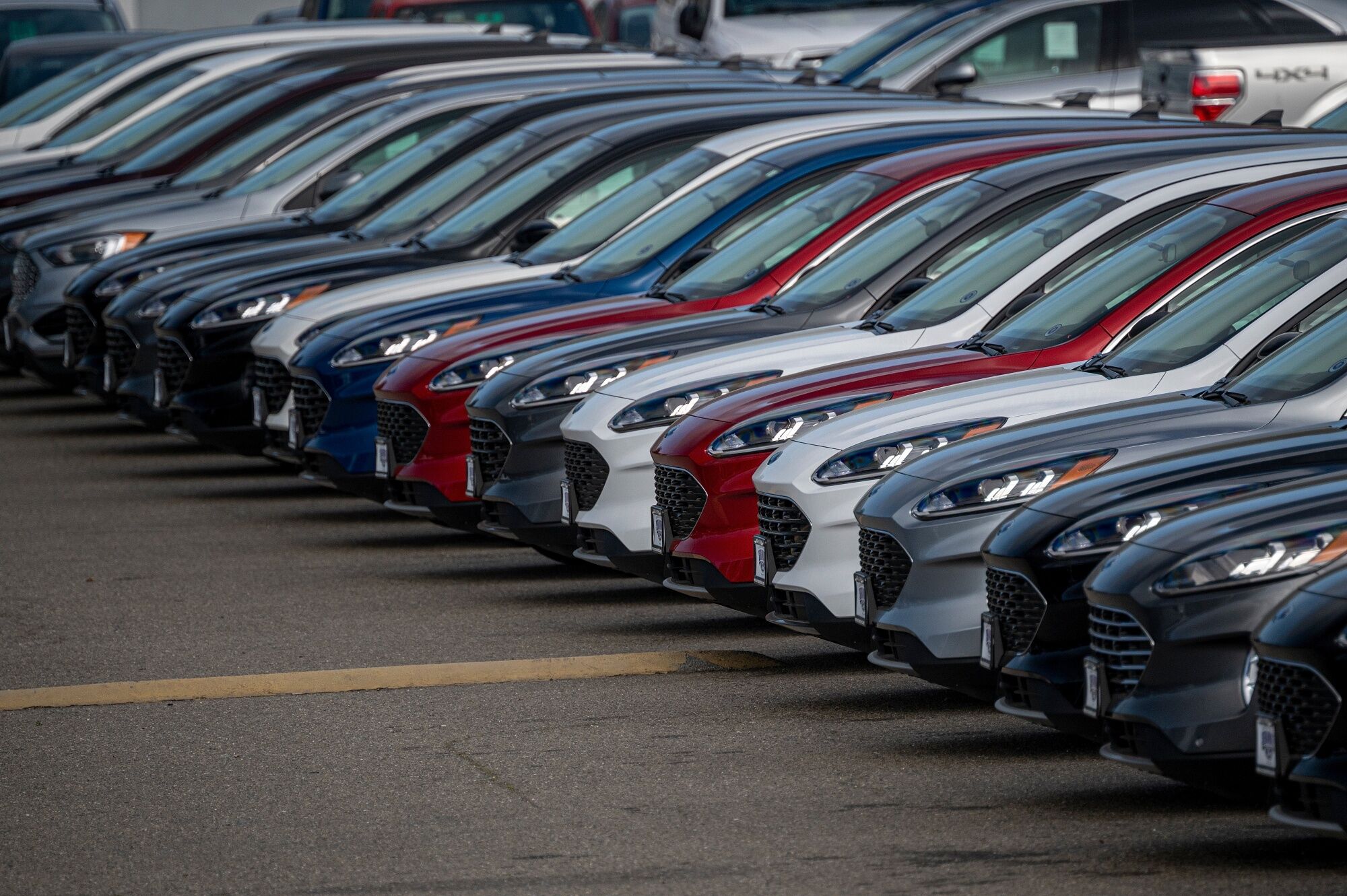
The company’s traditional gasoline-fueled models are financing its EV transition and the automaker cranked up global production 9.5% in the second quarter, as pandemic-related parts shortage receded and dealers restocked their lots.
Even with more inventory, prices held up better than expected, according to JP Morgan Chase & Co. research.
Ford’s US light vehicle sales rose 9.9% in the second quarter.
Ford Blue, the company’s traditional internal combustion vehicle business, had second quarter earnings before interest and taxes of $2.3 billion, slightly above analysts expectations for $2.24 billion. Ford Pro, the automaker’s commercial business, posted earnings on that basis of $2.4 billion, substantially more than the $1.74 billion analysts expected.
“Ford needs to show they’re making progress on the EV bridge,” Whiston said. “That’s a long bridge and they’re still on the first part of the crossing.”
More stories like this are available on bloomberg.com
©2023 Bloomberg L.
P.