
Euro Zone Returns to Growth While Core Inflation Remains Strong
(Bloomberg) — The euro-area economy returned to growth while underlying inflation pressures persisted — strengthening early arguments for the European Central Bank to raise interest rates again.
Second-quarter gross domestic product advanced by 0.3% from the previous three months after shrinking and stagnating in the two earlier periods, according to Eurostat data published Monday.
A Bloomberg survey of economists saw an increase of 0.2%.
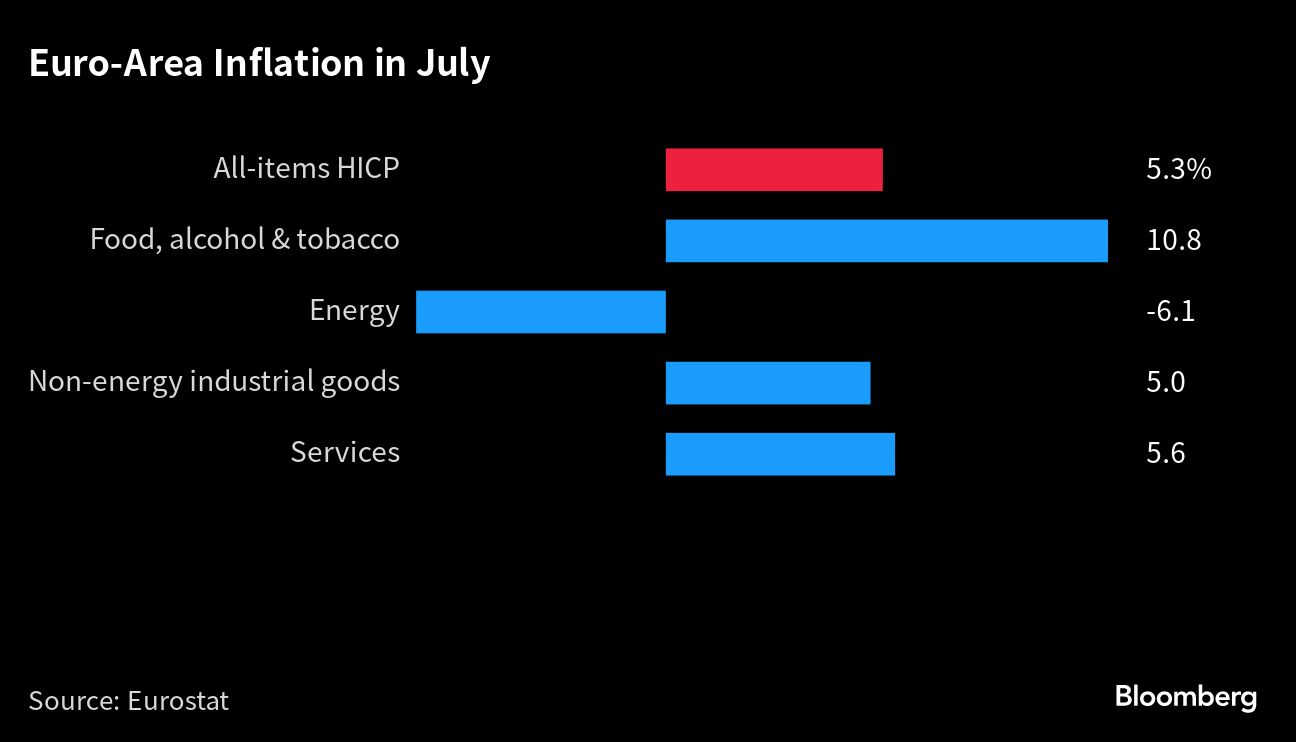
A separate release showed consumer prices rose 5.3% from a year ago in July, as expected. But in a sign of lingering dangers, the closely watched underlying inflation measure that excludes volatile costs like food and energy overshot estimates by a touch to stay at 5.5%, surpassing the headline gauge for the first time since 2021.
While the euro zone’s GDP number looks encouraging, in lifting rates last week for a ninth straight time since July 2022, the ECB offered a gloomy outlook for the region.
Confidence indicators are flashing red and AXA’s Gilles Moec is among analysts warning of a “hard-ish landing.”
A year after a manufacturing downturn began, services are now slowing too — a trend that’ll likely accelerate once the summer tourism season winds down. Companies’ demand for loans is plunging at a record pace, with housing and business investment also showing signs of weakness.
Germany, Europe’s largest economy, is faring badly.
While the country just about emerged from a six-month recession over the winter, output only stagnated in the second quarter.
Bayer AG last week joined other chemicals companies including BASF SE and Lanxess AG in warning of a deteriorating outlook, while Hamburger Hafen cut its forecast after seeing a significant drop in volumes.
With the deposit rate now at 3.75%, the ECB is at or near the end of its rate increases.
President Christine Lagarde reiterated her message over the weekend that in the current uncertain environment another hike or “perhaps a pause” are the options for the next policy decision, in September.
Economists say that meeting will be a close call, though most lean toward one final move. Monday’s figures offer no conclusive answer and several more data reports are due in the meantime.
Monday also saw Italy report a drop in GDP between April and June as domestic demand wilted.
There was better news on Friday from France and Spain, which both notched solid growth.
Eurostat will offer a more detailed breakdown of the data on Sept. 7.
–With assistance from Joel Rinneby, Barbara Sladkowska and Sonja Wind.
More stories like this are available on bloomberg.com
©2023 Bloomberg L. P.