
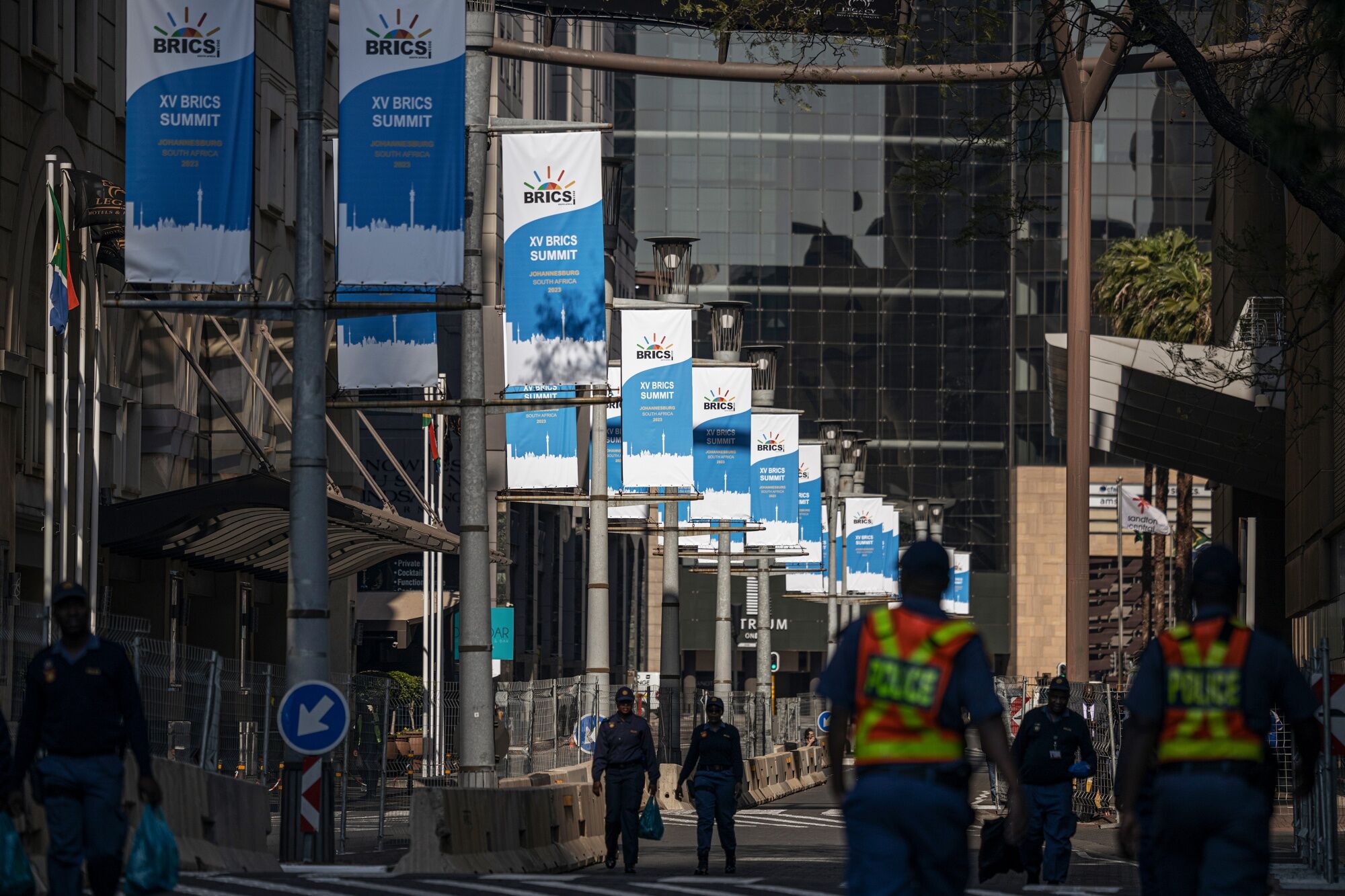
BRICS Latest: More Talks Needed on Dollar Shift, Ramaphosa Says
(Bloomberg) — The BRICS group has agreed to hold more talks on how to reduce their reliance on the dollar, including bolstering direct use of their own currencies to trade, South African President Cyril Ramaphosa said.
Leaders of the bloc — Brazil, Russia, India, China and South Africa — have been discussing reducing the use of dollars for trade at their annual summit on Wednesday in Johannesburg.
“We will continue discussions on practical measures to facilitate trade and investment flows through the increased use of local currencies,” Ramaphosa said. “This is matter we believe where further discussions need to take place, particularly amongst our finance ministers,” Ramaphosa said.
India’s Modi Backs BRICS Expansion (12:15 p.m.)
Indian Prime Minister Narendra Modi gave public backing to increasing the size of the BRICS club, but was careful to stress the need for proceeding in a manner agreed to by all five current members.
“India fully supports the expansion of BRICS membership and we welcome moving forward on this based on consensus,” he told the summit.
Billionaire Says China Key to Tilt From Dollar (11:23 a.m.)
China must reduce trade deficits with other developing nations to accelerate the use of local currencies, the billionaire founder of India’s Vedanta Resources Ltd said.
Leaders of the BRICS bloc — Brazil, Russia, India, China and South Africa — are discussing reducing the use of dollars for trade at their summit on Wednesday.
This will mainly be through expanding the use of their currencies for trade.
Read more: BRICS Needs China to Expand Use of Local Currencies, Tycoon Says
China’s Economic Slowdown Has an Upside for Dealmakers (11:10 a.m.)
China’s economic slowdown opens doors for other nations to draw a bigger share of investment targeted at emerging markets, according to executives attending the BRICS summit.
The deceleration, characterized by a property slump, soaring municipal debt and a youth unemployment crisis, has jolted financial markets as investors ponder what it might mean for commodities amid waning demand from the world’s second-largest economy.
More stories like this are available on bloomberg.com
©2023 Bloomberg L.
P.