
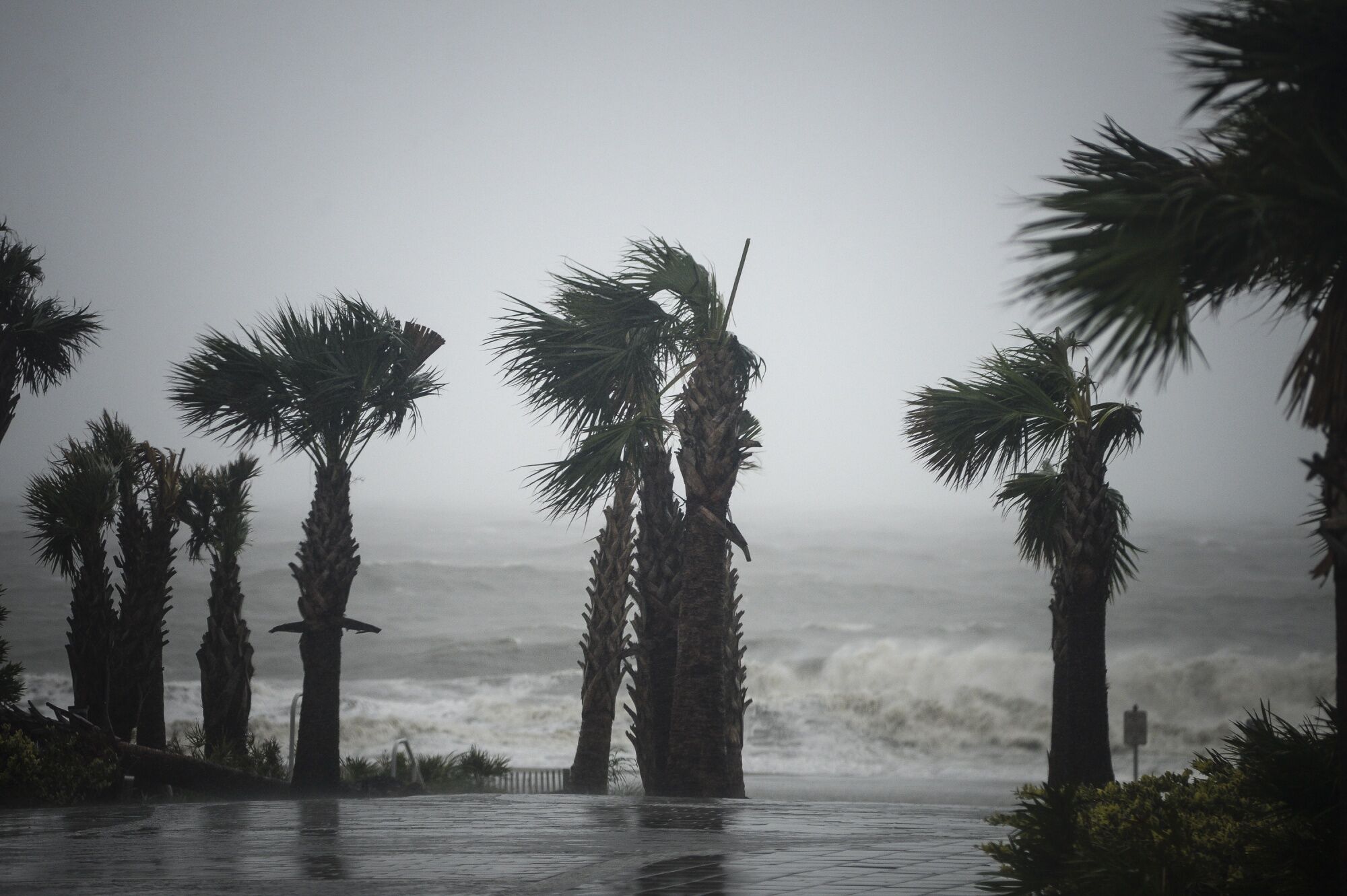
(Bloomberg) — Cristobal, on the cusp of reentering the Gulf of Mexico, is once again a tropical storm headed on a path that will carry it over offshore oilfields and on to the coast of Louisiana.
Already, more than than 25% of offshore oil and gas production has been shut down in anticipation of the storm’s fury.
Tattered by its trip over land, the storm probably won’t have enough time to become the season’s first hurricane.
Still, Cristobal threatens to bring “extensive heavy rains from the Sabine River Pass to the Florida Panhandle,” according to Jim Rouiller, lead forecaster at the Energy Weather Group LLC.
“The good news is it won’t have too much over-water time to rejuvenate itself,” Rouiller said. “It does not look like it will be a hurricane, but it could be a high-end tropical storm.”
Cristobal’s winds have strengthened to 40 miles (64 kilometers) per hour, the U.
S. National Hurricane Center said in an advisory. As it moves back over water, the storm is expected to bulk up even more, with winds peaking at around 60 mph.
Tropical storm and storm surge warnings have been issued for coastal areas from Louisiana to Florida.
On its current track, Cristobal will pass through the eastern side of U. S. offshore energy installations, where some companies have already evacuated non-essential workers.
The storm will then likely slam into Louisiana late Sunday or early Monday, according to the hurricane center.
Offshore platforms account for 16% of U. S. crude oil production and 2.4% of natural gas output, according to the Energy Department. Additionally, more than 45% of U. S. refining capacity and 51% of gas-processing capacity is located along the coast.
Across the Gulf, 64 platforms have been evacuated, shutting down 29% of crude output and 22% of of natural gas production, according to the U.
S. Bureau of Safety and Environmental Enforcement.
Energy prices are reacting in the U. S., with Houston benchmark gasoline prices moving higher as traders secure supply. Cristobal could push the average retail price of a gallon of gasoline over $2, according to AAA. The U. S. crude complex has also come under pressure, with the storm potentially affecting logistics in the Gulf and causing a backup of supplies, according to market participants.
Fast Mover
Rouiller said Cristobal will move fast and he expects energy companies to be back in operation by early next week.
“Damaging and deadly flooding” is already occurring in Central America and Mexico, and heavy rains are expected to continue through Saturday, the hurricane center said.
After Cristobal moves north through Louisiana, what is left of it will head through the central U.
S. dragging a tail of tropical moisture that is expected to bring heavy rains. By the middle of next week, the remnants of the storm will likely be over Chicago.
The rain could in some cases be a good thing, at least for agriculture. The region where the most rain is expected to fall “is currently in a moderate to severe drought,” Jeff Masters, a meteorologist with Scientific American, said by email. “So widespread major flooding is unlikely.”
Cristobal is the third storm to form in the Atlantic this year, marking the fastest start to hurricane season on record.
With the season off to a quick start, many meteorologists have forecast this to be an above-average season. On Thursday, Colorado State University increased its seasonal forecast to 19 storms from 16 in April.
(Updates with energy impact starting in second paragraph.)
For more articles like this, please visit us at bloomberg.com
©2020 Bloomberg L.
P.