
(Bloomberg) — Japan’s economy shrank less than initially estimated in the first quarter, but analysts warn the latest revised figures may offer a misleading view of the economy’s health as the virus hit.
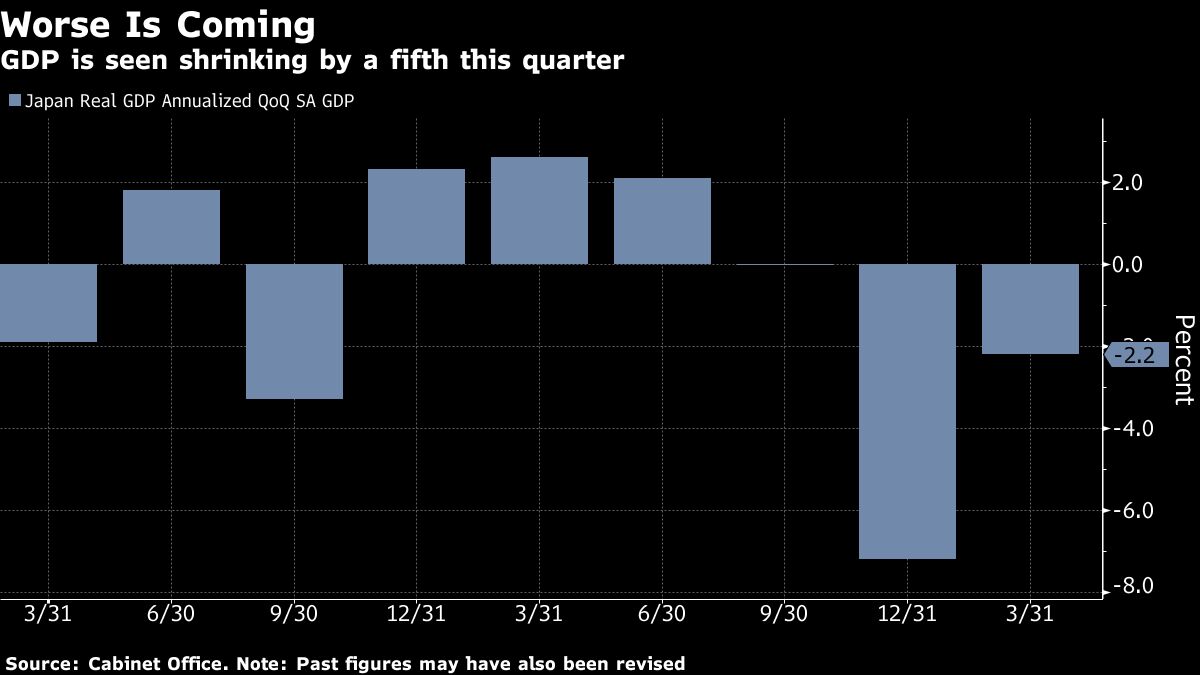
The latest data show the economy contracted at an annualized pace of 2.2% last quarter, less than the 3.4% drop in initial calculations. But the result was based on a survey that could have overstated the strength of business investment amid the pandemic.
Analysts say first quarter figures are likely to be revised down later.
The result still means Japan’s economy has been stuck in reverse for two straight quarters, with an even sharper contraction expected in the April-June period. Economists see GDP shrinking more than 20% this quarter, the most in records going back to 1955.
Even before the revision was released, economists were casting doubt on its accuracy because of unusually strong business investment readings in a report used to tweak the overall growth numbers.
The finance ministry said its corporate survey had a low response rate amid the pandemic that may have skewed the results.
Economists say firms hit hard by the pandemic may not have had the time or resources to respond to government inquiries in the usual way.
BOJ Is Said to See Need to Include Firms’ Solvency on Radar
Prime Minister Shinzo Abe two weeks ago ended a national state of emergency slightly ahead of schedule, but a resurgence of the virus in Tokyo suggests consumer spending could stay subdued and a jump in the numbers of workers on leave could be a harbinger of wider layoffs ahead.
Meanwhile, export markets are also struggling to reopen, casting a further shadow on the outlook for the economy.
The government last month doubled its proposed stimulus measures to about $2 trillion, or more than 40% of GDP, to give lifelines to businesses and households. Some analysts say the packages won’t do enough to boost spending and more aid will be needed.
A separate report today showed bank lending rose at the fastest pace in decades in May, as companies rushed to secure financing amid the crisis, another sign of recession trauma.
Data doubts
Japan’s government statisticians have often faced criticism for producing data that is slow and sometimes unreliable, but the problems are piling up as the coronavirus makes collecting information even harder.
Japan’s Ultralow Jobless Rate Ignores 4 Million People on Leave
Temporary store closures and inventory losses, for example, have forced the government to plug holes in the data for the consumer price index with results from a past survey.
The health ministry had to scrap this year’s survey of national living conditions partly because officials couldn’t actually visit people’s homes.
“Coronavirus has had an impact on various data,” said economist Yoshiki Shinke at Dai-Ichi Life Research Institute. “While there haven’t been that many surveys that have been stopped altogether so far, the response rate does appear to have become lower with some data.”
Japan Inc.
Unexpectedly Raised Investment at Start of Year
Monday’s gross domestic product report showed capital spending jumped 8% on an annualized basis compared with the previous quarter. The initial reading showed capex falling 2.1%.
Analysts said they expect the GDP number to be revised down when the government releases a third estimate. The confusion will make it more difficult to get an accurate read on the economy’s performance in the April-June period, when the recession may be at its worst.
“The upward revision in first quarter GDP doesn’t quite reflect reality and will be revised yet again in August,” economist Mari Iwashita at Daiwa Securities said, adding that the changes will make it difficult to forecast the performance of the economy in the second quarter.
What Bloomberg’s Economist Says
“The bigger picture remains the same — the drop put Japan into recession, and the contraction in 2Q is sure to be much deeper as the impact of coronavirus containment measures and weaker external demand take a toll.”
–Yuki Masujima, economist
Click here to read more.
(Adds bank lending figures and updates throughout.)
For more articles like this, please visit us at bloomberg.com
©2020 Bloomberg L.
P.