
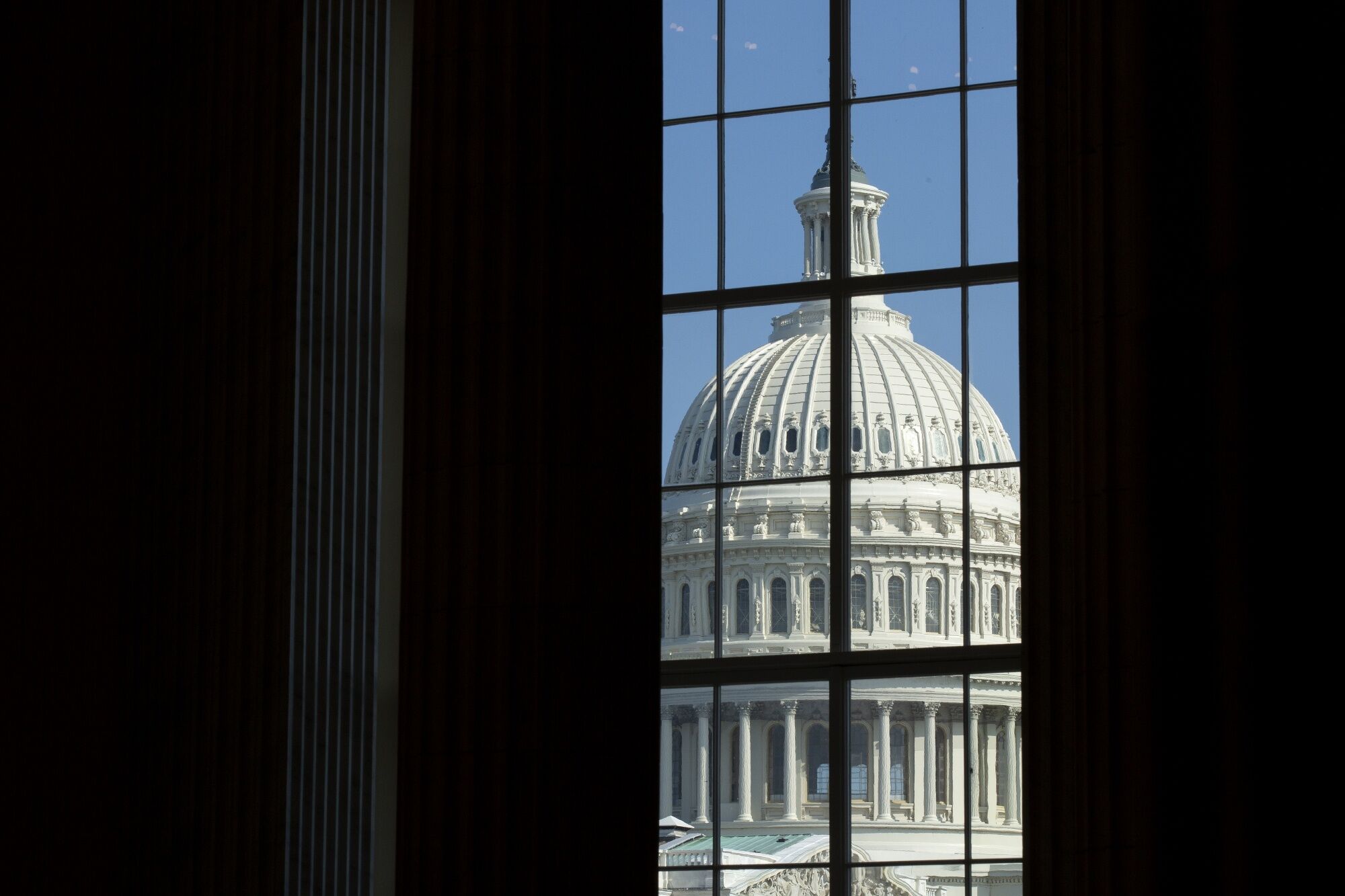
(Bloomberg) — The two parties in Congress staked out battle lines over liability protections for employers and jobless benefits ahead of another round of negotiations Tuesday between Democratic leaders and President Donald Trump’s representatives.
The issues are emerging as two of the main points of contention in the talks as Senate Majority Leader Mitch McConnell and House Speaker Nancy Pelosi hunt for a compromise with time running short for Congress to act.
Treasury Secretary Steven Mnuchin and White House Chief of Staff Mark Meadows met with Senate Republicans over lunch before resuming shuttle negotiations with Pelosi and Senate Democratic leader Chuck Schumer Tuesday afternoon.
It’s the second such session in a row with the Democratic leaders since McConnell and Senate Republicans unveiled their $1 trillion stimulus package on Monday.
There’s a wide gap between the GOP plan and the $3.5 trillion proposal that Democrats have put on the table. While there is some common ground on issues like small business aid, stimulus checks for individuals and money to expand coronavirus testing and eventual vaccine distribution, several big hurdles are in front of a comprehensive compromise.
Some Senate Republicans continued to express dissatisfaction with the size of their party’s proposal.
“I’m not inclined to support it now,” said Senator Josh Hawley of Missouri. “It’s a mess.”
That split leaves McConnell with little room in negotiations, where Democrats are seeking to use GOP dissension to exert maximum pressure.
Senator Dick Durbin, the chamber’s No. 2 Democrat, said he doesn’t see any reason his party would support McConnell’s plan to shield businesses, schools and other organizations from lawsuits over Covid-19 infections from employees or customers.
“This is an effort by the Republicans to seize the moment and to push through changes in tort law that they have been longing for for decades that have nothing to do with Covid-19,” Durbin told reporters Tuesday.
A short time earlier, McConnell spoke on the Senate floor in defense of the Republican plan to cut supplemental unemployment aid to $200 a week from the $600 a week that was included in an earlier stimulus.
That would be the level set until states, which administer the benefits, could devise a system to use federal funds to replace 70% of a worker’s lost wages.
He and other Republicans contend that the higher payment discourages workers from returning to jobs, which Democrats and some economists dispute.
”The American people don’t call that a controversy,” he said. “They call it common sense.”
There’s pressure on Republicans to act months after McConnell pressed the pause button on new aid.
Earlier stimulus measures are beginning to run dry as soaring virus cases and deaths are disrupting the economy. That’s caused Trump’s poll ratings to slump, threatening GOP control of both the White House and Senate.
But a number of Republicans are saying they are concerned about more deficit spending and signaling they won’t support the plan McConnell has put forth.
“If Mitch can get half of the conference, I think that would be quite an accomplishment,” South Carolina Republican Senator Lindsey Graham said.
Senator Kevin Cramer, a North Dakota Republican, said McConnell needs to strike the right balance in any final stimulus or risk losing a large group of Republicans in a vote on it.
He’s pleased the initial GOP proposal is $1 trillion, but he said it can’t get too much larger.
“The bigger the price tag gets, the fewer Republicans that will support it,” he said.
For more articles like this, please visit us at bloomberg.com
©2020 Bloomberg L. P.