
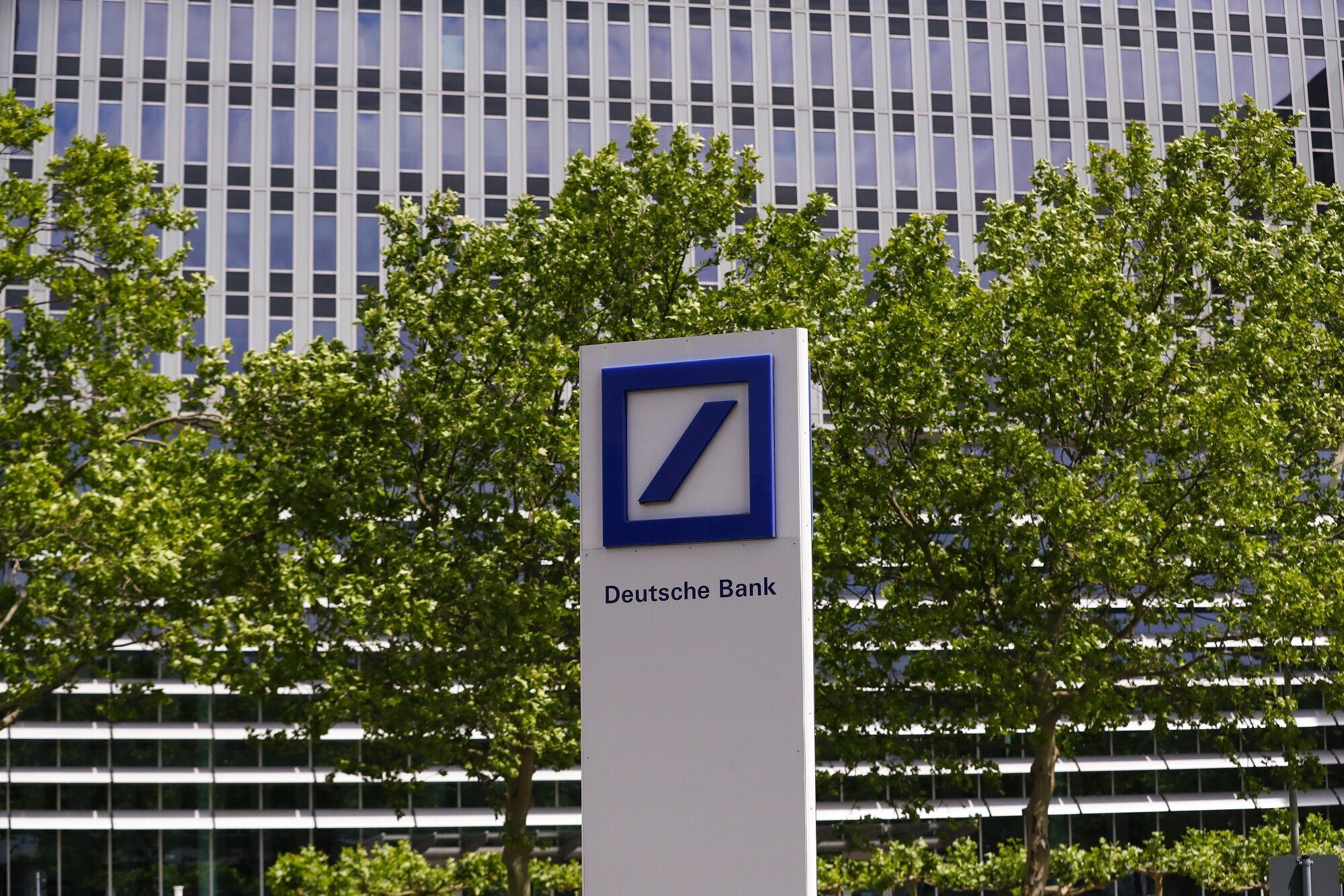
(Bloomberg) — Deutsche Bank AG reported the biggest gain in fixed-income trading in almost eight years as a market rally bolstered Chief Executive Officer Christian Sewing’s turnaround efforts for a third straight quarter.
Income from buying and selling debt securities rose 39% from a year earlier, offsetting weaker revenue in asset and wealth management, the lender said Wednesday.
While its traders couldn’t quite keep up with the five biggest Wall Street banks, which roughly doubled fixed-income revenue, their gain was the biggest since the third quarter of 2012. Revenue from advising on capital raisings and deals increased 73%.
The investment bank and particularly the trading business, for years the target of cutbacks, has provided some much-needed support for Sewing this year as he contends with the prospect of surging bad loans while negative interest rates weigh on the corporate bank that’s a key pillar of his strategy.
The CEO said earlier this month that his overhaul of Germany’s largest lender, which he unveiled a year ago, was on track or ahead of plan, while cautioning that the debt-trading boom will likely slow in the second half of the year.
Across Wall Street, the market gyrations in the wake of the pandemic have fueled record investment banking results, with the five biggest U. S. firms disclosing $45 billion in revenue from their trading and dealmaking units in the second quarter.
The support from the trading boom helped fuel a 16% rally in Deutsche Bank’s shares this year, the best performance of the large European banks.
“In a challenging environment, we grew revenue and continued to reduce costs, and we’re fully on track to meet all our targets,” Sewing said in the statement.
Other Deutsche Bank units have struggled as negative interest rates erode income from lending while market volatility hurt assets management and fees for overseeing them.
Both the asset management unit and retail banking saw lower revenue in the second quarter.
Core Bank
Core bank revenue, which includes only the businesses Deutsche Bank is keeping in its overhaul, rose 6%, driven by the investment bank. The transaction bank — a centerpiece of Sewing’s effort to wean the lender off its reliance on trading — saw a 4% increase, reflecting higher credit loss recoveries and a portfolio rebalancing.
The bank set aside 761 million euros ($892 million) for bad loans, roughly in line with a guidance of about 800 million euros it had given in June.
Borrowers who had drawn down credit facilities during the early days of the pandemic have already started to pay them back or refinance, boosting the bank’s main measure of capital strength – the common equity Tier 1 ratio — to about 13.3% at the end of June from 12.8% three months earlier, Deutsche Bank said last week.
Unlike its Wall Street rivals, Deutsche Bank has set aside relatively small amounts for bad loans, which are expected to surge in the wake of the pandemic.
Sewing has argued that his lending standards are high and the firm is less exposed to some of the worst-hit borrowers. He’s also being helped by some of the world’s most extensive government loan guarantee programs set up to combat the economic fallout from the pandemic.
For more articles like this, please visit us at bloomberg.com
©2020 Bloomberg L.
P.