
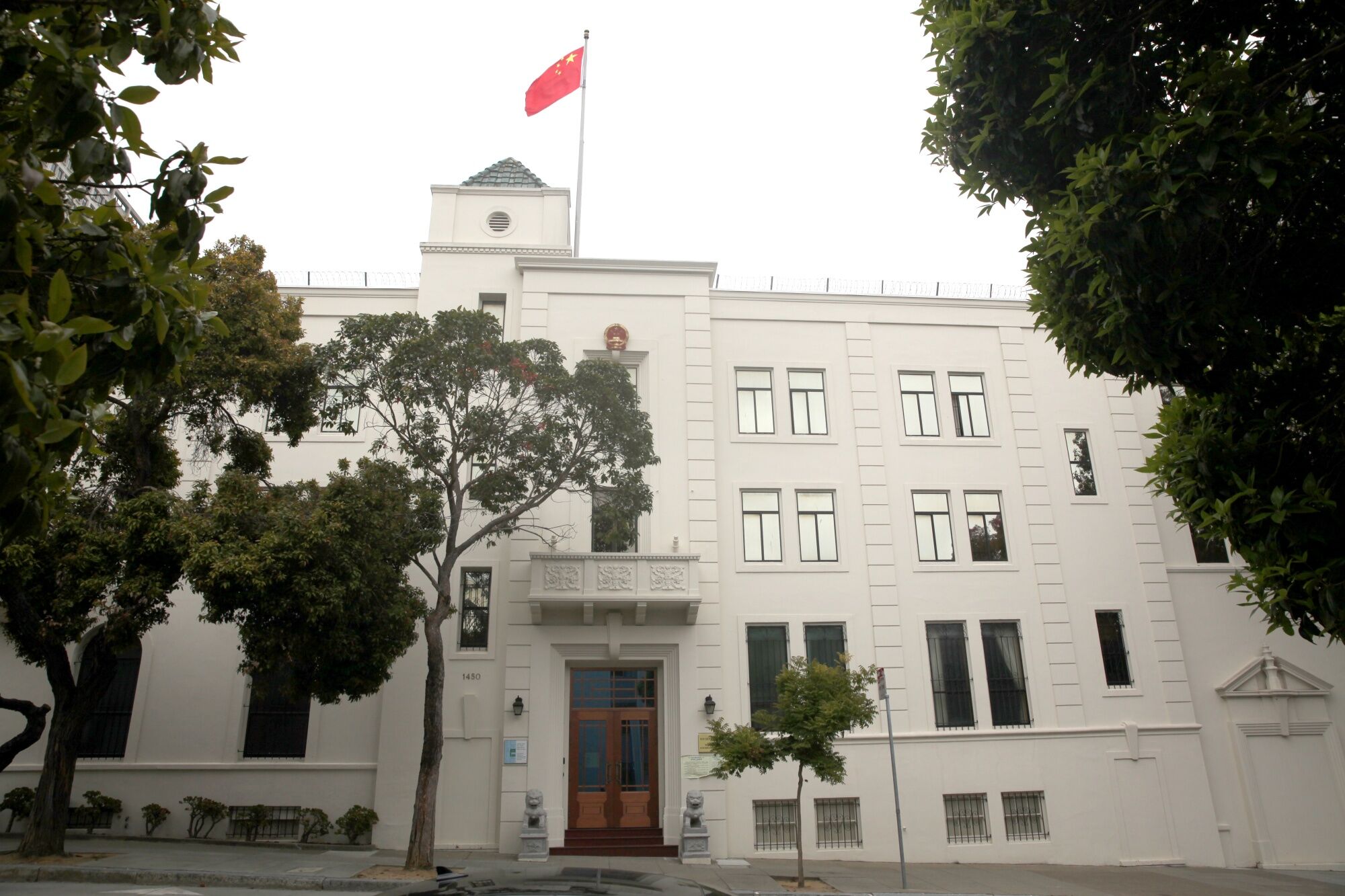
(Bloomberg) — A Chinese researcher left the protection of her country’s San Francisco consulate expecting to get arrested by U. S. authorities, her lawyer said, in the latest wrinkle in a case that has helped fuel historic tensions between the two sides.
The researcher, Juan Tang, surrendered voluntarily to American law enforcement after leaving the consulate to seek medical attention, according to Lexi Negin, her court-appointed lawyer.
Tang — a cancer researcher at the University of California, Davis — had taken shelter in the consulate for about a month amid a U. S. investigation into whether she concealed Chinese military ties.
New details about Tang’s surrender were disclosed in court filings as Tang, 37, seeks release from county jail in Sacramento, where she has been held since last week on charges of visa fraud.
A key question has been whether Tang left the consulate on her own or as the result of some agreement between the U. S. and Chinese sides.
“I don’t have any reason to believe she was forced to leave the consulate. It doesn’t sound like she was,” Negin said by email Wednesday. “She was aware that she would be arrested, if she left consulate property.”
Tang is one of several Chinese scholar visa holders in more than 25 American cities who the Justice Department suspects of having an “undeclared affiliation” with the Chinese military.
She has become a flashpoint of tension between the U. S. and China, which have sparred publicly by closing each other’s diplomatic missions in Houston and Chengdu.
While the Chinese Foreign Ministry didn’t immediately respond Thursday to a request for comment about the court filing, a spokesman earlier this week called for her release. “China has launched solemn representations with the U.
S. side urging the U. S. side to immediately release the Chinese national and ensure her legitimate and legal rights,” Wang Wenbin told a regular news briefing Tuesday in Beijing.
Tang sought shelter at the consulate in San Francisco after federal agents showed up and interviewed her at her apartment in Davis, where she was doing cancer research at the University of California, according to the filing.
Tang was in “hysterics” after learning of the warrant for her arrest, leading consulate officials to believe she needed to see a doctor, Negin wrote in the filing.
Tang believed that American law enforcement were watching the building and followed her car to a medical office where she was treated and then arrested, Negin said in the filing. Negin said in an email that the details about Tang’s arrest came from a prosecutor who wasn’t personally involved in her detention.
“I believe she could have stayed on consulate property, if she desired to,” Negin said in the email.
Lauren Horwood, a spokeswoman for U.
S. Attorney McGregor Scott in Sacramento, didn’t immediately respond to an email after business hours seeking a response to the filing. The request for Tang’s release said her husband is a doctor living with their daughter in China. It also highlights pieces of prosecutors’ evidence that are “weak and lend themselves to many innocent explanations,” including photographs of Tang in military uniform.“Ms.
Tang apparently attended a prestigious medical school that is run by the military in China,” the filing said. “That does not mean that she was ‘in the military.’”The case is U. S. v. Juan Tang, 20-MJ-96, U. S. District Court for the Eastern District of California (Sacramento).
For more articles like this, please visit us at bloomberg.com
©2020 Bloomberg L.
P.