
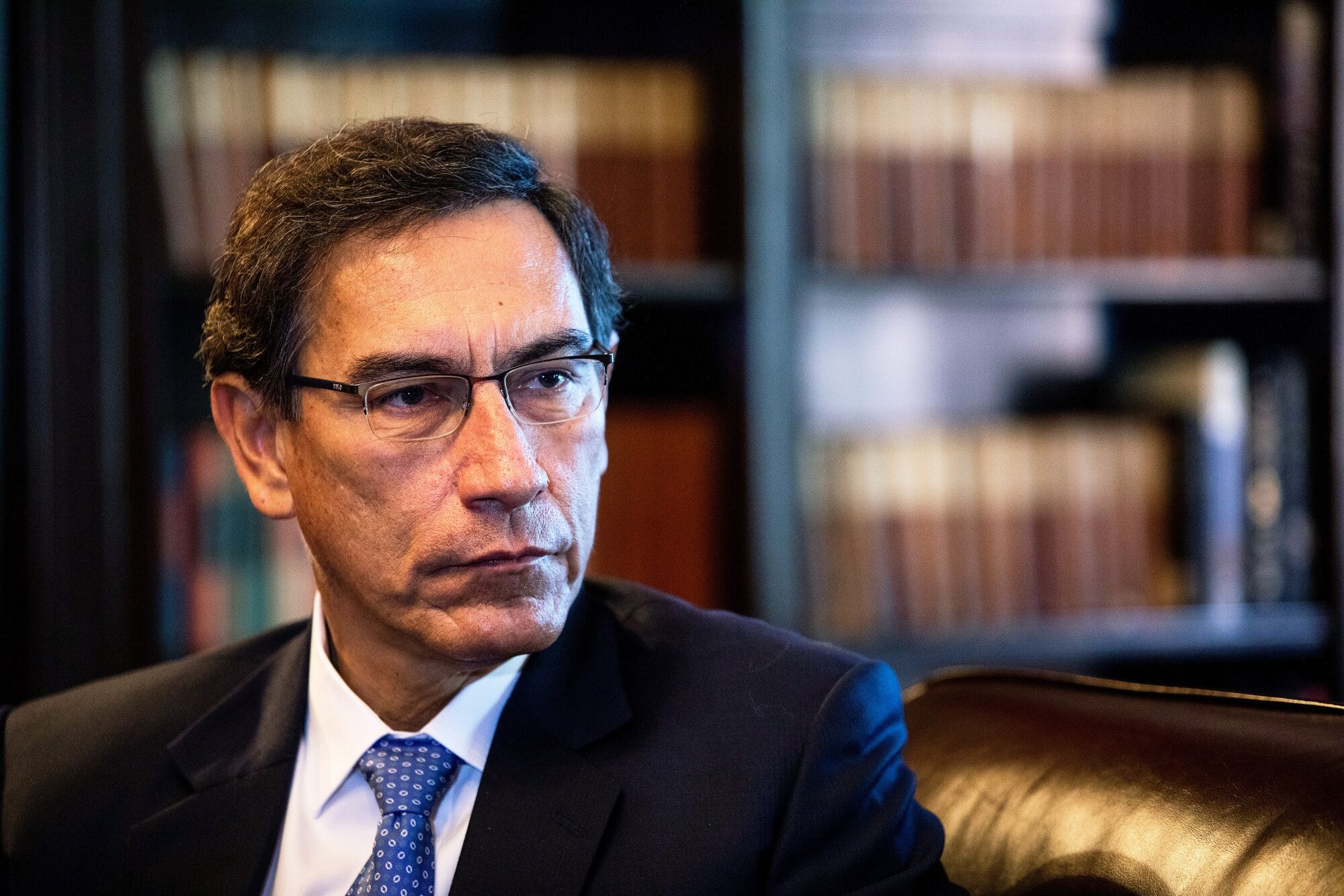
(Bloomberg) — Peru President Martin Vizcarra’s cabinet chief is set to resign after unexpectedly losing a vote of confidence in Congress, throwing his government into disarray as it grapples with the coronavirus pandemic.
Lawmakers voted against the cabinet led by Pedro Cateriano, who will now have to step down less than three weeks in the post, forcing Vizcarra to find a replacement more palatable to the opposition-controlled Congress.
The outcome of Tuesday’s vote was unexpected as lawmakers usually support newly appointed cabinet chiefs.
It’s even more surprising given that Peru is mired in its worst economic crisis in decades as a result of the virus outbreak and can ill afford political disagreements.
“The political class represented in Congress, with few exceptions, is not up to the challenges of our country,” said Alonso Segura, a former finance minister with the previous administration who’s been critical of the government’s strategy to handle the pandemic. “It’s one thing to have differences and another to bring down a cabinet in the middle of a health and economic crisis.”
Pro-Mining
Vizcarra appointed Cateriano, an experienced politician, and changed most of his ministers last month following criticism his government had mishandled the coronavirus pandemic and caused an economic crisis with strict lockdowns.
On Monday, Cateriano attended Congress with his cabinet and laid out plans to dig Peru out of its worst slump in a century, with emphasis on spurring mining investment. He said the government had made mistakes in fighting the virus, which has killed as many as 40,000 people in the country, and pledged to reorganize the public health system.
Yet lawmakers from several parties criticized Cateriano’s pro-mining stance, saying his focus should be on helping small businesses.
They debated his proposals through the night and voted 54-37 against the cabinet, with 34 abstentions.
What Our Economist Says
“This adds evidence of the ongoing political instability and structural governance problems in Peru. It is likely to undermine the ability of the government to execute the ambitious fiscal stimulus plan announced earlier this year and points to a weaker than initially expected economic recovery.”
— Felipe Hernandez, Latin America economist with Bloomberg Economics
Vizcarra has had a fractious relationship with Peru’s legislature since assuming office amid a political crisis in March 2018.
He dissolved Congress in September after frequent clashes over measures to fight corruption, and called a parliamentary election. That vote produced a fractured Congress with mostly first-time lawmakers and one in which the government has no representation, which often fuels political tensions.
The president has enjoyed high levels of public approval since shutting Congress, maintaining support even after the country’s three-month nationwide lockdown failed to prevent Peru from becoming a hotspot for the coronavirus.
The central bank forecasts a 12.5% drop in gross domestic product this year, the biggest in a century and one of the deepest in Latin America, as a result of the coronavirus pandemic.
Read More: Virus Puts Peru on Path to Economic Suicide, Think Tank Says
(Adds former minister’s comment in third paragraph)
For more articles like this, please visit us at bloomberg.com
©2020 Bloomberg L.
P.