
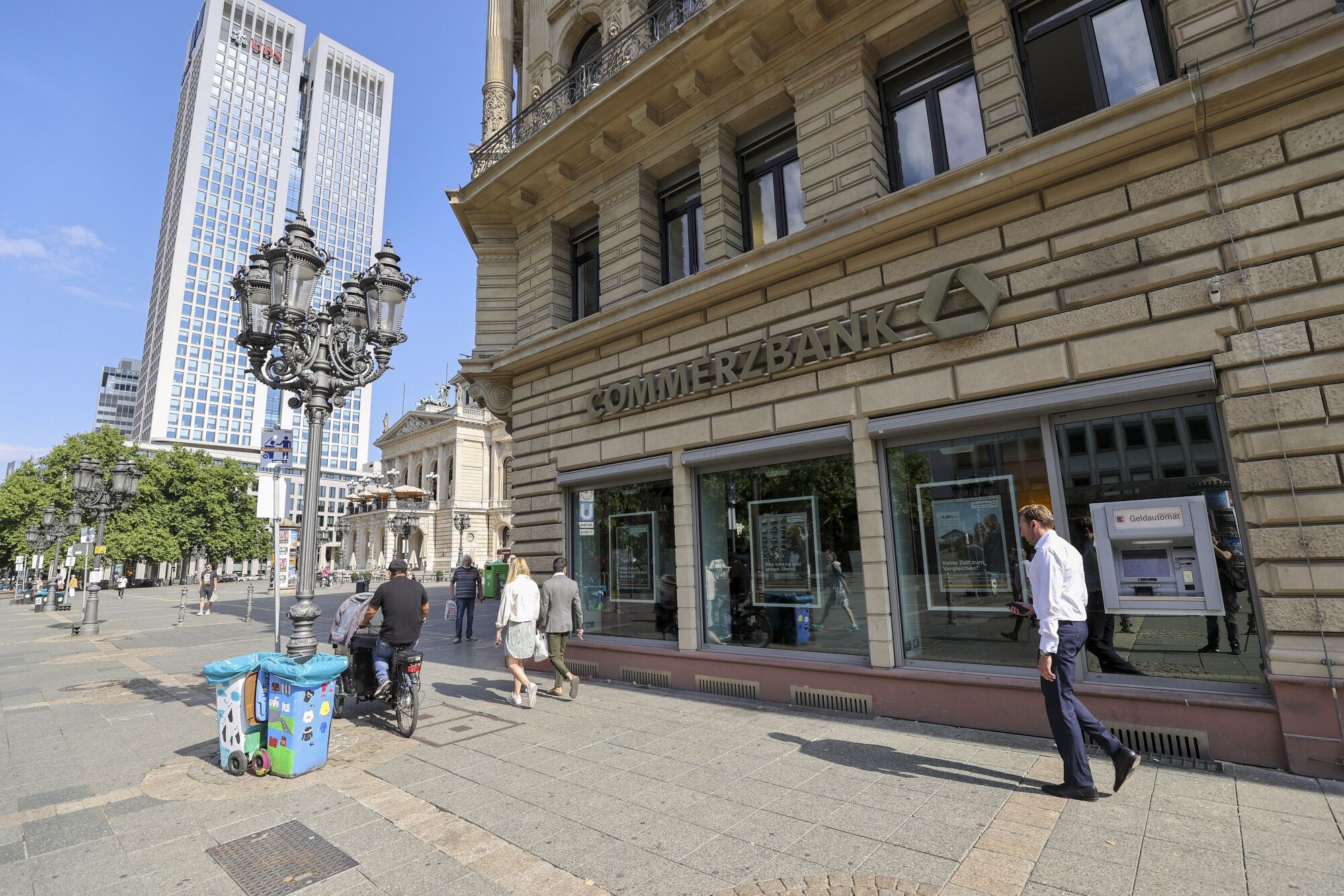
(Bloomberg) — Commerzbank AG abandoned its goal for a full-year profit after losses tied to the failure of Wirecard AG added to surging costs for bad loans, underscoring the challenges as the lender seeks to emerge from a leadership crisis.
The outlook revision was driven by a single case that cost the bank 175 million euros last quarter, it said in its quarterly report. That exposure was Wirecard, according to a person familiar with the matter who asked not to be identified.
Net income for the quarter, at 220 million euros, came in higher than expected, after the bank’s online broker Comdirect posted record revenue when trading volumes surged during the pandemic.
The results cap a dramatic quarter in which Commerzbank was plunged into disarray when Chief Executive Officer Martin Zielke and Chairman Stefan Schmittmann last month announced their resignations amid mounting calls from shareholders for deeper cost cuts.
Hans-Joerg Vetter, who succeeded Schmittmann on Monday, will now have to find a CEO who can navigate the conflicting demands of stakeholders and put the lender on a more sustainable footing during the country’s worst crisis since World War II.
Commerzbank rose 4.5% at 9:32 am in Frankfurt trading, paring losses this year to 14%.
The bank stashed away 469 million euros ($554 million) in the second quarter to deal with an expected mountain of bad debt.
That’s the highest since 2013. For the full year, it now expects to set aside between 1.3 billion euros and 1.5 billion euros, up from no more than 1.4 billion euros.
The firm is among the lenders hit worst by the collapse of Wirecard, which filed for insolvency after saying that 1.9 billion euros previously reported as cash on its balance sheet didn’t exist. The payments company had a credit facility of 200 million euros with Commerzbank, of which about 90% was drawn at the time of its undoing, Bloomberg has reported.
ING Groep NV, ABN Amro Bank NV and Landesbank Baden-Wuerttemberg, or LBBW, had a similar exposures.
That hit is now likely to push Commerzbank into the red for the full year. But even before it cut the profit outlook, analysts were expecting the bank to post a full-year loss of about 300 million euros.
The outlook revisions makes it “all the more important that we reduce our costs in order to be able to cushion future burdens,” Chief Financial Officer Bettina Orlopp said in a press release. “We are working on this and have stepped up the cost target for this year.”
As a first step, the bank said it plans to bring costs down this year, after earlier targeting a level in line with last year.
Before Zielke announced his resignation last month, he was working on a radical overhaul that he was planing to present on the day he reported second-quarter results.
That plan would have cut about a quarter of the workforce, closed as many as 80% of the branches, and shrunk its foreign presence while financing the restructuring by drawing down the capital cushion, Bloomberg has reported.
The appointment of Vetter, a former CEO of regional lender LBBW, was opposed by Cerberus Capital Management, the most vocal critic of the bank’s leadership as of late.
But with a stake of just around 5%, the U. S. private equity firm has a limited say in a company still controlled by the government following a bailout.
(Updates with size of Wirecard hit in third paragraph, shares in fifth.)
For more articles like this, please visit us at bloomberg.com
©2020 Bloomberg L. P.