
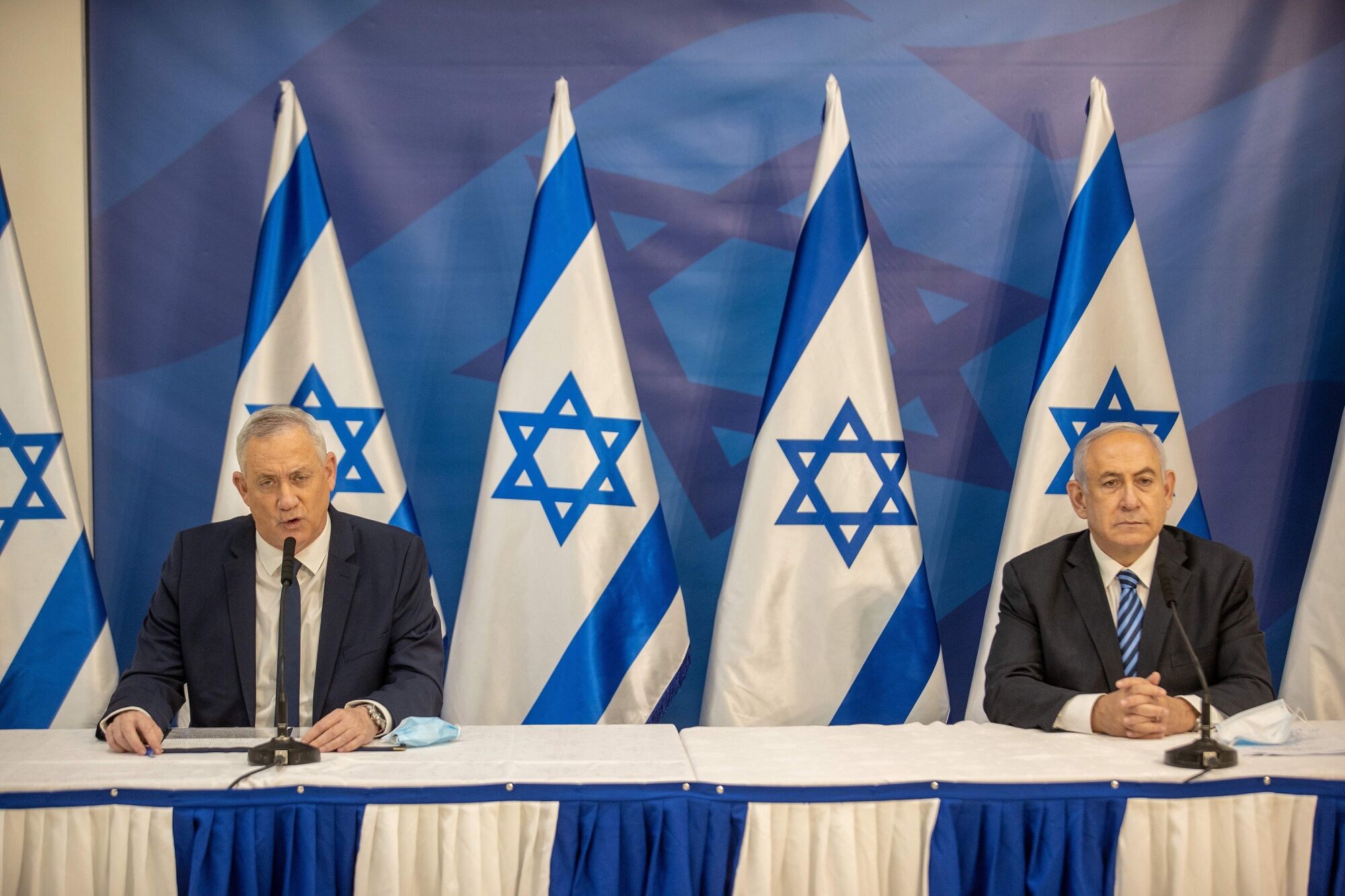
(Bloomberg) — Israel’s rickety ruling coalition will decide ahead of a crucial midnight deadline whether to paper over differences and avert the government’s collapse as a coronavirus outbreak rages and Prime Minister Benjamin Netanyahu’s graft trial swings into gear.
A fourth election since April 2019 will be called if Netanyahu and Defense Minister Benny Gantz fail in the hours ahead to agree on a compromise budget proposal.
Netanyahu announced late Sunday that he accepted the plan, and hours later, parliament’s Finance Committee voted to send it to the full legislature for final votes.
Gantz sounded distrustful of the prime minister’s motives, saying in a statement that there should be “no shticks and no tricks.”
Under Israeli law, parliament is automatically dissolved if the budget isn’t approved by a cutoff date.
But the deadline can be extended and the floated compromise gives lawmakers 120 additional days. That may just delay the inevitable, however, as it doesn’t resolve disputes over spending or defuse other possible threats to the coalition’s stability.
Suspicion is rife that Netanyahu will call early elections at some point rather than turn over the reins to Gantz in November 2021 as stipulated in their power-sharing agreement.
A new vote would also give him an opportunity to try to win a more pliant coalition that would derail his corruption trial.
Netanyahu Alleges Overthrow Attempt at Start of Graft Trial
Another election would be crippling, with the country in the throes of a second virus wave far more serious than the first, and having barely emerged — if at all — from long months of policy paralysis.
“The public’s faith in its elected representatives will sink to a grave low if there’s another round of elections,” President Reuven Rivlin warned last week.
A new vote could also backfire against both men politically, because polls show support for both Netanyahu’s Likud and Gantz’s Blue and White sinking if another election were to be held.
A bungled reopening of the economy after the coalition was installed in mid-May has sent virus infections soaring by about 500% and deaths more than tripling.
The economy, meanwhile, contracted nearly 29% in the second quarter due to the health emergency, and unemployment is topping 20%. Israel has borrowed heavily to relieve the pressure on its finances, leading the Bank of Israel to forecast the budget deficit will swell to 13% of output this year.
The popular discontent that’s seething as a result of the virus has erupted into mass protests against Netanyahu.
Raging Protests Confront Netanyahu With Virus Moment of Truth
Although his partnership with Gantz gave Israel its first permanent government since December 2018, it’s been limping from the start.
Distrust bled through their coalition agreement, and action on the coronavirus has been compromised by a fractious government of 30 ministers.
Squabbling has extended to issues as granular as gay conversion therapy and as sweeping as annexing West Bank land the Palestinians want for a state. That last problem was sidelined, but only temporarily, when Netanyahu agreed to suspend his annexation plans in order to secure a peace framework with the United Arab Emirates — negotiated behind Gantz’s back.
Questions about Netanyahu’s motives have played a major role in the budget crisis.
Likud has argued that a more complicated, two-year spending proposal would prevent officials from moving urgently to remedy the virus-battered economy.
But the duration of the budget has political implications as well. The two-year plan would deny Netanyahu the chance to bring down the government over next year’s spending plan — and block Gantz from taking over as premier.
For more articles like this, please visit us at bloomberg.com
©2020 Bloomberg L.
P.