
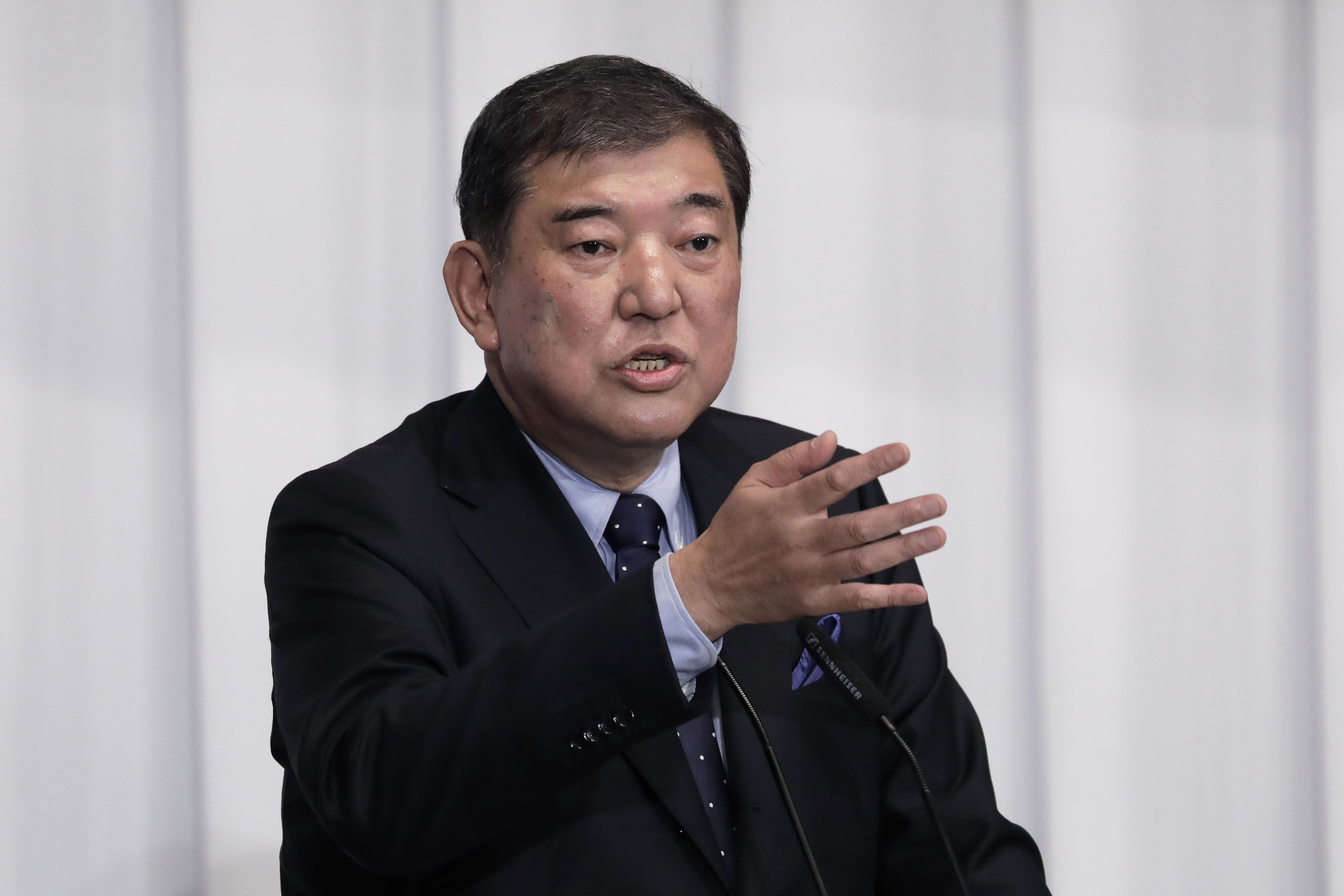
(Bloomberg) — Japanese Prime Minister Shinzo Abe’s surprise decision to resign last week has vaulted his long-time aide, Yoshihide Suga, to the top of a narrow list of contenders to succeed him.
The chief cabinet secretary must first overcome a small group of party stalwarts in what’s expected to be a mid-September vote for control of the Liberal Democratic Party. The ruling party’s power structures mean he likely won’t have to face a strong female candidate — since none have support from its controlling factions — while some up-and-coming politicians such as Environment Minister Shinjiro Koizumi, 39, are seen as too junior.
The winner doesn’t have to face the voters until the end of next year, the legal deadline for holding a new general election.
Here’s a look at the most likely candidates to lead the LDP:
Yoshihide Suga, 71, chief cabinet secretary
Having served as Abe’s right-hand man since 2012, Suga would be the most seamless successor in terms of economic policy. He’s been seen as a skilled back room manager throughout Abe’s run as the country’s longest-serving premier, helping him win six straight national elections.
Local media said he planned to announce his bid on Wednesday, after a party decision Tuesday to set out the election process.
Three of the major factions that dominate the LDP have already reportedly signaled their intention to back him. Suga’s chances could increase further if the party limits the leadership vote mostly to sitting lawmakers, since he’s viewed as less popular among the LDP’s general membership.
Suga hasn’t laid out a policy platform, but he has frequently emphasized the importance of reviving the pandemic-hit economy.
He’s also shown an occasional willingness to play to the public by calling for cheaper mobile phone rates and helping exempt food from the 2019 sales tax increase.
He has largely echoed Abe’s foreign policy views, although he has so far avoided hawkish moves that might alarm neighbors China and South Korea, such as visiting the controversial Yasukuni war shrine.
Shigeru Ishiba, 63, former defense minister
Public opinion polls consistently show Shigeru Ishiba, who has served stints as minister of defense and regional revitalization, as voters’ preferred choice to succeed Abe.
An election that puts the leadership question to the LPD’s rank-and-file membership would likely favor him.
Ishiba has backed economic policies seen as more populist than Abe’s. He has called for reinvigorating domestic demand, particularly in the regions to spur growth rather than relying on foreign trade. He has cast doubt on the sustainability of the Bank of Japan’s monetary policy and if chosen could further play down the importance of the bank’s 2% inflation goal.
On the international front, Ishiba has shown a conciliatory attitude toward China.
In July, he urged an LDP group to think about the consequences of its call for the cancellation of a planned state visit to Tokyo by President Xi Jinping. Ishiba has similarly expressed caution about Abe’s unfinished quest to change the country’s pacifist constitution to clarify the military’s legal standing.
Taro Kono, 57, defense minister
Current Defense Minister Taro Kono had been seen as a potential contender, but is likely to hold off after the faction to which he belongs has moved to back Suga, news network FNN said.
A former foreign minister who speaks fluent English and is a graduate from Georgetown University in the U. S., Kono has attracted attention for his light-hearted Twitter accounts in both languages.
In recent months, Kono has signaled a relatively hawkish approach to China, telling the Nikkei newspaper that Japan was interested in working closely with the U. S-led “Five Eyes” intelligence alliance.
He is also reported to have considered conducting an aerial inspection of East China Sea islands claimed by China, a move that could anger Japan’s largest trading partner.
Dropping his bid this time could leave the door open for Kono to run in the next party leadership election, which will need to be held by September next year.
Fumio Kishida, 63, former foreign minister
Fumio Kishida is among the few party members previously identified by Abe as a potential successor.
But the mild-mannered former banker has so far failed to build a public profile, despite appointments as foreign minister and then a senior party post.
In 2015, Kishida sealed a landmark deal with South Korea that was meant to end a dispute over women trafficked in brothels run by the Japanese military during World War II. That agreement fell apart after the election of South Korean President Moon Jae-in, who argued that the two governments didn’t sufficiently consult the victims.
In an interview with broadcaster TV Tokyo on Monday, Kishida said he expected interest rates to remain low, given the state of the economy.
He called for plentiful spending to combat the economic crisis, but urged caution on the idea of cutting the sales tax. In a book to be published mid-September, he flags the issue of widening income inequality and calls for changes to taxation on capital gains and more support for small companies.
Seiko Noda, 59, former internal affairs minister
Former Internal Affairs Minister Seiko Noda is expected to make a run for the LDP leadership post, even though she may struggle to muster the necessary 20 votes to get on the ballot.
She failed to meet that threshold two years ago, when she challenged Abe’s bid to secure an unprecedented third term.
Noda expressed concern about the shrinking number of women appointed to the most senior positions in Japanese politics, after she was removed from the cabinet. Despite a promise to fix Japan’s big gender imbalances, only two of the 20 ministers appointed in Abe’s cabinet reshuffle last year were women.
Noda has blamed the lack of women in political power for Japan’s struggle in tackling demographic problems like its falling birthrate and aging population.
She has pledged to champion diversity and put less emphasis on economic growth.
(Updates with details on Suga and Kono.)
For more articles like this, please visit us at bloomberg.com
©2020 Bloomberg L. P.