
(Bloomberg) — Chancellor Angela Merkel’s party will keep Germany on a centrist course regardless of which wing wins the leadership race in December, a close ally of hers said in an interview.
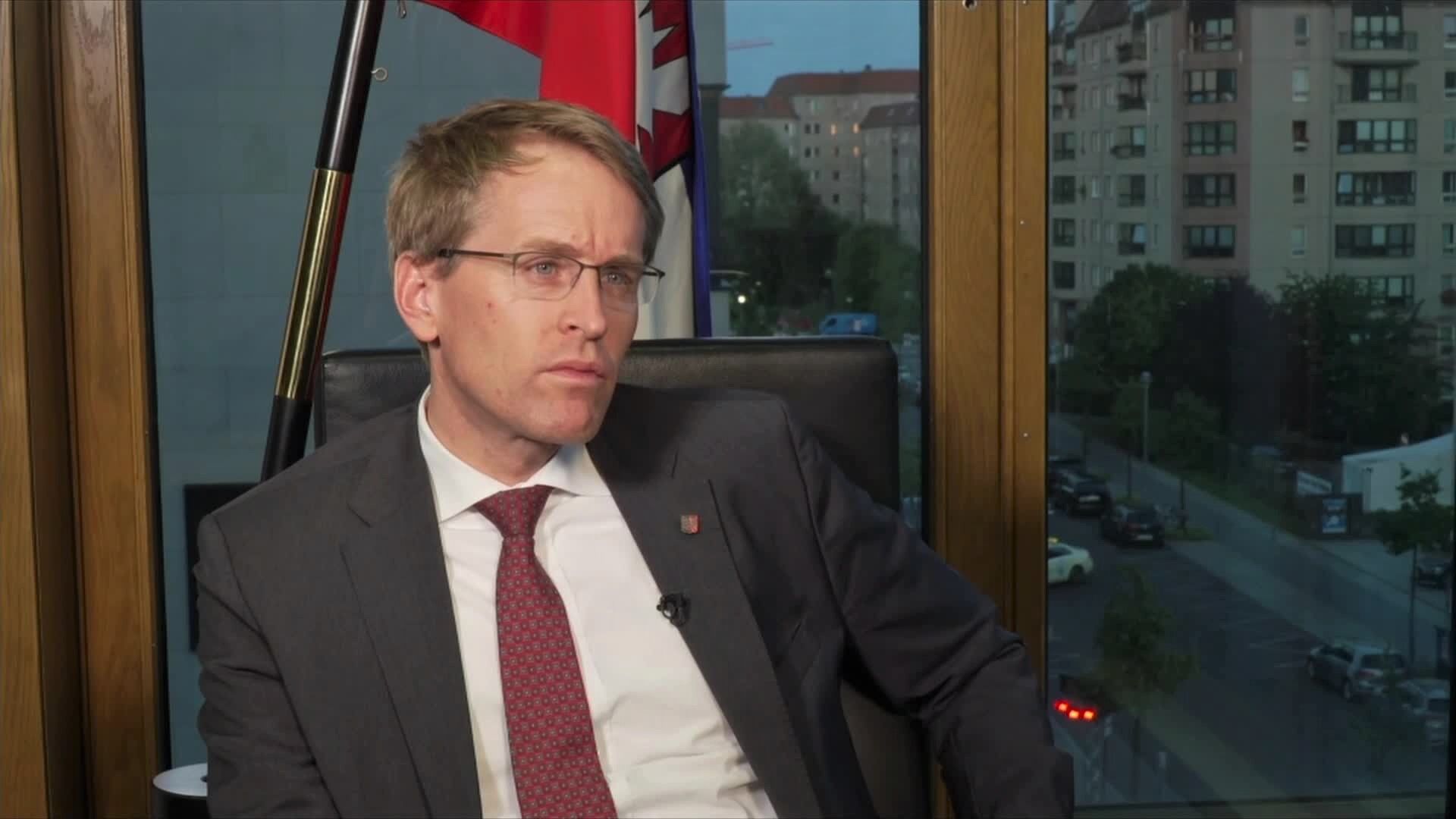
“Thanks to Angela Merkel’s compass, the CDU is so firmly rooted in the middle that I have absolutely no doubt that even when she no longer holds office, the CDU will continue on its course,” Daniel Guenther, premier of the northern state of Schleswig-Holstein and a rising star in Merkel’s Christian Democratic Union, told Bloomberg News in Berlin.
While Europe’s largest nation is focused on rebooting its economy after the coronavirus pandemic triggered the worst recession in recent memory, the race to succeed Merkel in national elections a year from now is well under way.
And with it comes the growing sensation at home and abroad that she will leave a big void after more than a decade and a half in office.
A month after the Social Democrats, the junior partner in Merkel’s coalition, put forward Finance Minister Olaf Scholz as their candidate, the CDU earlier this week set its convention to elect a new leader for Dec. 4 in Stuttgart. The front-runners are North Rhine-Westphalia Premier Armin Laschet for the moderates and former caucus leader and Merkel nemesis, Friedrich Merz for the conservative wing of the party.
Whoever garners that job would normally take a pole position to succeed Merkel, as the CDU remains Germany’s strongest party.
But Markus Soeder, head of the CDU’s smaller Bavarian sister party, the Christian Social Union, is also billed as a strong contender, despite denying interest in the country’s top job. After their respective party conventions, the CDU and CSU are expected to decide early next year on a common candidate.
While Guenther favors Laschet and the CDU should make its weight as the larger party count in that process, the possibility of a Soeder candidacy can’t be ruled out, Guenther said.
“I would never say it’s unthinkable, I certainly think we could agree on a CSU candidate,” said the 47-year old trained political scientist.
Soeder has done a good job as premier, added weight to the CSU and improved relations between both parties, Guenther added.
Poll
According to a recent Kantar opinion survey, only 6% of Germans consider Laschet a viable chancellor, well behind Soeder with 31% and Merz with 13%.
While Merkel has vowed not to intervene directly in the decision to replace her, she did make highly symbolic visits to Soeder and Laschet in their home states this summer, praising each of them and giving the media plenty of photo opportunities.
Outgoing CDU chairwoman Annegret Kramp-Karrenbauer, who is also defense minister, prompted the leadership battle in February when she threw in the towel to chair her party following a series of missteps and near-rebellions on her watch.
Germany’s increased standing on the European and global stage was in part due to Merkel’s skill as a negotiator, but her departure won’t mean a shift in the country’s foreign policy.
“If there is a breath of fresh air from a new chancellor, no one has to worry, at least as long as the federal government remains in the hands of the union parties.”
And the chances that Merkel could change her mind and run for a fifth term are non-existent, said Guenther.
“The way I know her, she is very consistent in that.”
For more articles like this, please visit us at bloomberg.com
©2020 Bloomberg L.
P.