
(Bloomberg) — Boris Johnson will announce new restrictions on bars and restaurants and appeal to Britons for their support as he seeks to halt a surge in coronavirus cases that threatens the U. K.’s fragile economic recovery.
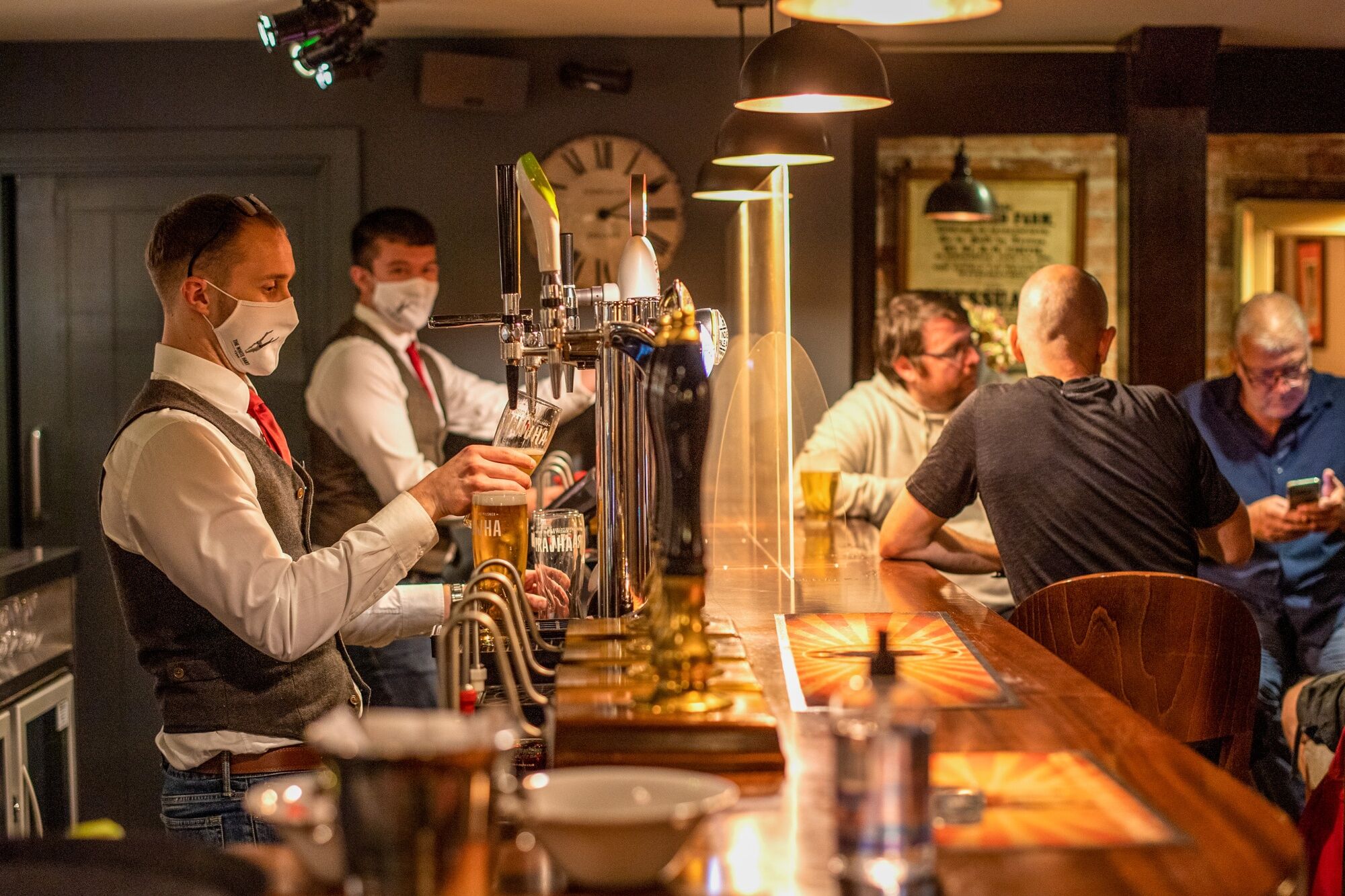
Hospitality venues across England will have to close by 10 p.m. from Thursday and will be limited to table service only as ministers clamp down on socializing, the prime minister’s office said.
Johnson will consult with senior officials and the leaders of Scotland, Northern Ireland and Wales at a meeting of the so-called Cobra emergency committee Tuesday morning before briefing Parliament on further curbs.
He will then make a broadcast to the nation at 8 p.m.
“No-one underestimates the challenges the new measures will pose to many individuals and businesses,” Johnson’s office said in the email. “We know this won’t be easy, but we must take further action to control the resurgence in cases of the virus.”
Ministers are trying to strike a balance between controlling the pandemic and avoiding a full lockdown that risks snuffing out the U.
K. economy’s recovery from the deepest recession for more than 100 years. Chief Scientific Adviser Patrick Vallance warned Monday that the current infection rate, at which the number of cases is doubling every week, could lead to 50,000 new cases a day by mid-October without urgent action.
‘Probably Exponentially’
Figures released Monday showed 1,261 people in England hospitalized with Covid-19, up from 782 a week earlier, with 154 of them on ventilators, up from 88.
The chief medical officers for the four U. K. nations recommended the coronavirus alert status should rise one notch to Level 4, meaning cases are “now rising rapidly and probably exponentially.”
Senior officials have repeatedly warned interventions would be needed if infections rose, and Health Secretary Matt Hancock said Johnson will set out “necessary” steps to control the spread of the disease. “We can either take measures now or we will end up with a much bigger problem, still having to take measures later,” he told lawmakers Monday.
The advice for workers to head back into the office will be reversed in favor of working from home where possible, the Daily Telegraph reported, citing unidentified government officials, while The Times said attendance at weddings may be cut to 15 guests from 30.
Johnson, already facing criticism over failures in the U.
K.’s testing system and confused messaging over measures to stop the spread of the disease, came under renewed fire from members of his own party who want restrictions lifted to allow the economy to recover. They accused ministers of stifling debate about their plans in the House of Commons.
Pauline Latham, a Tory MP, asked Hancock to “explain to the prime minister that we actually live in a democracy not a dictatorship,” while Graham Brady, another member of Johnson’s party, warned that “political judgments are improved by debate and scrutiny.”
Hancock promised there would be a debate in Parliament and said the speed at which decisions have to be made during the pandemic means it isn’t always possible to consult lawmakers beforehand.
‘Slow the Spread’
London Mayor Sadiq Khan called for further restrictions in the capital and said the failure of the government’s test-and-trace system has resulted in a lack of information about the spread of the disease that makes action inevitable.
“Without adequate testing or contact tracing in London we have no choice but to look at other measures to slow the spread of the virus,” he said in a statement. “Taking firm action now to prevent a deeper and longer lockdown in the future is without a doubt the best thing to both save lives, and protect jobs and our economic recovery.”
Khan’s comments reflect concern that a wave of large-scale restrictions could stifle the U.
K.’s recovery and worsen a spike in unemployment later this year.
The rebound, which has so far been quicker than officials expected, has been helped by resurgent consumer spending, which would be imperiled by widespread closures of pubs and restaurants. JPMorgan Chase estimated a two-week shutdown of the U. K. hospitality sector could knock at least 2% off the nation’s gross domestic product.
While the economic hit would likely be less severe than the previous lockdown, major restrictions would also add to the argument for more action from the Bank of England, which said last week that a resurgence in the virus is likely to slow the U.
K.’s rebound. Officials’ current projections, which see the economy recovering pre-crisis levels next year, are based on an easing of virus uncertainty and avoiding a nationwide lockdown.
For more articles like this, please visit us at bloomberg.com
©2020 Bloomberg L. P.