
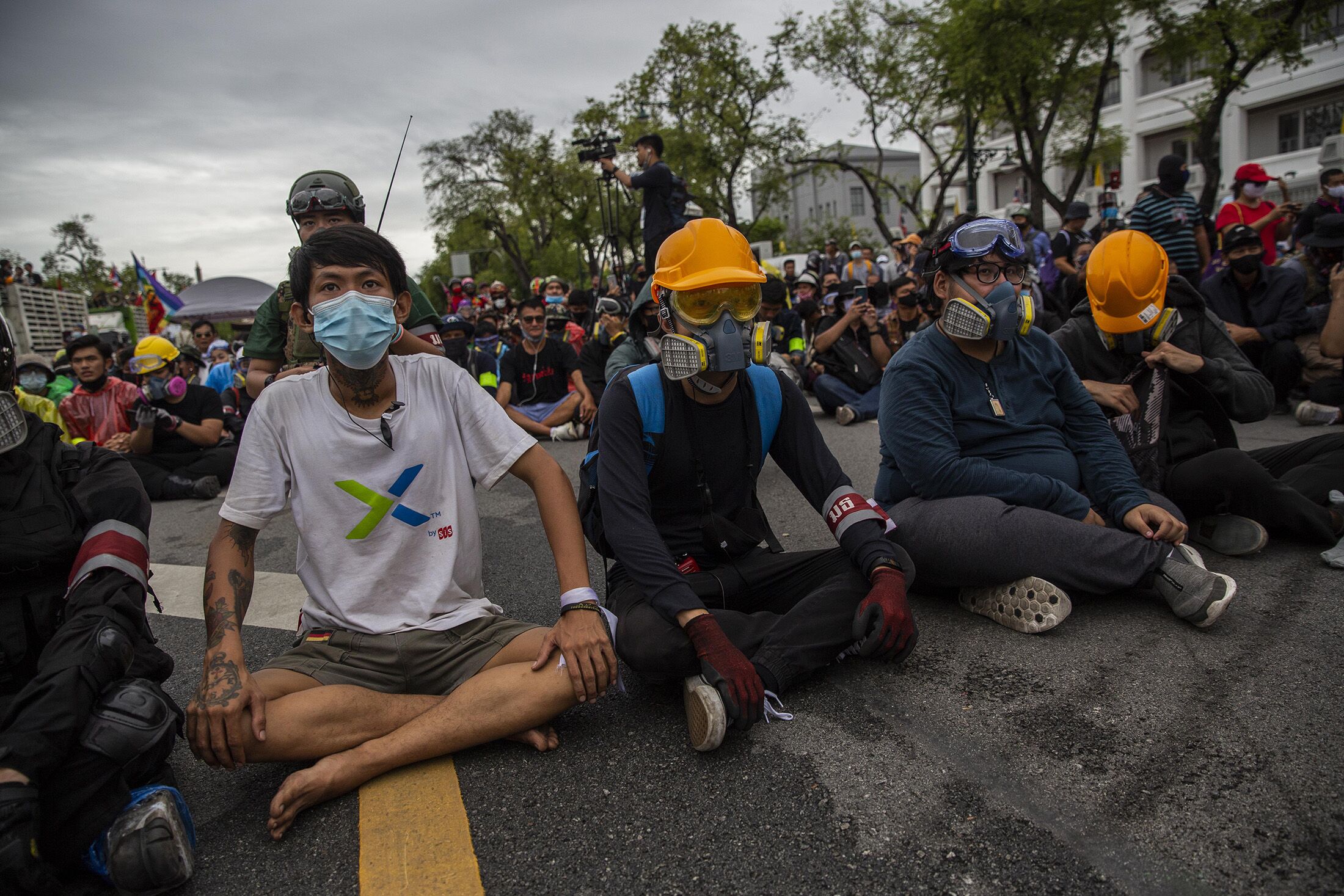
(Bloomberg) — Thai protesters hit the streets again as lawmakers debated a pathway to amend the constitution, a move aimed at placating demonstrators calling for more democracy and reform of the monarchy.
Both houses of the parliament is set to decide later on Thursday on various proposals to set up a committee that will propose changes to the constitution written by a military-appointed panel after a 2014 coup.
About 50,000 demonstrators gathered over the weekend to push for changes that include reining in the power of King Maha Vajiralongkorn.
Protesters also want a range of changes that include scrapping the military-appointed Senate, which played a key role in the return of coup leader Prayuth Chan-Ocha as prime minister after the election last year.
Hundreds of demonstrators gathered in front of the parliament on Thursday and placed a giant white ribbon, a symbol of the movement, on the parliament gate.
They’re mounting pressure on the parliament in the final hours of debate before a possible vote, while lawmakers are still trying to convince Senators to back the move.
“If the parliament votes to the direction to rewrite the charter, this will ease pressure,” said Maria Lapiz, head of research at Maybank Kim Eng Securities Thailand Pcl. “The protest group will then re-focus toward ensuring that all or part of its agenda is somehow incorporated.”
The process of rewriting a constitution, which may take about a year and involve a referendum, will ultimately require the king’s endorsement.
The current military-backed constitution, Thailand’s 20th since absolute monarchy ended in 1932, made it easy for Prayuth and his allies to keep power after an election last year that ended five years of rule by a military junta.
Fueling Protest
The king hasn’t publicly addressed the protests, and Prayuth called for patience on charter amendment Wednesday, saying he was happy that the country was peaceful, allowing the government to “continue our work, especially on the economy.”
While Prayuth’s army-backed coalition has also proposed a pathway to amending the charter, it’s unlikely to support any changes that impact its efforts to retain power, said Punchada Sirivunnabood, an associate professor of politics at Mahidol University near Bangkok.
That could end up fueling the protest movement in the coming months, she said.
The growing protest movement adds to challenge for Prayuth’s year-old administration, which is trying to revive Thailand’s trade- and tourism-reliant economy with foreign investors fleeing from its stocks and bonds.
Seeking Resignation
The demonstrations have escalated since they began in July, with leaders busting long-held taboos in Thailand about publicly criticizing the monarchy.
The group United Front of Thammasat and Demonstration has called on Prayuth to resign and issued a 10-point demand to reform the monarchy, including revoking strict laws criminalizing insults against top members of the royal family.
The Thammasat group has also called for a general strike on Oct. 14. They urged supporters to show solidarity by not standing during the royal anthem and have called for a boycott of Siam Commercial Bank Pcl, in which the king is the biggest shareholder.
“As for the rallies, they will proceed,” Paul Chambers, lecturer at Naresuan University’s Center of Asean Community Studies in northern Thailand. “The bottom line: opponents of the regime need more cohesion if they are going to effectively pressure conservative forces to make real change.”
(Recasts with protesters staging rally and lawmakers’ debate.)
For more articles like this, please visit us at bloomberg.com
©2020 Bloomberg L.
P.