
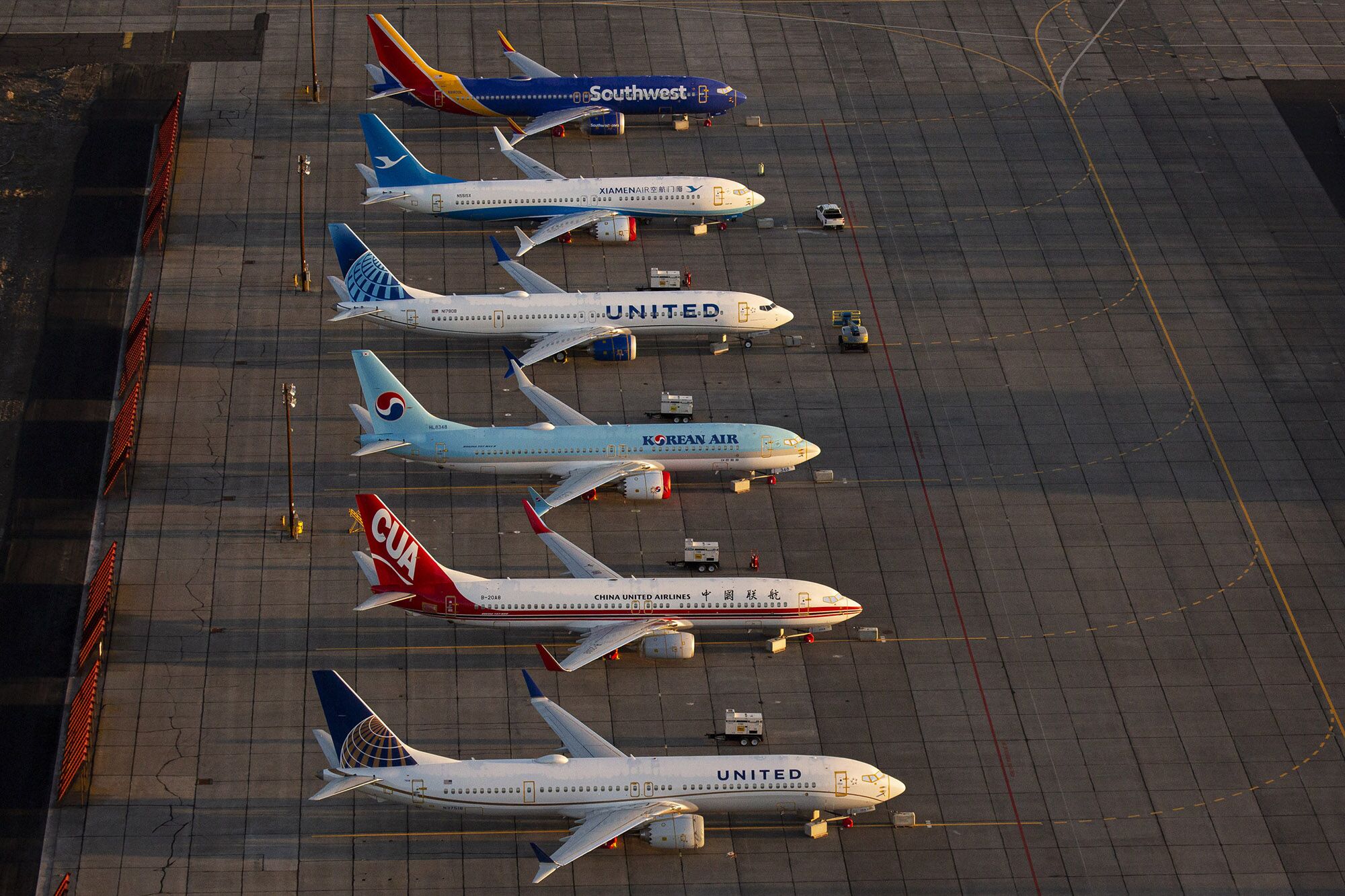
(Bloomberg) — European regulators said they expect to complete their evaluation of the grounded Boeing Co. 737 Max by November, in a boost to the U. S. planemaker’s push to return the jet to the skies by year-end.
Test flights and a separate round of simulator sessions conducted this month went well, Patrick Ky, executive director of European Union Aviation Safety Agency, told French reporters on Friday.
Boeing has agreed to install a synthetic sensor on the next version of the plane, called the 737 Max 10, according to Ky, whose comments were confirmed in an email from EASA.
The move resolves a key concern of EASA that went beyond fixes that the U. S. Federal Aviation Administration had proposed.
Boeing has worked with regulators to get the 737 Max back in the air following the crashes that killed 346 people and led to a worldwide grounding of the jet in March 2019. While the FAA is the main certification body for the plane, gaining the buy-in of EASA is seen as a key milestone for its return outside the U.
S., after other global regulators signaled they would follow the European agency’s lead.
The FAA has proposed multiple changes to the aircraft before allowing it to carry passengers again. Among them, the system that was driving the jet’s nose down in both accidents would no longer activate repeatedly. Various steps were taken to minimize the chances it would malfunction.
The coming Max 10, a larger variant of the single-aisle jet, is still to be certified.
The FAA completed test flights of the Max during summer.
In August, it kicked off a review period that could potentially lead to a U. S. sign-off on the plane’s safety by October at the earliest.
After some scheduling delays related to coronavirus travel restrictions, EASA conducted flight tests this month working through Canada. Simulator sessions that subsequently took place with the Joint Operations Evaluation Board, overseen by regulators from Canada, Europe, Brazil and the U.
S., will set out the training requirements for pilots.
With airlines having to retrain pilots and perform maintenance on the grounded fleet, it will take a few weeks at a minimum before the planes begin carrying passengers.
For more articles like this, please visit us at bloomberg.com
©2020 Bloomberg L. P.