
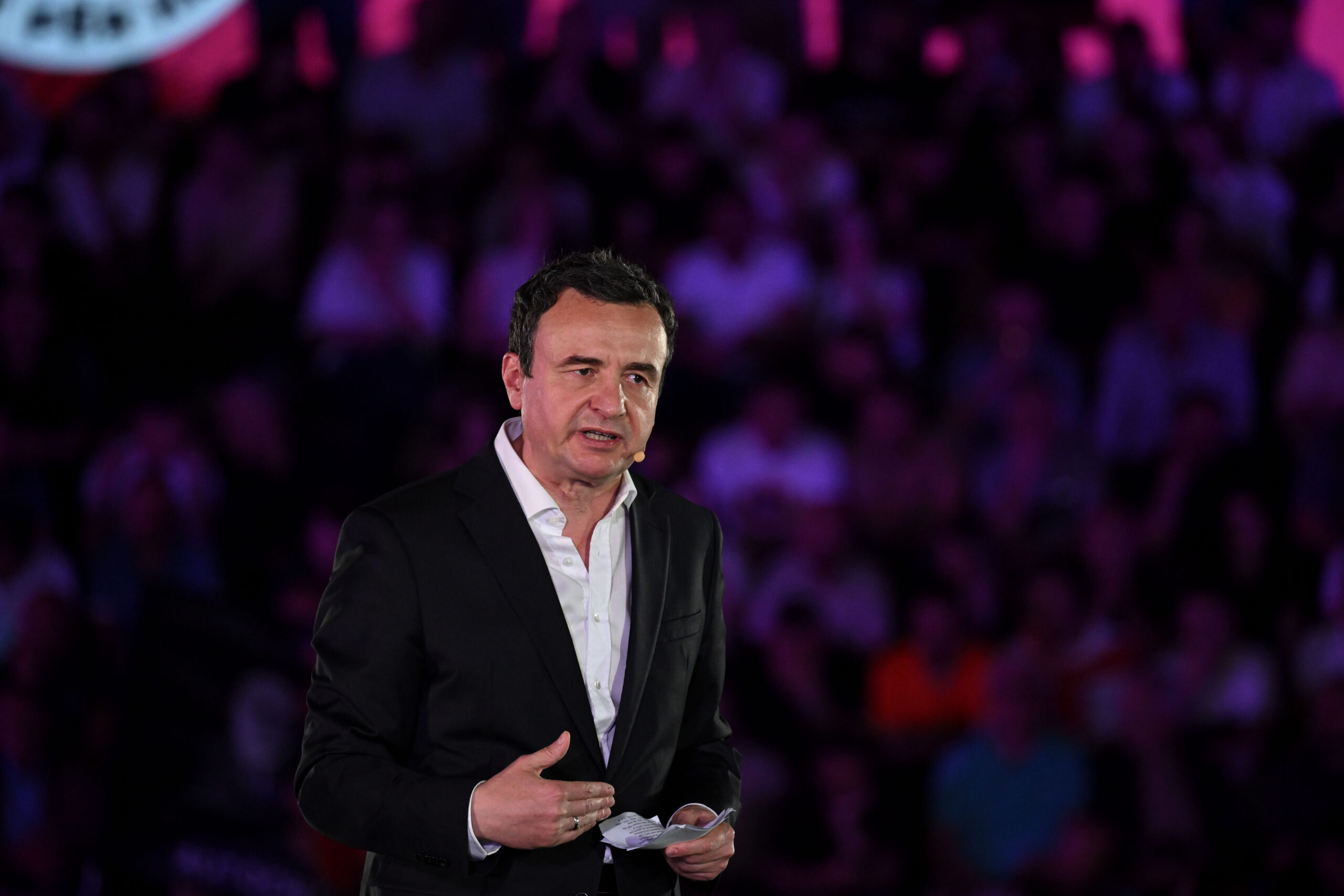
Kosovo PM’s party leads election
Kosovo Prime Minister Albin Kurti’s party took the lead in a snap election Sunday marked by low turnout, winning most of the votes but not enough to govern alone, exit polls showed. In Kosovo’s third election in just over a year, Kurti’s Vetevendosje party won slightly more than 40 percent of the votes, according to exit polls by three main Kosovo media. It was more than 10 percentage points less than the party won in the previous election, in December.
The result will not allow the party to form the next government on its own, suggesting difficult coalition talks ahead. The opposition Democratic Party of Kosovo (PDK) and the Democratic League of Kosovo (LDK) garnered slightly above and below 20 percent of the votes respectively, exit polls showed. Sunday’s vote was held as voter frustration mounts at grinding political gridlock in Europe’s youngest country.
It came after a polarised parliament failed to elect a president in April, deepening a political crisis that has gripped the country since inconclusive parliamentary elections in February 2025.”Enough is enough,” retired teacher Gezim Selimi told AFP after casting his vote in the capital Pristina.”I expect parties to finally come to their senses and work for Kosovo, instead of wasting time fighting for power through one snap election after another.”Despite topping the polls in the February 2025 vote, Kurti’s party fell short of the majority needed to form a government, triggering months of bitter division among MPs and eventually forcing a snap election in December.
Vetevendosje party — which blends a leftist agenda with fervent nationalism — again topped the vote, and joined with ethnic minority MPs to form a government. But an opposition boycott of the vote to replace the outgoing president eventually sank the parliament.”I don’t think I will vote. It’s frustrating to see that the election will yield the same result,” computer programmer Miranda Fazliu told AFP ahead of the election, echoing the view of many voters.- Low turnout -Kurti on Sunday called on citizens to turn out in large numbers.”Higher turnout will turn into higher legitimacy and stability for institutions of our republic,” he said after casting his ballot in Pristina.
Turnout was nearly 37 percent, official figures showed. In the December vote, it was around eight percentage points higher. Experts say lawmakers’ inability to work across political divides means the latest vote is unlikely to solve anything. Political and economic researcher Ardi Uka said Kosovo had entered a cycle of elections.”The crisis will continue,” Uka said. Safet Gerxhaliu, a university lecturer, said the problem had become “systemic” and was now “continuously sending people back to the polls”.”It is definitely the biggest crisis in Kosovo since the declaration of independence” from Serbia in 2008, he said.”The institutions are on the verge of collapse.”The rolling election cycles come amid a rise in living costs, which are felt acutely by voters in one of Europe’s poorest countries.”Life has become more expensive.
You can see that for a single visit to the shop,” said painter Faton Kryeziu, with a gallery full of work he is struggling to sell.”Sales are at zero today. It has never been harder for me.”- Election costs -The cost of Sunday’s vote was estimated at more than 10 million euros ($11.5 million), excluding campaign spending by political parties. The total cost of elections has increased fivefold when two national and two local elections held in 2025 are added.”Political parties have shown a lot of immaturity as we are not a wealthy enough country to hold two elections every year and the money spent on them would be better used for development,” said retired judge Virgjina Dumnica.
Local doctor Nexhmedin Osmani agreed that the cost was particularly frustrating for a country that still sees many of its youth move abroad in hopes of finding a job.”That worries me. We will be left with only old people.”Preliminary official results are due late Sunday.
Sun, 07 Jun 2026 18:36:31 GMT