
Five key dates in the Turkey-PKK conflict
Turkish lawmakers on Monday voted through a bill offering a limited amnesty for Kurdish PKK militants, in a first legislative step towards ending the decades-long Kurdish conflict. The move came 18 months after a historic call by jailed PKK founder Abdullah Ocalan, in which he urged his militants to lay down their arms and embrace democratic means to defend the rights of Turkey’s Kurdish minority. Here are five key dates in the history of Ocalan and his Kurdistan Workers’ Party (PKK), whose violent struggle for a Kurdish homeland sparked a conflict that left around 50,000 dead.- 1978-1984: PKK formed, armed struggle beginsWith Marxist-Leninist roots, the PKK was formed in 1978 by Ankara University students with the ultimate goal of achieving the Kurds’ liberation through armed struggle.
They chose Ocalan, a political science student, as leader. A Turkish military coup in 1980 forced the PKK and its leader to flee to Syria and Lebanon. The group then began its armed struggle in 1984, with its militants training in Lebanon’s Beqaa Valley, east of Beirut, while attacking Turkish military posts and convoys. Turkey hit back, sparking a wave of violence, notably in the Kurdish-majority southeast, that left the region in a state of near-civil war.- 1999: Ocalan’s arrest – Ocalan was forced to leave Syria in 1998 after Ankara threatened Damascus over its backing for the PKK, with the militant leader fleeing between several European states. He was eventually arrested in Kenya on February 15, 1999, flown back to Turkey and sentenced to death. There he was placed in solitary confinement on the prison island of Imrali, off the coast of Istanbul. In 2002, his sentence was commuted to life imprisonment when Turkey started the process of abolishing the death penalty as part of reforms backed by the European Union. – 2013-2015: Fragile truce – Ocalan urged the PKK to lay down their arms in a letter on March 21, 2013, the Kurdish New Year, as part of talks with the government of then-prime minister Recep Tayyip Erdogan, who is now president.
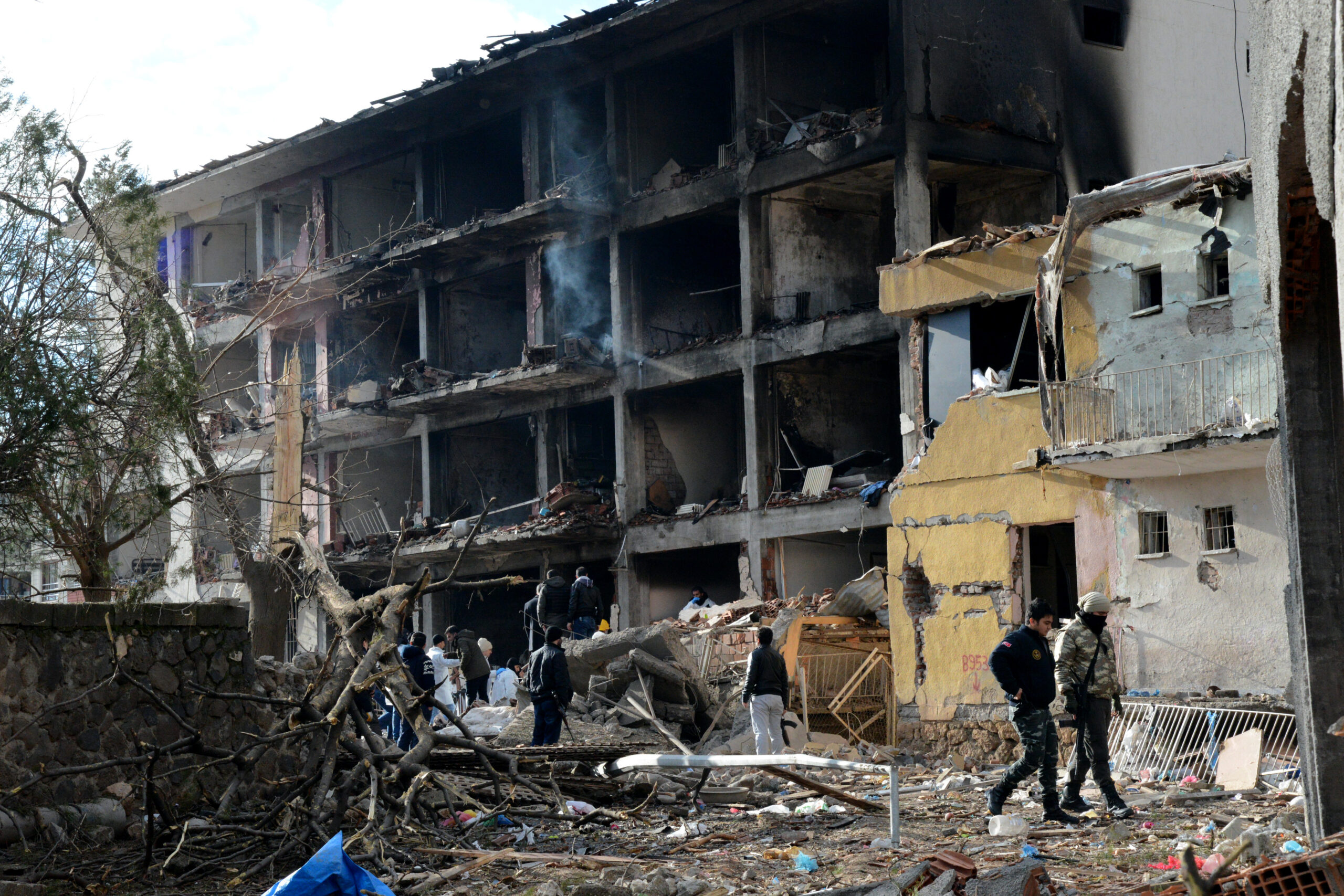
Turkey’s National Intelligence Organisation (MIT) also held talks with the PKK in Oslo. But the truce collapsed in July 2015 after a deadly bomb attack in Suruc, a town near the Syrian border. – 2015-2016: Clashes in southeast – Turkey bombed PKK targets in Iraq and led a vast military offensive at home. The PKK hit back with “urban warfare”. There were fierce daily battles in the southeast, including in the city of Diyarbakir, which has left a bitter legacy among the local population. Ties deteriorated after a failed 2016 coup, with a government crackdown on Kurdish political activities and the arrest of Kurdish politicians. Turkey also deployed troops in northern Syria to protect its frontier. – 2025: PKK ends armed struggle – After a decade of status quo marked by occasional attacks, a hardline ally of Erdogan extended Ocalan an olive branch, urging him to renounce violence in a move backed by the Turkish leader. Indirect talks facilitated by the pro-Kurdish DEM party began, and on February 27, Ocalan called on his fighters to disband and lay down their weapons. On May 12, the PKK announced its dissolution and two months later, several dozen of its leaders joined a symbolic ceremony in the mountains of northern Iraq at which they began destroying their weapons.
Mon, 10 Aug 2026 19:48:02 GMT