
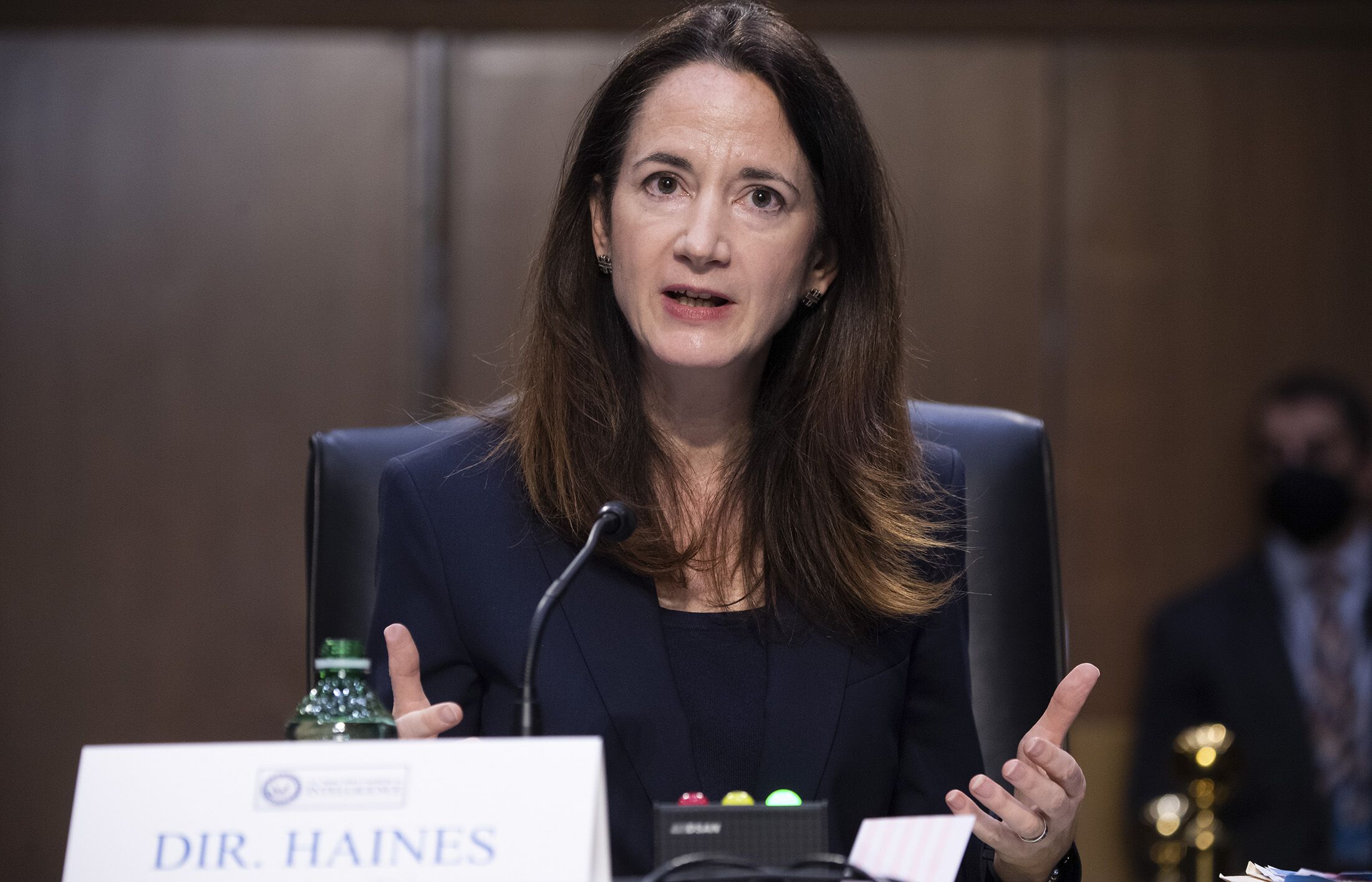
(Bloomberg) — Top lawmakers on the Senate Intelligence Committee issued warnings about China’s rise, Russian hacking and Joe Biden’s plans to withdraw forces from Afghanistan by Sept. 11 as the president’s top spy chiefs testified publicly for the first time in more than two years.
Director of National Intelligence Avril Haines, CIA Director William Burns and the heads of the Defense Intelligence Agency and FBI are speaking to the panel on Thursday.
In her opening remarks, Haines called China an “unparalleled priority for the Intelligence Community.”
That echoed remarks from Virginia Senator Mark Warner, the committee’s chairman, who said China’s Communist Party is increasingly focused on displacing American dominance in technology and its influence in Asia, as Beijing seeks to exert greater influence in places like the South China Sea.
“As China grows in power and stature, the CCP has sought to undercut the U.
S. as the world’s leading technological power,” Warner, a Democrat, said in his opening statement. He cited China’s “reliance on both strategic investments and traditional espionage to acquire intellectual property” and “their modernization of traditional and asymmetric military capabilities, including in the cyber and space domains.”
Florida Senator Marco Rubio, the top Republican on the Senate panel, said the majority of America’s threats boil down to five areas: China, Russia, Iran, North Korea and global terrorism.
Biden Sets Sept. 11 Target to Pull Forces From Afghanistan (3)
But Rubio and Warner also flagged their interest in discussing President Biden’s plans to withdraw from Afghanistan by Sept. 11, the 20th anniversary of the terror attacks that led to the U.
S. invasion. Rubio warned that the U. S. departure could lead to the Taliban regaining control of the country and al-Qaeda reestablishing a base there.
“No one can deny it’s going to have serious security implications for our country for years to come,” Rubio said in his opening statement. “If they do I think it’s almost certain that al-Qaeda will return to Afghanistan.”
In an unclassified report released Tuesday, officials led by Haines describe an array of potential threats to American interests in the coming year, from hackers being able to disrupt critical services to domestic terrorist attacks and potentially severe economic fallout from the global coronavirus pandemic.
The testimony provides public insight into the daily classified briefings they are giving Biden as his administration shapes its still-developing strategy on threats from China, Russia, Iran and North Korea.
The officials will also appear Thursday before the House Intelligence Committee.
The two days of hearings mark the first time in two years that the nation’s spy chiefs have testified together publicly, reviving a tradition of annual public presentations. That practice lapsed last year after former President Donald Trump dismissed his own intelligence team as “extremely passive and naive” for findings in 2019 that didn’t fit his views on Iran and North Korea.
Cyberwar, How Nations Attack Without Bullets or Bombs: QuickTake
The 27-page report released in advance of the hearings reflected Biden’s pledge that his intelligence officials will give independent assessments.
In one such example, the report offered a grim prognosis for the war in Afghanistan only hours before administration officials revealed that Biden has decided to remove American forces this year.
The intelligence officials said they “assess that prospects for a peace deal will remain low during the next year. The Taliban is likely to make gains on the battlefield, and the Afghan Government will struggle to hold the Taliban at bay if the coalition withdraws support.”
More broadly, the report warned that “the effects of the COVID-19 pandemic will continue to strain governments and societies, fueling humanitarian and economic crises, political unrest, and geopolitical competition as countries, such as China and Russia, seek advantage through such avenues as ‘vaccine diplomacy.’”
In findings related to world flash points, the intelligence agencies say that “Iran is not currently undertaking the key nuclear weapons-development activities that we judge would be necessary to produce a nuclear device.”
On cybersecurity, the report warns that the prospect of more “destructive and disruptive” hacking attacks is increasing as countries deploy more aggressive cyber operations, including those likely to affect civilian populations.
For more articles like this, please visit us at bloomberg.com
©2021 Bloomberg L.
P.