
(Bloomberg) — Armin Laschet salvaged his political career when he secured the nomination to lead Angela Merkel’s conservative bloc into September’s election. Now he faces a battle to cling on to the chancellery.
The 60-year-old leader of the Christian Democrats enters the campaign politically wounded. A bruising contest to head the conservative ticket exposed just how many people in his own party doubt his ability and exposed the deep divisions that Merkel’s authority had papered over.
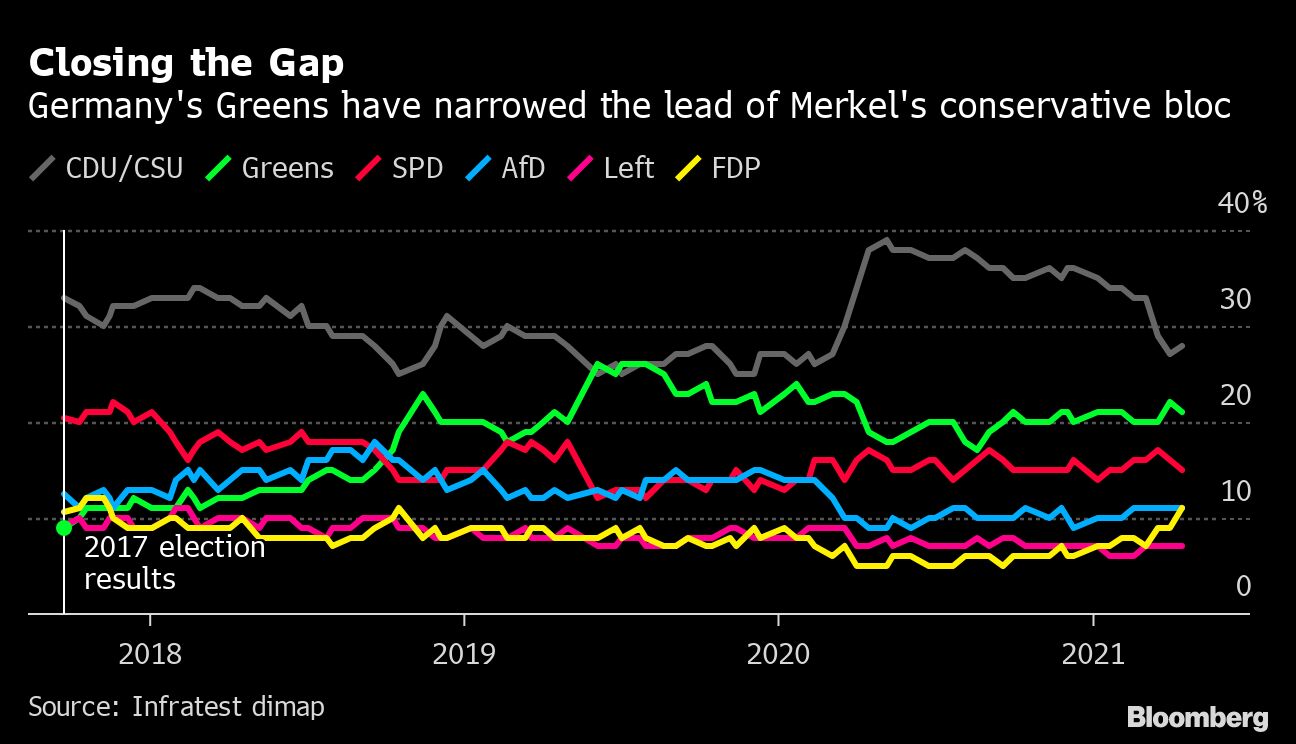
Merkel’s CDU and their smaller Bavarian sister party, the CSU, have seen their support slump in polls over recent weeks and Laschet’s hard-fought victory will add to the concerns that they could cede control of Europe’s economy to Annalena Baerbock’s Greens.
“The process of how we reached the decision leaves some question marks,” CSU caucus group leader Alexander Dobrindt said Tuesday. “This will have a number of after effects and lead to discussions.”
Laschet is still the favorite to become the next chancellor after finally ending the insurgent challenge of CSU leader Markus Soeder on Tuesday.
But in picking Laschet, the CDU is prioritizing party stability over Soeder’s greater electoral appeal, just as the Greens are narrowing its lead in the polls.
“Everybody knows what’s at stake,” Laschet said in Berlin. “We’re talking about an agenda-setting decision for Germany,” he said, adding that a left-leaning coalition led by the Greens would be “a different republic.”
In the late night brinkmanship that eventually settled the identity of the candidate, a CDU elder statesman and former finance minister, Wolfgang Schaeuble, had warned Laschet that if he failed to claim the nomination he’d risk losing not just his position as party leader, but also his job as state premier of North Rhine-Westphalia, the country’s most populous region.
That threat has been fended off, for now at least, but there’s no hiding the fact that many people in both the CSU and Laschet’s CDU made clear that they thought Soeder would have been the better candidate.
CSU General Secretary Markus Blume called him the “candidate of our hearts” as Soeder made his concession speech on Tuesday.
Those party skeptics doubt whether Laschet has the steel to lead the conservative bloc through potentially the toughest campaign in its history and Laschet did little to quell their worry when he congratulated Baerbock on her own nomination, and wished her a “happy election campaign.” More conservative members of the bloc fear that Laschet will give the Greens an easy ride during the campaign and also lose more right-wing voters to the nationalist Alternative for Germany.
There’s also concern about the deal he might have struck with Soeder to persuade him to step aside.
Soeder is well known for his power moves in Bavaria and CDU officials think that he’ll force their party to accept more proposals from and give more jobs to the CSU. Laschet denied on Tuesday that he’d made any commitments to Soeder to secure his backing.
The CDU and CSU “will lead this country into the future, and Markus Soeder will play a central role in that,” said Laschet. “I will continue to consult with him on a daily or weekly basis, or whenever is necessary, and these consultations are always driven by the desire to come to a unified result.”
Read More: Merkel’s Bloc May Not Survive Her Departure — Balance of Power
That Germany’s dominant party wound up in such a mess with just five months to go to polling day reflects its struggle to move past 66-year-old Merkel, who has governed for 16 years and dominated the CDU for a generation.
She has stayed out of the selection of her successor but congratulated Laschet on his candidacy.
An initial effort to hand over the reins to Merkel protege Annegret Kramp-Karrenbauer was undermined by a series of missteps and then the process of selecting a replacement was delayed by the pandemic. Laschet was elected in January and promptly suffered defeats in elections in former conservative strongholds.
That opened the door for Soeder, who fought tooth and nail to prevent his rival from settling the debate, potentially doing lasting damage to the bloc’s image.
For more articles like this, please visit us at bloomberg.com
©2021 Bloomberg L.
P.