
(Bloomberg) — The European Union is ready to engage in ad-hoc talks with the US to prevent its concerns over President Joe Biden’s stimulus package spiraling into a trade dispute, the bloc’s trade commissioner said.
Speaking on the sidelines of the International Monetary Fund meetings in Washington, European Commission Vice President Valdis Dombrovskis said the EU is concerned that several provisions in the recently passed Inflation Reduction Act discriminate against European companies.
Provisions related to tax credits for American-made electric vehicles are the thorniest issue, since many EU nations have set up subsidies and tax credits that have no requirements for local production.
“Bilaterally, we may consider some kind of ad-hoc work stream given the urgency and major implications of this issue,” Dombrovskis said at a media briefing. “We hope to resolve these issues before they become disputes.”
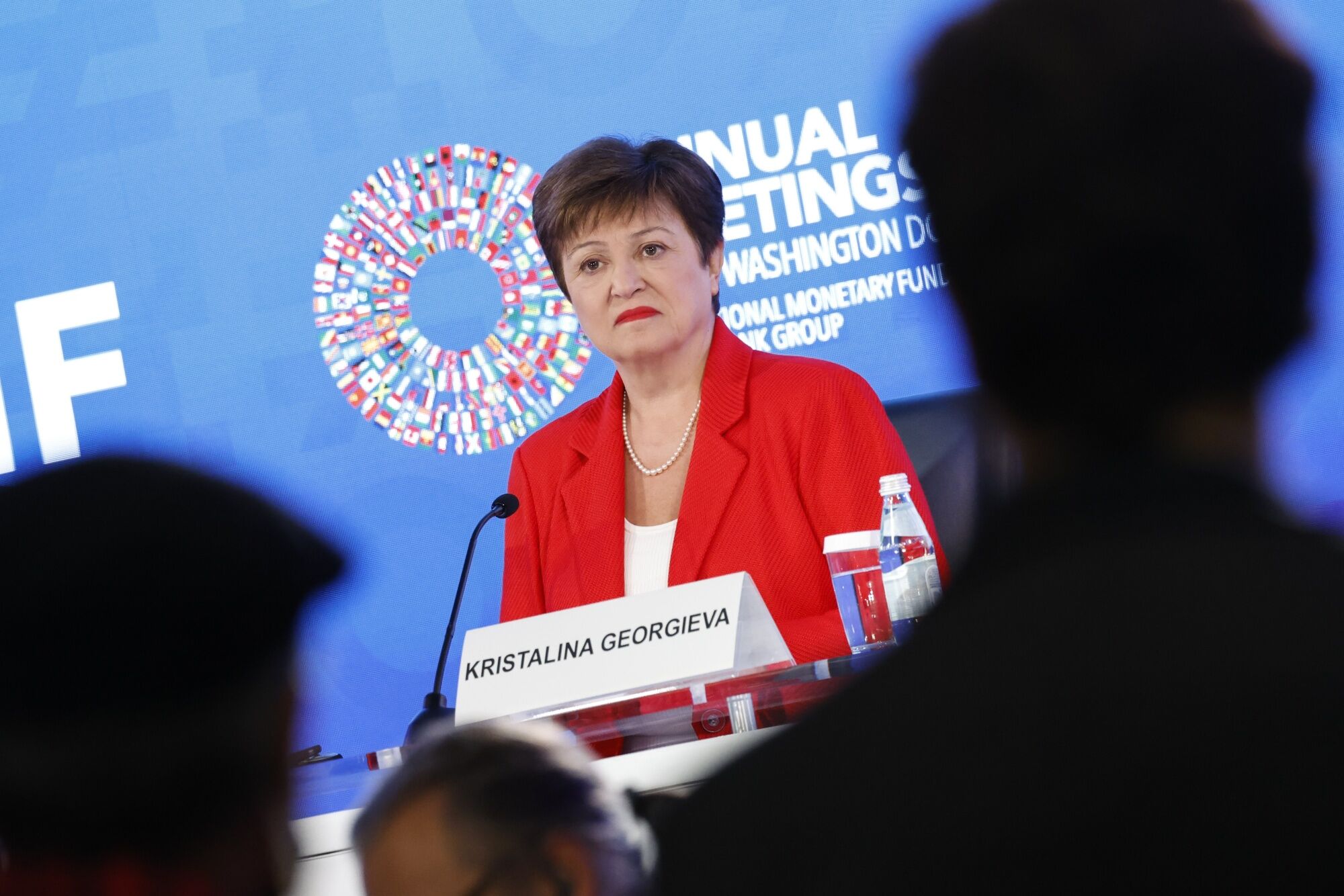
The IMF is holding its annual meetings this week, bringing global finance and central bank chiefs — along with their development and banking counterparts — to the US capital at a fragile moment for the global economy.
Among the key events taking place Thursday is the Group of 20 forum of nations comprising the world’s largest economies.
Even after the misery of this year — surging inflation, war in Ukraine, China’s slowdown — Bloomberg Economics expects next year could be even worse. The IMF on Tuesday cut its forecast for worldwide growth in 2023 and said that policies to tame high inflation may add risks to the global economy.
Even President Joe Biden said this week that the US, the world’s biggest economy, could suffer a “very slight” recession.
(All times Eastern)
ECB’s Nagel Pushes for Robust Interest-Rate Hike (10:14 a.m.)
The European Central Bank should enact another “robust” interest-rate increase at this month’s meeting to ensure price expectations don’t become unmoored, according to Governing Council member Joachim Nagel.
“Permanently higher inflation is the biggest growth decelerator and damper of prosperity,” Nagel said at a briefing in Washington that included German Finance Minister Christian Lindner.
He also said there’s “agreement” within the 25-member Governing Council that officials will next year tackle the issue of shrinking the trillions of euros of bonds the ECB accumulated during recent crises.
US Has to Focus on Curbing Inflation, Georgieva Says (9:35 a.m.)
The US central bank has to pursue its mandate of controlling inflation because not doing so would have spillover effects for the rest of the world, International Monetary Fund Managing Director Kristalina Georgieva said.
Both Treasury Secretary Janet Yellen and Federal Reserve Bank Chair Jerome Powell are mindful of the impact their policies may have on other nations’ economies, Georgieva told reporters in Washington Thursday.
“Think of the the scenario in which inflation in the United States doesn’t get under control for a long period of time — bad for the US, but it also has spillover impacts for the rest of the world,” she said.
Her comments came just as the US Labor Department released data showing the core consumer price index for September rose by more than forecast to a 40-year high of 6.6%. That pressures the Fed to keep raising interest rates aggressively.
The IMF is endorsing a strong focus on price pressures because the risk of higher inflation expectations becoming de-anchored has become more visible, Georgieva said.
“We cannot possibly allow inflation to become a runaway train — it’s bad for growth and bad for people,” she said. “Bad especially for poor people.”
Cutting Poor Nations’ Debt Under Discussion, World Bank Says (8:44 a.m.)
With debt for a growing number of countries becoming unsustainable, policymakers meeting in Washington this week are talking about finding ways to reduce those debt burdens, World Bank President David Malpass said.
Arranging help for low-income nations in debt distress through the institutions such as the International Monetary Fund “means that you’re under the gun,” Malpass said in an interview with Tom Keene on Bloomberg Television Thursday. “A better way to do it is to find a way to get to actual debt reduction so that you can you have light at the end of the tunnel, get out from under the debt,” he said, adding that this is “under discussion.”
More stories like this are available on bloomberg.com
©2022 Bloomberg L.
P.