
(Bloomberg) — China’s extreme border controls for the past three years have made getting into the country for foreigners nearly impossible, making US-based analyst Scott Kennedy’s recent trip there all the more remarkable.
His impression of China after a three-year absence is that society is dominated by intense Covid curbs, the economy is in a rough spot, and it’s nearly impossible to pin down Xi Jinping’s thinking as the Communist Party leader’s grip on the country tightens.
Visiting Beijing “felt more like Pyongyang” this time around than it did a more international city, said Kennedy, a senior adviser for Chinese business and economics at the Center for Strategic and International Studies, referring “half” in jest to the North Korean capital.
He spoke in an interview after his return to Washington, DC, following a month-long visit to Shanghai and Beijing, where he met with government officials, business executives, journalists and academics.
The interview has been edited and condensed for clarity:
Q: How difficult is it to get into China?
A: It’s extremely challenging. Not only do you need a sponsor for a visa, but you also need time and money, as the quarantine isn’t cheap and plane tickets are ridiculously expensive.
I originally left DC in early April to go to China but was stymied by the Shanghai lockdown.
My next flight in August was canceled due to Covid cases on previous flights of the same airline. So then I flew to Taiwan, waited there for six days and finally arrived in China to do 10 days of quarantine. It took 17 days from leaving Washington to stepping out onto the street in Beijing, which is quite different from the way it used to be.
Q: What’s changed since you were last here in December 2019?
Obviously, the level of social control is far higher.
You can’t be invisible and anonymous in China anymore, because you simply cannot physically move anywhere without being tested to get a green code on your phone, and then scanning your phone everywhere. That is a dominant part of people’s lives.
People in China may have become accustomed to this, but for those arriving from abroad, where the pandemic is over, it is quite jarring.
The second noticeable thing is the absence the utter absence of foreigners in China — so few people from multinational companies, no foreign tourists, and far fewer students than in the past.
I say, only half jokingly, that in 2019, I left a Beijing that was on its way toward being like London — and when I returned in September, it felt more like Pyongyang.
Q: What are your expectations for the economy?
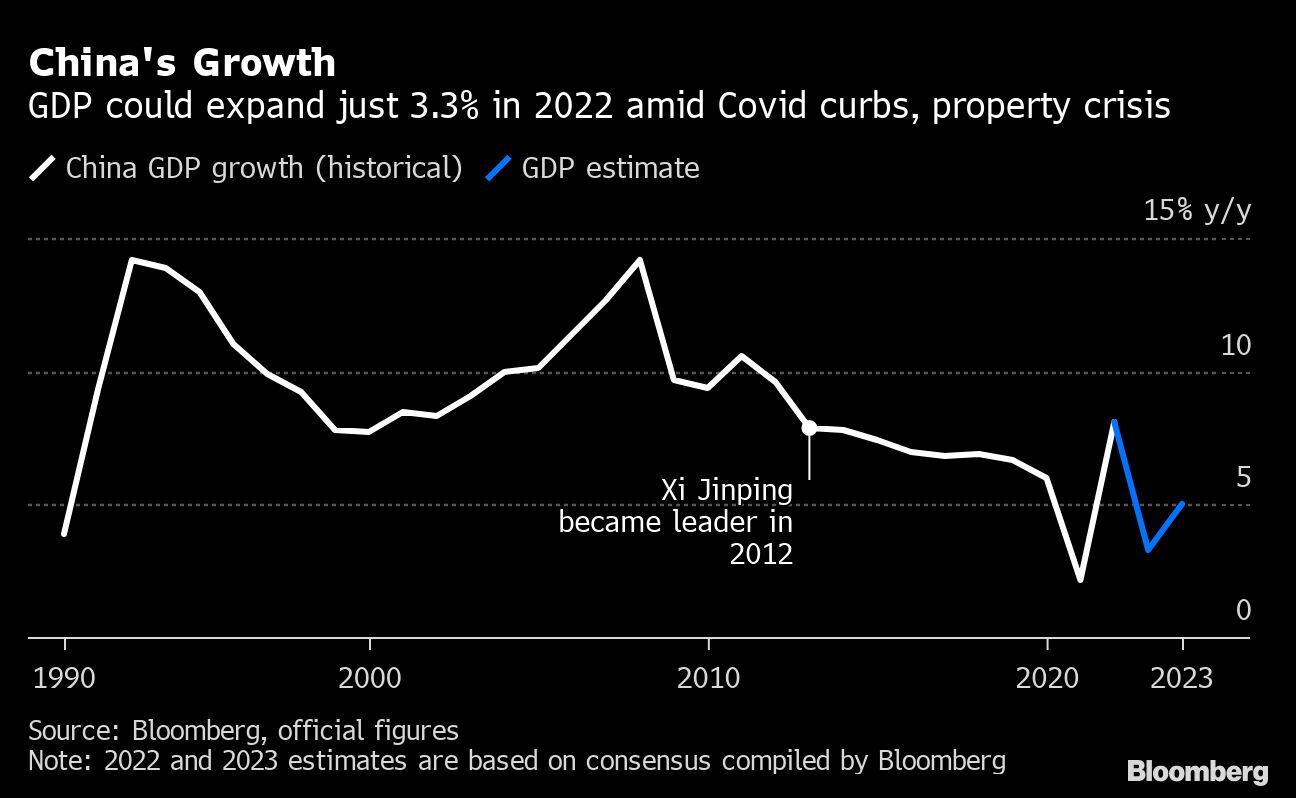
A: The economy is in pretty bad shape and my expectations are relatively grim for the remainder of this year and next.
Diplomatic tensions are leading governments starting with the US to encourage their companies to diversify, to restrict sharing of technologies and to reduce China’s participation in global innovation.
That’s going to constrain China’s growth and opportunities.
On top of that, you’ve got the self-imposed problem of the Covid Zero policy. This is signaling to consumers that there’s an immense amount of risk. Consumers are not spending and companies are not investing.
Even though internally there’s certainly investigation about how to change strategy, the government hasn’t signaled that it is considering doing so.
Once they do signal that they could change policy, I think consumers and investors have been so shaken by Covid Zero and previous efforts to revive the economy that haven’t materialized that there’ll probably be a very gradual or delayed recovery.
Q: It’s your impression from talking to people here that the government is discussing exit strategies?
A: Among the expert community in China, they recognize that there needs to be a transition and there’s a variety of proposals that have been floated around.
They’ve taken some micro steps, such as shortening the length of the quarantine for international visitors.
The question is will they gradually move? Or will they make some more substantive, overt transition, where everyone can really see a path to the other side?
Q: What are your takeaways from the Communist Party congress?
A: Chinese politics has always been opaque, but this is a black box which is sealed much more tightly than ever before.
In the past, elite politics were always a topic of discussion, and you could gain some general idea of what you thought was going on and broadly follow things.
What I discovered this trip is people were engaging in blind speculation, mostly driven by what they hoped or feared might happen.
Based on Xi Jinping’s speeches, state media coverage and important appointments, it appears that China’s going to continue with the approach it’s followed under the first 10 years of his leadership — and do so even more thoroughly and unapologetically than before.
Growth is not going to be the primary focus of economic policy, but will have to be balanced against national security concerns, domestic security concerns, reducing carbon emissions and equity.
More stories like this are available on bloomberg.com
©2022 Bloomberg L.
P.