
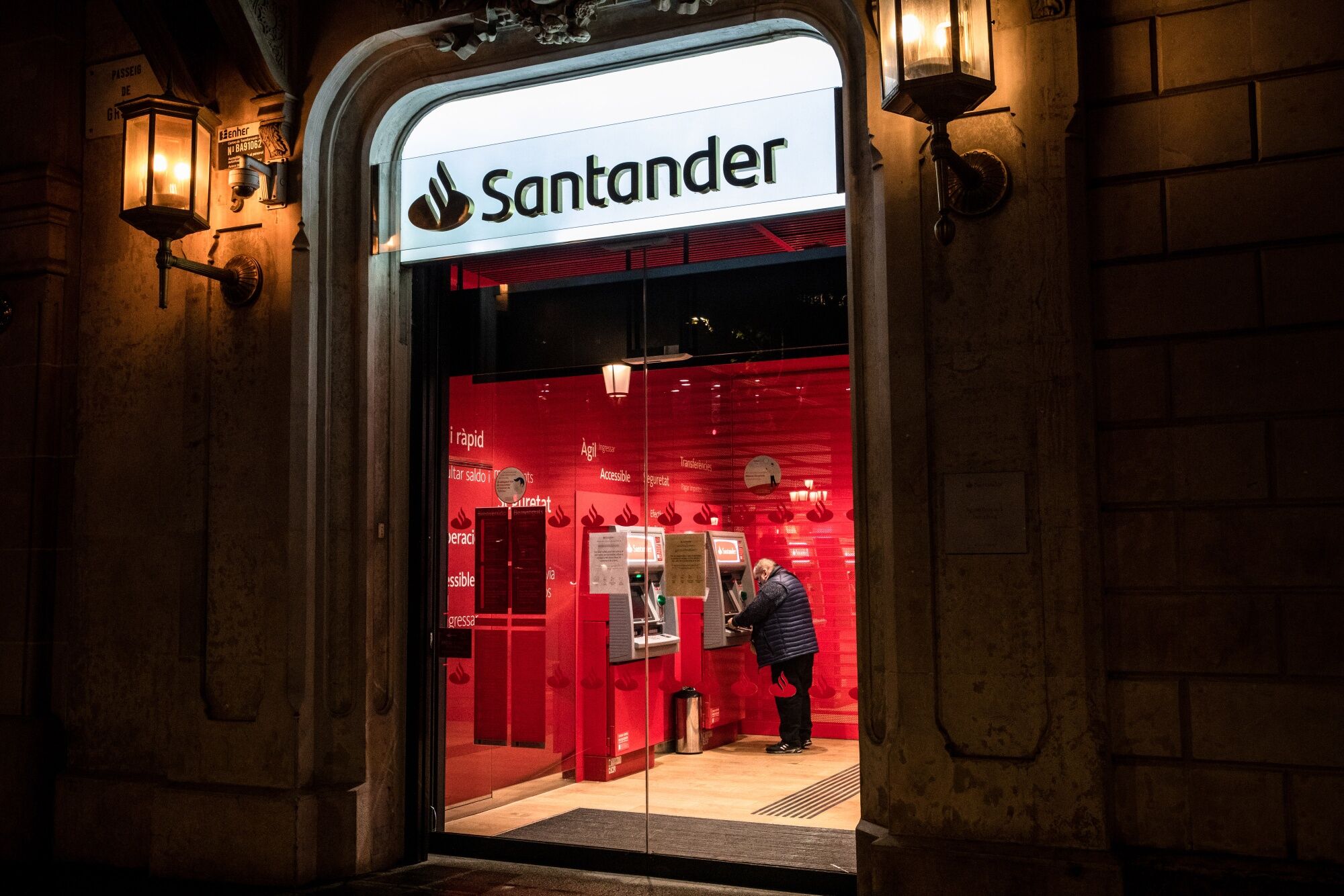
(Bloomberg) — Banco Santander SA’s earnings beat estimates as a revenue boost from higher interest rates across key markets counters higher costs from inflation and the cost of covering souring loans.
The Spanish retail-banking giant posted net income of 2.42 billion euros ($2.4 billion) in the third quarter, exceeding the consensus analyst forecast of 2.2 billion euros, according to a statement.
Net interest income rose 5.2% in the quarter.
With a loan-book of more 1 trillion euros Santander is benefiting from central bank moves to tackle inflation from the euro area to the UK and the US. At the same time, the lender is grappling with rising expenses linked to inflation and labor agreements at its Latin American banks, while higher borrowing costs and a weakening global economic outlook threaten to drive up defaults.
“We expect the macroeconomic environment to remain challenging as markets across Europe and North America adapt to levels of inflation not experienced in decades,” Chairman Ana Botin said in a statement.
Santander shares fell as much as 2.4% in early trading in Madrid.
The stock is down about 9% this year compared with a 12% decline for the STOXX 600 Banks Index.
Santander stuck to targets for profitability, revenue growth and capital goals for this year given in February, while saying it now expects to get “close” to an efficiency metric announced at the time.
Back then, the lender said it was targeting return on underlying tangible equity of above 13%, mid-single-digit revenue growth and a cost-to-income ratio of about 45%, while aiming to keep its key capital ratio at around 12%.
Net loan-loss provisions rose 24% in the third quarter from a year ago, after the lender released provisions previously.
Cost of credit, a metric that tracks the ratio of provisions to expected loan losses, ticked up to 0.86% from 0.83% in the previous three-month period.
Asset Quality
Third-quarter underlying profit from Spain more than doubled from a year earlier to 452 million euros, boosted by lower provisioning costs and higher net interest income. Underlying earnings from Brazil rose 14% as higher lending and trading revenue offset a jump in provisioning costs.
Profit from the US slipped, with the bank saying it was “normalizing” provisions there.
At the same time, the lender underlined that there is little evidence of an imminent rise in defaults. Net interest income from Argentina surged.
“We are not seeing any asset-quality pressures yet in any of the markets where we operate,” Santander Chief Financial Officer Jose Garcia Cantera said in an interview with Bloomberg Television’s Anna Edwards. “This will very much depend on the type of slowdown we face in the next few quarters, but the bank is better prepared than ever to face any asset quality deterioration that we might see.”
Santander is among lenders facing growing a political backlash as higher interest rates swell their top line.
The Spanish government wants to slap a windfall tax on banks as part of a drive to raise funds to cover its response to a growing cost-of-living crisis. Quarterly earnings included a 181 million-euro charged linked to moratoriums on mortgage payments put in place in Poland to quell public anger over fast-growing borrowing costs.
Key Numbers
- Underlying ROTE: 13.38% vs 13.1% in 2q
- CET1 fully-loaded capital ratio 12.10% vs 12.05% in 2q
- Net interest income rose to EU10.05 billion from EU9.55b in 2q
- Operating expenses rise 14% from year earlier to EU6.16b
- Efficiency ratio: 45.6% vs 46% 2q
- NPL ratio: 3.08% vs 3.05% in 2q
(Updates with share move.)
More stories like this are available on bloomberg.com
©2022 Bloomberg L.
P.