
(Bloomberg) —
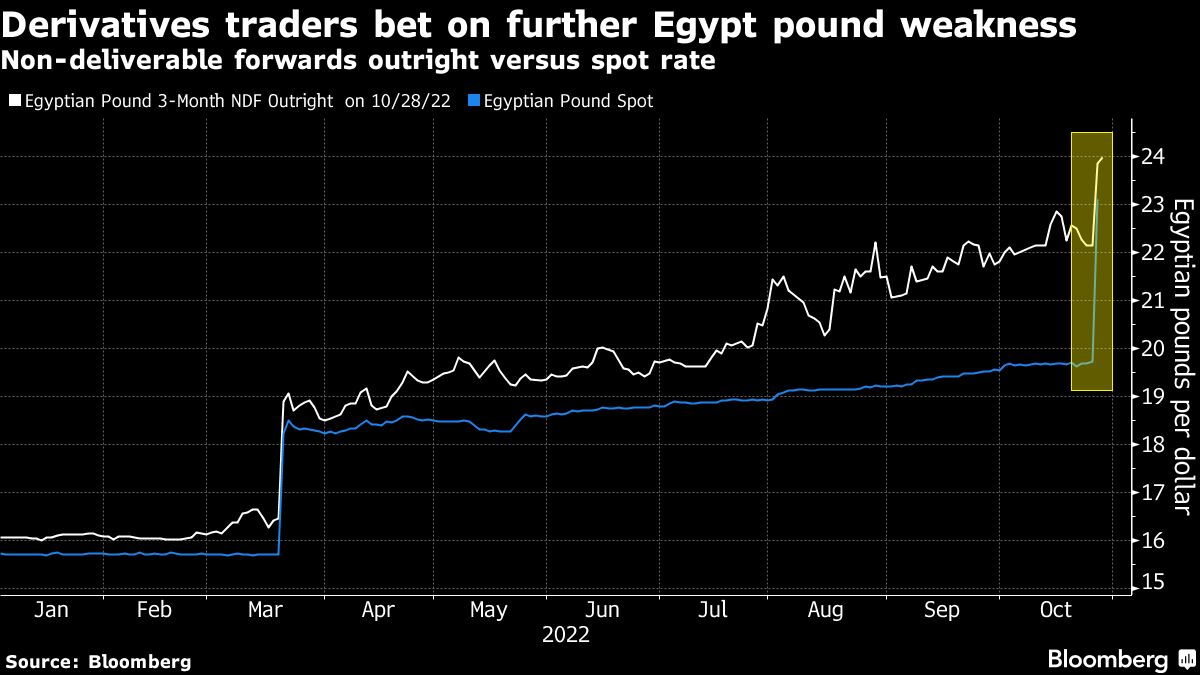
Egypt’s pound extended its losses to depreciate as far as 24 to the US dollar for the first time, as speculation whirled over where the currency will level out after the North African country declared a landmark shift to a flexible exchange rate.
The drop, shown on the websites of Egyptian commercial banks on Sunday, follows an Oct. 27 devaluation that saw the pound plunge more than 15%.
The central bank’s move to let supply and demand decide its value helped Egypt reach a $3 billion loan agreement with the International Monetary Fund, providing support for an economy battered by Russia’s invasion of Ukraine.
With Egyptians bracing for the fallout on inflation that’s already running near a four-year high, the question is how far the pound will drop. Deutsche Bank AG analysts including Samira Kalla in an Oct. 27 note predicted it may end the year closer to 25 per dollar, before support from Egypt’s Gulf allies, foreign inflows and more supportive current-account dynamics bring stability.
In addition to the IMF funds, Egypt is set to receive $5 billion from unidentified international partners.
A further $1 billion from a newly created sustainability fund is also on the table, according to the IMF.
Saudi Arabia, the United Arab Emirates and Qatar have already pledged mammoth aid and investments for Egypt this year amid concern about the stability of the Arab world’s most populous nation.
“The transition to a new foreign exchange regime and lingering uncertainty around the longer-term funding of the residual external funding gap in Egypt could keep risk and uncertainty elevated in the near term,” Goldman Sachs Group Inc. including Kamakshya Trivedi said in a report.
But the devaluation, higher rates, and a new opportunity for reforms “are setting the pound on the right track to becoming an attractive investment again,” they said.
More stories like this are available on bloomberg.com
©2022 Bloomberg L.
P.