
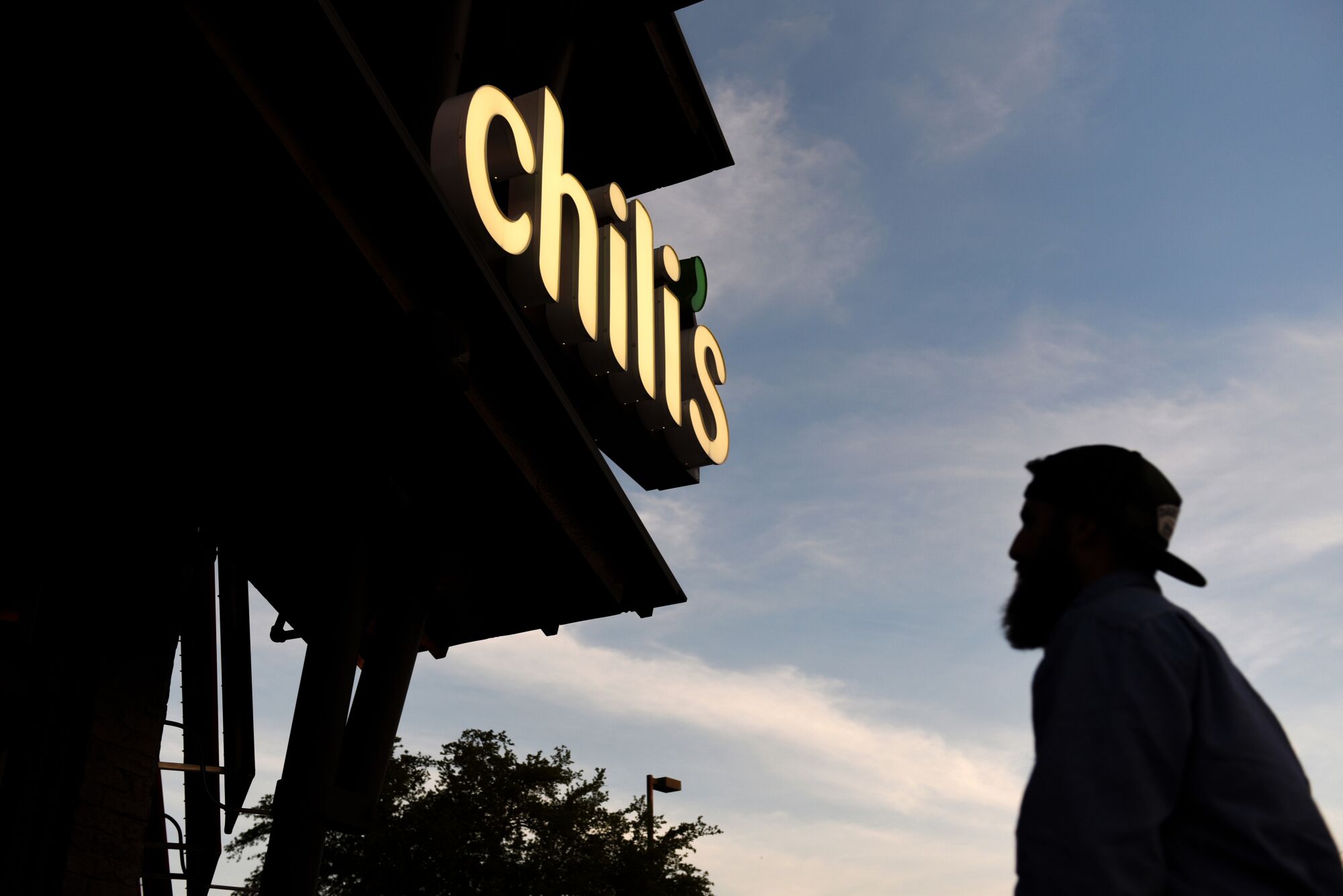
(Bloomberg) — Kevin Hochman became chief executive officer of Brinker International Inc. earlier this year and quickly realized that the Chili’s Grill & Bar chain didn’t have enough of what once made it a top performer: fun.
To remedy that, he’s livening up the bar scene with NFL games on DirecTV, more happy hours serving $3 Bud Lights and offerings such as mango habanero chicken wings and shots made with peanut-butter-flavored whiskey.
“You have a cash-strapped customer,” Hochman said in an interview. “It does create opportunity for those that can create superior value in a fun environment.
That’s our plan.”
In the dining room, Chili’s is reducing tasks for waitstaff, so they can spend more time with customers. Advertising is also being ramped up — under the leadership of Tinder’s former top marketer — after the chain pulled back during the pandemic when diners stayed away.
It’s part of a plan to win over middle-class consumers amid the highest inflation in four decades and reignite growth at the 47-year-old chain.
Investors will get a sense of how this is working when Dallas-based Brinker reports earnings on Wednesday.
Covid-19 restrictions hit sit-down dining hard — quarterly revenue at Brinker sank as much as 33%. But chains responded by ramping up delivery and creating digital-only brands, such as Chili’s did with its successful launch of It’s Just Wings.
Catering to the DoorDash crowd helped boost revenue at Brinker, which also owns the Maggiano’s chain, to $3.8 billion in the fiscal year through June — up 18% from the same period in 2019.
Read more: Post-Covid restaurant boom is winding down
While Chili’s, which makes up about 90% of Brinker’s sales, has bounced back from the pandemic, it still needs a spark.
Comparable-store sales were declining or little changed in the four years before the pandemic. After a surge in diner traffic when restrictions eased, customer visits at Chili’s were negative last quarter. The bright spot has been the growth of takeout and delivery, which is now about a third of revenue.
Casual dining boomed in the 1980s and 1990s along with shopping centers. But much like retail, the industry over-expanded.
Then fast-casual chains such as Chipotle stole market share by offering menus that were better than fast food and cheaper than sit-down. Some chains went bankrupt, and several closed under-performing locations. Chili’s now has fewer locations than in 2018.
Now, as the disruption caused by the pandemic wanes, the same doubts about legacy sit-down chains have returned.
Enter Hochman, who joined in June when Wyman Roberts retired after a nine-year run as Brinker’s CEO in which the stock fell by almost a third and sales growth averaged 3%.
Hochman came from KFC where he ran US operations and increased sales at a similar rate in each of the past three years.
“KFC in the US had a good run” and the marketing has been “top-notch,” said Michael Halen, an analyst for Bloomberg Intelligence who covers the restaurant industry. The brand grabbed attention with quirkiness such as selling a Yule log that smells like fried chicken and bringing back the Colonel Sanders character, he said.
Hochman hired George Felix as chief marketing officer after a year in the same role at dating app Tinder.
Before that, Felix had a stint at Yum Brands, owner of KFC and Pizza Hut, when Hochman worked there.
“George is known for taking well-known brands and reminding customers what makes the brand special in a contemporary, relevant way,” Hochman said on a recent earnings call.
One hurdle for Felix is that Chili’s cut back on mass media marketing during the pandemic. The brand has barely spent on national TV ads since March 2020, according to data from iSpot.
In 2019, Chili’s outlaid more than $38 million on television, but hasn’t allocated any this year. Meanwhile, competitors such as Applebee’s resumed spending.
“To what degree has Chili’s awareness suffered?” asked Raymond James analyst Brian Vaccaro.
In its heyday, Chili’s broke through in the 1990s with its hit baby-back ribs TV jingle, highlighted by comedian Mike Myers singing the tune in one of his Austin Powers movies.
But that magic waned.
The Chili’s marketing plan is focused on digital right now, but will evolve, Felix said in a statement. With ’90s nostalgia trendy again, might that include bringing back that ribs commercial?
“No comment for now,” Felix said. “You’ll just have to keep an eye on what we’re doing.”
Before Hochman arrived, Chili’s admitted it veered off course.
In 2017, the brand said it chased too many foodie trends and cut the menu by 40%. It jettisoned items such as mango tilapia to make its core of burgers, ribs and fajitas tastier. But that didn’t revive sales.
Core to Hochman’s strategy is what’s internally called the “raise the bar” initiative. The chain launched DirecTV for the start of the football season in September and a revamped happy hour menu.
There are also more booze options, such as that peanut-butter-and-jelly whiskey shot.
The CEO is reducing promotions and revamping the loyalty program, too. That may include cutting back on perks for rewards members such as free chips and salsa. Analysts worry that this could reduce visits, especially with inflation pushing Americans to be more frugal. Meanwhile, competitors are adding more deals, such as Olive Garden’s $6 takeout meals.
Hochman has said the chain needs to rely less on discounting because that’s hurting results.
He wants to convince wealthier customers to splurge on something like Chili’s Ranch Water, a new cocktail with Patron tequila.
Key to that will be servers who are having non-customer-facing work reduced. In Skokie, Illinois, Rileigh Elliott has been working at Chili’s for about a year. The 18-year-old, clad in jeans and a gray Chili’s t-shirt, said she now spends about 80% of her time in the dining room, freeing her to refill beers quicker and tout more menu items.
There’s a big incentive for her — she’s getting better tips.
“We’ve got to mitigate how much trade down that we get from our guests that can afford more,” Hochman told analysts earlier this year. “There are a lot of opportunities.”
More stories like this are available on bloomberg.com
©2022 Bloomberg L.
P.