
(Bloomberg) — The Federal Reserve will do what it takes to return inflation to its 2% target, and won’t wait for things to settle on their own time, Richmond Fed President Thomas Barkin said.
“This slow return to normal levels of inflation could threaten the stability of inflation expectations,” Barkin said at an event hosted by the Virginia Chamber of Commerce Wednesday.
“The Fed can’t let inflation fester and expectations rise.
If we back off for fear of a downturn, inflation comes back even stronger and requires even more restraint,” said Barkin, who does not vote on monetary policy this year. “That’s why the Fed is not waiting around for things to settle on their own time. We know inflation is painful and everyone hates it.”
Fed officials are aggressively raising borrowing costs in an effort to tame the price growth running near 40-year highs.
The US central bank hiked interest rates by 75 basis points for the fourth straight time last week, bringing the target for the benchmark rate to a range of 3.75% to 4%.
Fed Chair Jerome Powell told reporters after last week’s meeting that rates could go higher than officials previously expected, but hinted that policymakers could use smaller moves to get there. Investors are leaning toward the Fed downshifting to a 50 basis-point increase when officials next gather in mid-December.
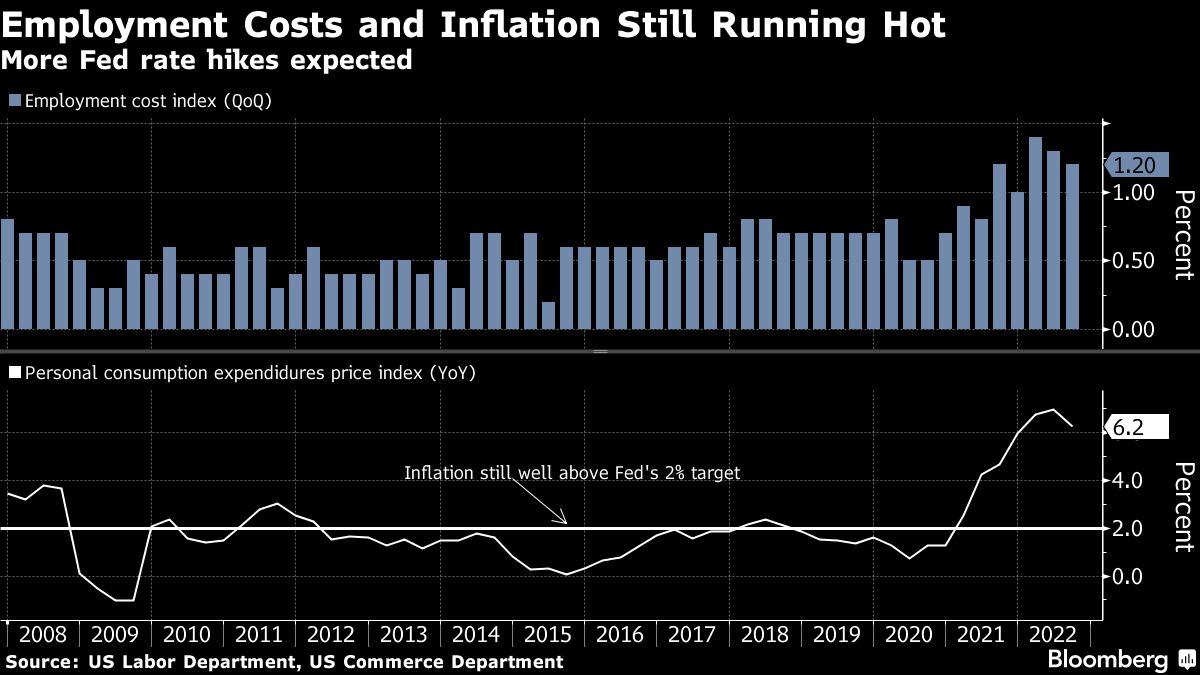
The Fed aims to achieve 2% inflation over the longer run as measured by the personal consumption expenditures price index, which rose by 6.2% in the 12 months through September, the most recent month for which data are available.
“We are doing what it takes to get inflation back to our 2% target,” Barkin said. “That’s one place I can assure you we are headed back to normal.”
During a question-and-answer session after his speech, Barkin said that he viewed the US as being at the “back end” of the episode of high inflation.
“Commodity prices seem to be cooling, supply chains seem to be easing up,” he said, adding “and the Fed is raising rates.”
He tried to stay away from politics, noting that the result of the US midterm congressional elections on Tuesday was still being calculated, while acknowledging that what happens with fiscal policy in the next Congress could have implications for the Fed.
“If there is more inflationary pressure that comes from fiscal, then we might have to do more,” he said. “‘And if there is less, we might have to do less.”
(Updates with Barkin comments during Q&A in final four paragraphs.)
More stories like this are available on bloomberg.com
©2022 Bloomberg L.
P.