
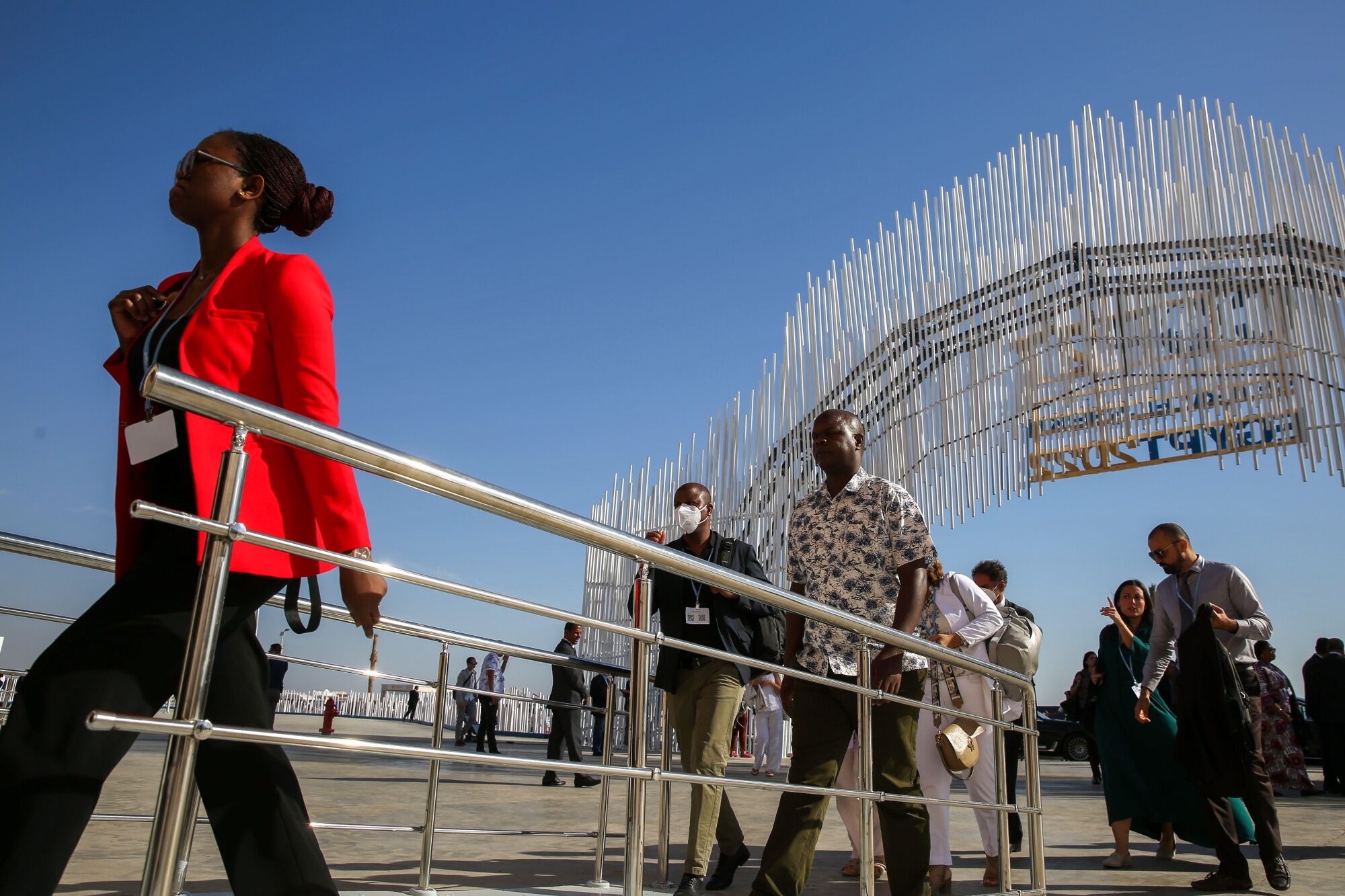
(Bloomberg) — COP27 climate talks in Egypt were in disarray Saturday after the European Union’s climate chief Frans Timmermans said the bloc is “prepared to walk away” if progress is not made on keeping alive the target of limiting global warming to 1.5 degrees Celsius by the end of the century.
Timmermans criticized the ambition shown by the Egyptian presidency of the talks in the seaside town of Sharm El-Sheikh, saying it failed to move the world closer to a key climate goal that will stop more extreme weather events from battering vulnerable countries.
While a positive outcome was still within reach, Timmermans said there were concerns over the most controversial issue of these talks: the setting up of a dedicated loss and damage facility.
New draft decisions published Saturday afternoon would likely do little to alleviate the EU’s concerns, particularly when it came to having countries come back with new climate pledges. There was progress on loss and damage: the latest text establishes a fund within the context of other “funding arrangements,” something that South Africa, a key voice for developing countries, wecolmed.
But Timmermans’ ultimatum puts the talks in jeopardy, because the quid pro quo for a loss and damage fund was greater ambition on the migation of greenhouse gas emissions.
Talks are already in overtime, having been scheduled to finish Friday.
The threat to walk away came after late night talks in which the Egyptian presidency presented delegations draft text of individual agenda items on loss and damage and efforts to boost mitigation. The bloc was permitted by the presidency to analyze the text for 20 minutes at 1:30 a.m. in a private room, a senior official said.
The process was highly unusual, the official added, building on top of heavy criticism directed toward the handling of the summit.
Read more: COP27 Gets Chaotic With Mysterious Draft Text, Elusive President
As it stands, the draft wouldn’t require countries to lay out new climate goals or update their national plans to achieve the 1.5 degree Celsius target laid out by the Paris Agreement, the official said, asking not to be named due to the discussions being private.
“There can’t be any backsliding on 1.5 degrees Celsius,” said Steven Guilbeault, Canada’s minister of environment and climate change. “We cannot leave Sharm El-Sheikh by having abandoned he possibility of keeping 1.5 Celsius alive, and right now we are very concerned that is what is being proposed.”
Still the progress on loss and damage was a cause of optimism for some developed countries.
“We are all ready to contribute to the loss and damage fund,” said Norway climate minister Espen Barth Eide. “It’s been a great turnaround; practically all the traditional donors are ready to be part of that, but we have to make it operational and we have to make sure that this is a part of a mosaic of solutions.”
A number of countries including India, the US, the EU and small island states have also called for a phase down of all fossil fuels.
They see it as an improvement from what countries agreed on in COP26 in Glasgow last year — to phase down unabated coal power. So far the language has not appeared in any of the draft texts put forward by Egypt, including the one on Saturday afternoon.
“The EU is united in our ambition to move forward and build on what we agreed in Glasgow,” Timmermans said. “Our message to partners is clear: we cannot accept that 1.5C dies here and today.”
COP Flop
The COP27 presidency worked through the night to gather perspectives from different countries and come up with a text that balanced all views, the meeting’s president and Egyptian Foreign Affairs Minister Sameh Shoukry told the press on Saturday.
“A vast majority of the parties indicated to me that they considered the text as balanced and that it constituted a breakthrough that could lead to consensus,” Shoukry said. “Every party has a full right to join consensus or not join consensus.”
Shoukry’s defense came amid a wave of fingerpointing by delegates and observers at the conference, who were already bracing for a potential collapse in talks that could destroy faith in the multilateral climate negotiation process.
“I fear today is the opening salvo in the blame game to say this conference is falling apart and we are failing not only to keep 1.5 alive but failing to keep the multilateral process going to be able to keep making better decisions going forward,” said Simon Lewis, a professor of global change science at University College London.
–With assistance from Salma El Wardany, Akshat Rathi, Mirette Magdy and Antony Sguazzin.
(Updates to reflext new text from third paragraph.)
More stories like this are available on bloomberg.com
©2022 Bloomberg L.
P.