
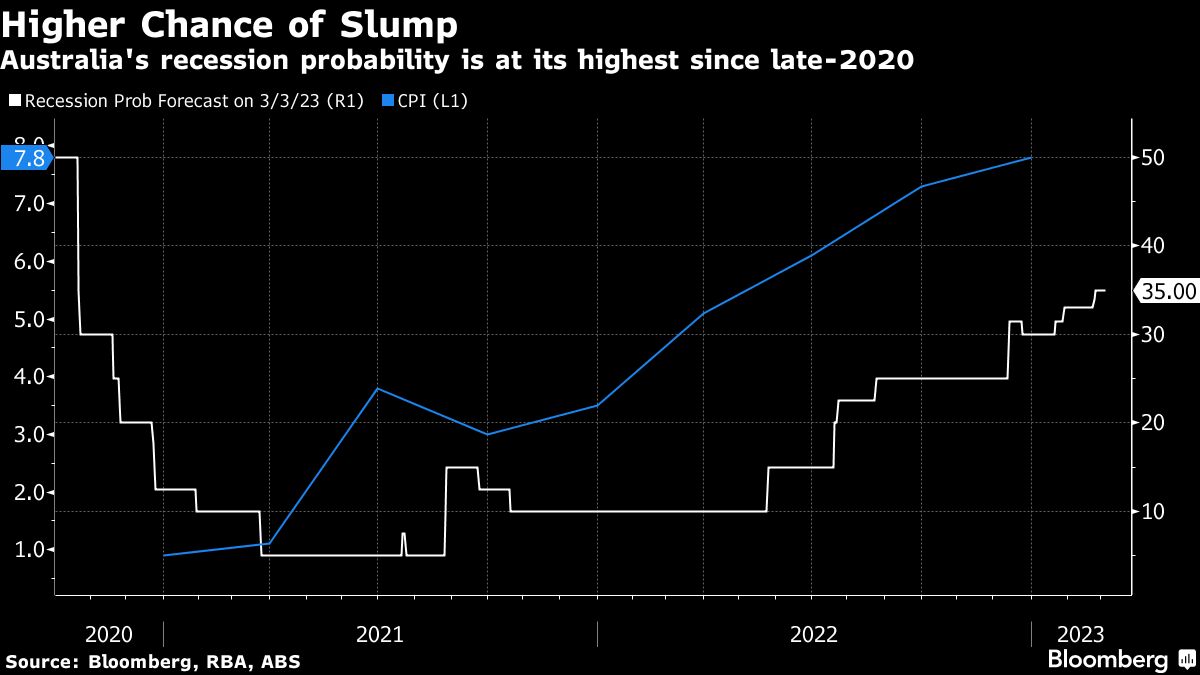
(Bloomberg) — Australia’s central bank raised its key interest rate for a 10th straight meeting, while signaling future tightening will depend on incoming economic data, sending the currency and government bond yields lower.
The Reserve Bank on Tuesday lifted its cash rate by a quarter-percentage point to 3.6%, the highest level since May 2012 and in line with expectations. The decision brings its cumulative hikes since May to 3.5 points, the most aggressive tightening since 1989.
“In assessing when and how much further interest rates need to increase, the board will be paying close attention to developments in the global economy, trends in household spending and the outlook for inflation and the labor market,” Governor Philip Lowe said in his statement.
The Aussie dollar fell after the governor added the time element of “when” to his comments on the next rate rise, suggesting a potential pause is in the offing.
The currency traded at 67.06 US cents at 2:44 p.m. in Sydney. Three- and 10-year government bond yields also dropped and traders edged down their expected peak cash rate to 4% from 4.1%.
Lowe’s signal that the timing and size of future increases will be linked to economic data follows figures through February that missed expectations, including slower growth and inflation and higher unemployment.
The outcomes suggest the RBA’s tightening to date is beginning to have an impact on activity.
“The monthly CPI indicator suggests that inflation has peaked,” Lowe said. “Goods price inflation is expected to moderate over the months ahead due to both global developments and softer demand in Australia.”
The RBA’s softer tone may jar with the tenor of comments from Federal Reserve Chair Jerome Powell, who later Tuesday and Wednesday will deliver his semi-annual monetary policy report to lawmakers.
At the same time, Australia’s heavily indebted households are running down their savings in response to price increases and higher loan repayments.
There are signs of rising mortgage stress and the latest corporate earnings, while mixed, point to more pain ahead.
The RBA’s more cautious approach comes as peers are pushing hard to crush inflation. New Zealand and the Fed have delivered 4.5 points of increases in their current cycles, a full percentage point more than Australia.
The more moderate tone in the RBA’s guidance adds to evidence that Governor Lowe is struggling to maintain a consistent message as macro data proves volatile.
“The board recognises that monetary policy operates with a lag and that the full effect of the cumulative increase in interest rates is yet to be felt,” Lowe said. “There is uncertainty around the timing and extent of the slowdown in household spending.”
Investors will now turn their attention to the governor’s speech on Wednesday morning, which is likely to flesh out his views on the the policy path and economic outlook.
Australia’s center-left government has so far avoided being blamed for the cost of living squeeze, with polls suggesting voters accept that the price rises are fallout from the pandemic.
Still, the Labor government is being constrained from providing much new spending as it tries to keep fiscal and monetary policy aligned to beat inflation.
Treasurer Jim Chalmers says the focus will be on “relief, repair and restraint” in the May budget.
(Updates market reaction, adds further Lowe comments.)
More stories like this are available on bloomberg.com
©2023 Bloomberg L. P.