
(Bloomberg) — Turkey’s inflation slowed below 50% for the first time in over a year, with risks for price stability rising as the country goes to the polls in less than two weeks.
Consumer prices grew an annual 43.7% in April, down from 50.5% in March, official data showed on Wednesday. While slowing slightly more than expected by economists in a Bloomberg survey, inflation is now forecast to plateau around 44%-45% for the rest of the year.
Crucial to the outlook is the outcome of the vote less than two weeks away as President Recep Tayyip Erdogan faces the stiffest challenge of his two decades in power.
Under his stewardship, Turkey has pursued an unorthodox approach and slashed interest rates in the belief it would hold back price gains.
Evidence to the contrary has been in plain view for months. And while the headline figure is in decline, core inflation is still running hot in a sign price pressures remain elevated.
Core inflation — which strips out volatile items like energy and food — was an annual 45.5%, down from 47.4% in March.
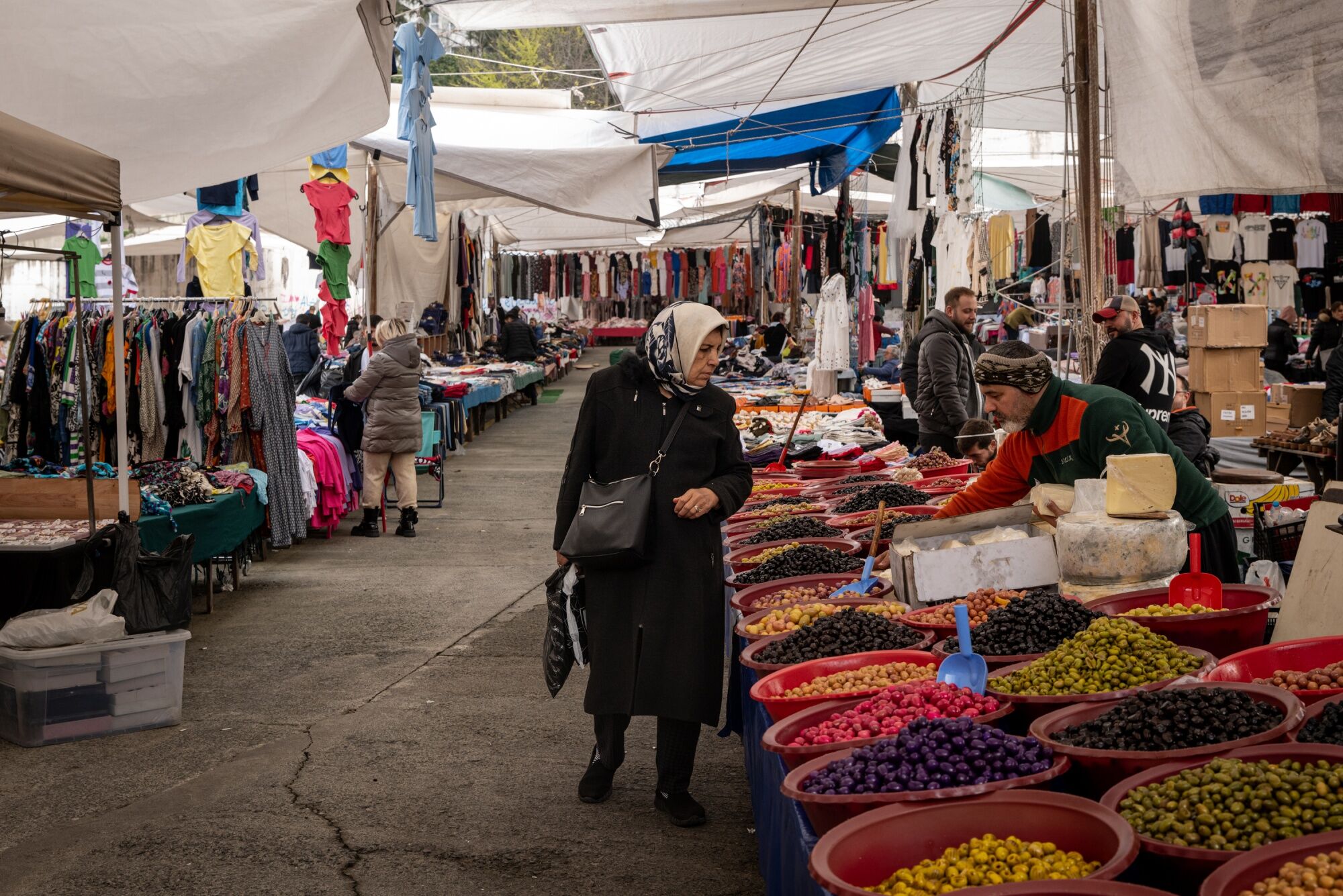
The cost of food and non-alcoholic beverages, which make up a quarter of the inflation basket, contributed the most to the overall slowdown.
Producer prices, an early indicator of inflation, reached an annual 52.1%, down from 62.5% in March.
Read more: Erdogan Faces Turkish Voters Angered by Years of Economic Chaos
The lira’s performance could determine much of what happens next, with mounting expectations for a depreciation after the May 14 elections posing a threat to consumer prices. The Turkish currency is among the worst performers in emerging markets so far this year with a drop of almost 4% against the dollar.
“A lira adjustment post-election and potential adjustments in wages and administered prices will likely weigh on inflation momentum,” ING Bank economists including Muhammet Mercan said in a report ahead of the data.
Adding to strain on inflation, the government has been ramping fiscal spending after the deadly earthquakes in February and with the approach of elections.
What Bloomberg Economics Says…
“The rise in public spending, including post-quake rebuilding, and the central bank’s loose stance, will likely feed into higher price gains.
In our view, that will limit the decline in the annual inflation rate, as it offsets the damping impact coming from base effects. We see inflation hovering above 40% for the rest of the year.”
— Selva Bahar Baziki, economist. Click here to read more.
A unified opposition of six political parties has promised that, if elected, it would commit to inflation targeting through a set of more conventional policies and possibly wind down the regulations and backdoor interventions used to steady the lira.
Read more: Wharton Professor Is Waiting in the Wings to Undo Erdogan Legacy
On Thursday, central bank Governor Sahap Kavcioglu will present this year’s second quarterly inflation report, where he may revise projections for 2023 and 2024.
Policymakers most recently forecast price growth will end this year at 22.3% — more than four times higher than the central bank’s official target — and then slow to 8.8% in 2024.
Should Erdogan’s opponents win power, “Turkey will return to inflation targeting with a new central bank,” Bilge Yilmaz, the head of economic policymaking at the opposition IYI Party, told Bloomberg Television on Wednesday.
–With assistance from Joel Rinneby.
More stories like this are available on bloomberg.com
©2023 Bloomberg L.
P.