
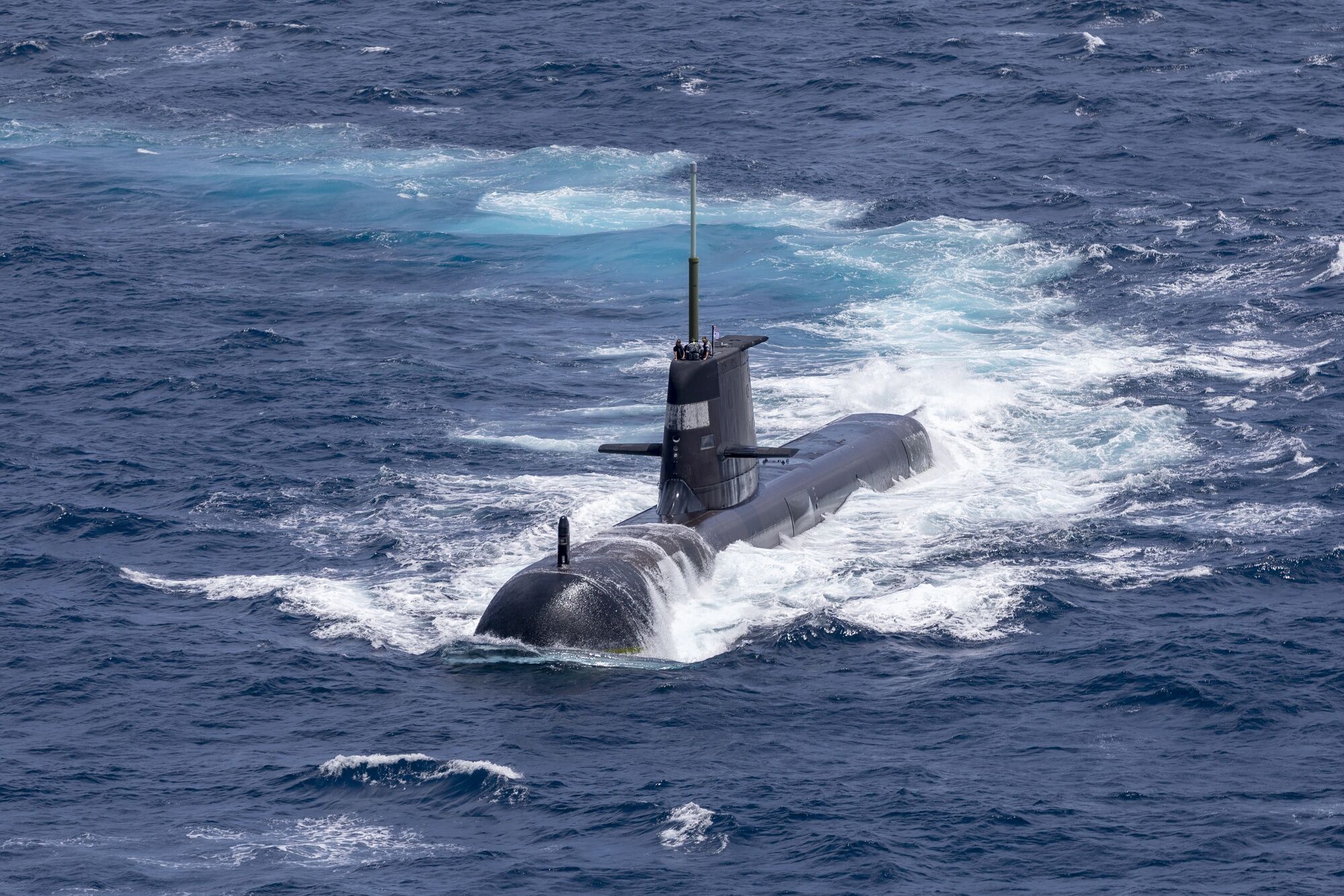
(Bloomberg) — Australia will need to do extensive preparation, training and research if it is to successfully construct a fleet of nuclear-powered submarines by 2040, Deputy Prime Minister Richard Marles said, highlighting the long road ahead for its military ambitions.
While no detailed costs have been announced yet for the construction of the nuclear submarines with US and UK technology, a previous program with the French had ballooned to A$90 billion ($58 billion) before getting scrapped.
The country is also expected to spend $7.4 billion to build a base to house the future fleet.
Marles, who is also defense minister, said while Australia would see “enormous benefit” from the plan to build nuclear submarines domestically in coming decades, there would need to be substantial preparation work.
“We are walking down the nuclear pathway, it rolls of the tongue pretty easily, but the scale of what that means in terms of the national endeavor is huge,” he said at the Submarine Institute of Australia conference in Canberra on Tuesday.
As an example, Marles said facilities in the city of Adelaide which had previously housed submarine components would need to be upgraded to withstand substantially higher seismic events, to avoid the risk of damage to nuclear material.
“Everything needs to be harder.
Everything needs to be more robust,” he said.
Australia Seeking Industrial Ramp-Up for Nuclear-Powered Subs
In September 2021, Australia joined a wide-reaching security agreement with the US and the UK known colloquially as “AUKUS,” which among other elements included the sharing of technology and expertise to assist Canberra in building and fielding a fleet of nuclear submarines by 2040.
Little is known about the final design for the submarines or when they will be operational, but Marles has previously said he’d like to build as much of the fleet as possible in Australia.
An announcement around the future of the AUKUS submarine fleet is expected in early 2023, along with a broad review of Australia’s military forces.
Speaking at the same conference, Chief of Navy Vice Admiral Mark Hammond warned without the nuclear submarines Australia was vulnerable to naval intimidation as a country which derived its “economic well-being” and its “security well-being” from the sea.
“A nation wishing to do us harm does not need to invade this country.
You can strangle this economy from this sea,” he said.
More stories like this are available on bloomberg.com
©2022 Bloomberg L. P.