
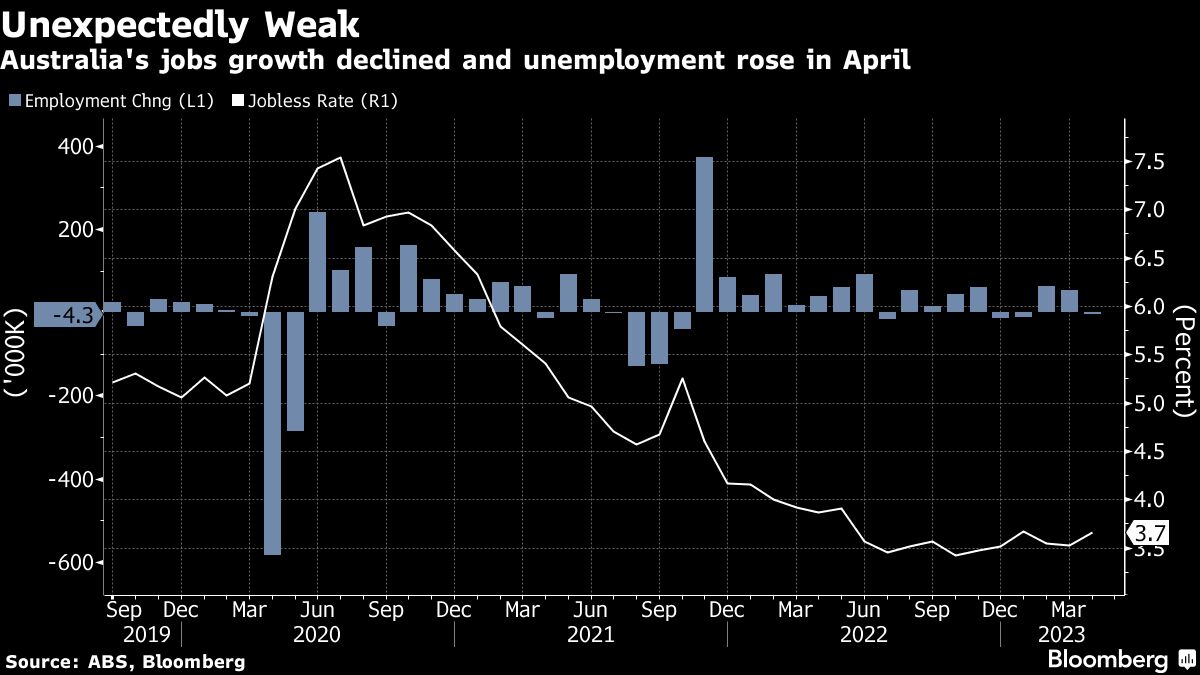
(Bloomberg) — Australia unexpectedly cut jobs in April and unemployment climbed for the first time this year, reinforcing the case for the Reserve Bank to stand pat at next month’s policy meeting.
Employers shed 4,300 roles from a month prior — led by a decline in full-time positions — compared with a forecast 25,000 gain, Australian Bureau of Statistics data showed Thursday.
The jobless rate rose to 3.7%, up from an almost 50-year low of 3.5%.
The Australian dollar and the three-year government bond yield both declined as the risk of a June rate hike receded. Overnight-indexed swaps imply the RBA is all but done with tightening.
The weaker result suggests the RBA’s 11 interest-rate hikes over the past year are weighing on the corporate sector at a time when surging migration is also set to swell the labor force.
That strengthens the argument for the central bank to hold its cash rate at 3.85% on June 6.
“We expect to see a gradual softening in labor market conditions over 2023,” said Sean Langcake, head of macroeconomic forecasting for Oxford Economics Australia. “Whether today’s data are the start of that process or just typical volatility will be a key question at the upcoming RBA meeting.”
Employment data are an important piece of the policy puzzle for Governor Philip Lowe as he tries to assess the economic impact of the RBA’s aggressive tightening to date.
Lowe wants to hold onto employment gains made since the pandemic while returning inflation to the 2-3% target from 7% now.
Thursday’s fall in employment followed two much stronger than expected increases in hiring.
The governor has said the board will closely monitor figures on the economy and inflation when deciding further policy moves. Figures out this month painted a mixed picture with a still-resilient corporate sector but signs of a squeeze among households.
Goldman Sachs Group Inc. expects the bank to raise rates by another quarter-percentage point while many others, including Commonwealth Bank of Australia, say the RBA’s tightening cycle is done.
Employment strength has been a key factor in the RBA’s confidence that Australia can avoid a recession.
The central bank is forecasting unemployment will rise to 4% by year’s end as rising borrowing costs drag on economic activity.
Bloomberg Economics estimates that jobs growth will need to average 2.3% a year, or 26,000 roles per month, to prevent unemployment rising further — a tough ask at a time when the economy is forecast to slow.
Thursday’s jobs report also showed:
- The participation rate fell to 66.7% from an upwardly revised 66.8% in March
- Underemployment fell to 6.1% and underutilization rose to 9.8%
- Full-time roles tumbled by 27,100, while part-time climbed by 22,800
- The employment to population ratio fell to 64.2%.
–With assistance from Tomoko Sato.
(Adds comment from economist, further details from report.)
More stories like this are available on bloomberg.com
©2023 Bloomberg L.
P.