
(Bloomberg) — Cases soared in Brazil and police opened an investigation into Rio de Janeiro’s handling of the crisis, while Mexico had its deadliest day yet. The European Union will propose a fiscal package worth more than $800 billion and Japan is planning new economic stimulus valued in excess of $1 trillion.
The euro-area is faring worse than hoped, facing a recession as bad as the European Central Bank’s more pessimistic forecasts.
In Britain, pressure mounted on Prime Minister Boris Johnson to fire his chief aide and the government may look at lockdowns on a local level if cases flare.
U. S. fatalities approached the 100,000 level, though infections rose at the slowest pace since March and President Donald Trump unveiled plans to increase testing. France said hydroxychloroquine, the malaria medicine touted as a treatment by Trump, can no longer be prescribed to Covid-19 patients.
Key Developments:
- Virus Tracker: Cases top 5.5 million; deaths over 350,000
- Germany’s stimulus: the wishlist for Europe’s biggest economy
- Europe’s easing timetable intact with virus spread under control
- Amazon writes its own TV news segments to laud virus response
- Salaries get chopped for many Americans who manage to keep jobs
Subscribe to a daily update on the virus from Bloomberg’s Prognosis team here.
Click VRUS on the terminal for news and data on the coronavirus. For a look back at this week’s top stories from QuickTake, click here.
Royal Bank, BMO Set Aside Record Provisions (7:58 a.m. NY)
Royal Bank of Canada and Bank of Montreal joined their Canadian peers in setting aside record provisions for loan losses as they brace for the economic fallout from the coronavirus pandemic.
Royal Bank, Canada’s largest lender by assets, earmarked C$2.83 billion ($2.06 billion) in the fiscal second quarter for souring debt, the highest among the Canadian banks that have reported so far, while Bank of Montreal put aside C$1.12 billion.
Both Toronto-based firms reported earnings Wednesday that missed analysts’ estimates.
The two lenders follow Bank of Nova Scotia and National Bank of Canada in posting higher provisions for credit losses to brace for the aftershocks from plunging oil prices and a pandemic that has caused a near economic standstill.
Applications for U. S. Home Loans Rise (7 a.m. NY)
Applications for home-purchase loans in the U.
S. rose to the highest level since January, the latest sign that the housing market is holding up better than expected during the coronavirus pandemic. The Mortgage Bankers Association’s purchasing index rose 8.6% in the period ended May 22. It has gained for six straight weeks and is up more than 50% since early April.
Poland Eases Curbs (6:30 a.m. NY)
Poland will scrap restrictions on the number of people in restaurants and shopping malls from May 30 as it sees the pandemic subsiding, Premier Mateusz Morawiecki said.
Theaters, cinemas, gyms and swimming pools can reopen from June 6. Outdoor gatherings of up to 150 people are allowed from May 30, while restaurants and bars at hotels can also fully reopen as of May 30.
China to Allow Charter Flights From Some Countries (6:08 a.m. NY)
China plans to allow chartered passenger flights from eight countries as it loosens restrictions on inbound travel put in place because of the coronavirus pandemic, according to people familiar with the matter, though the U.
S. won’t be included amid growing tensions between the two nations.
Japan, South Korea, Singapore, Germany, the U. K., Italy, France and Switzerland will be allowed to schedule charter flights into China, the people said, asking not to be identified as the information isn’t public. They didn’t say how many of the flights will be permitted.
Malaysia Adds Fewest Cases Since March (5:43 p.m.
HK)
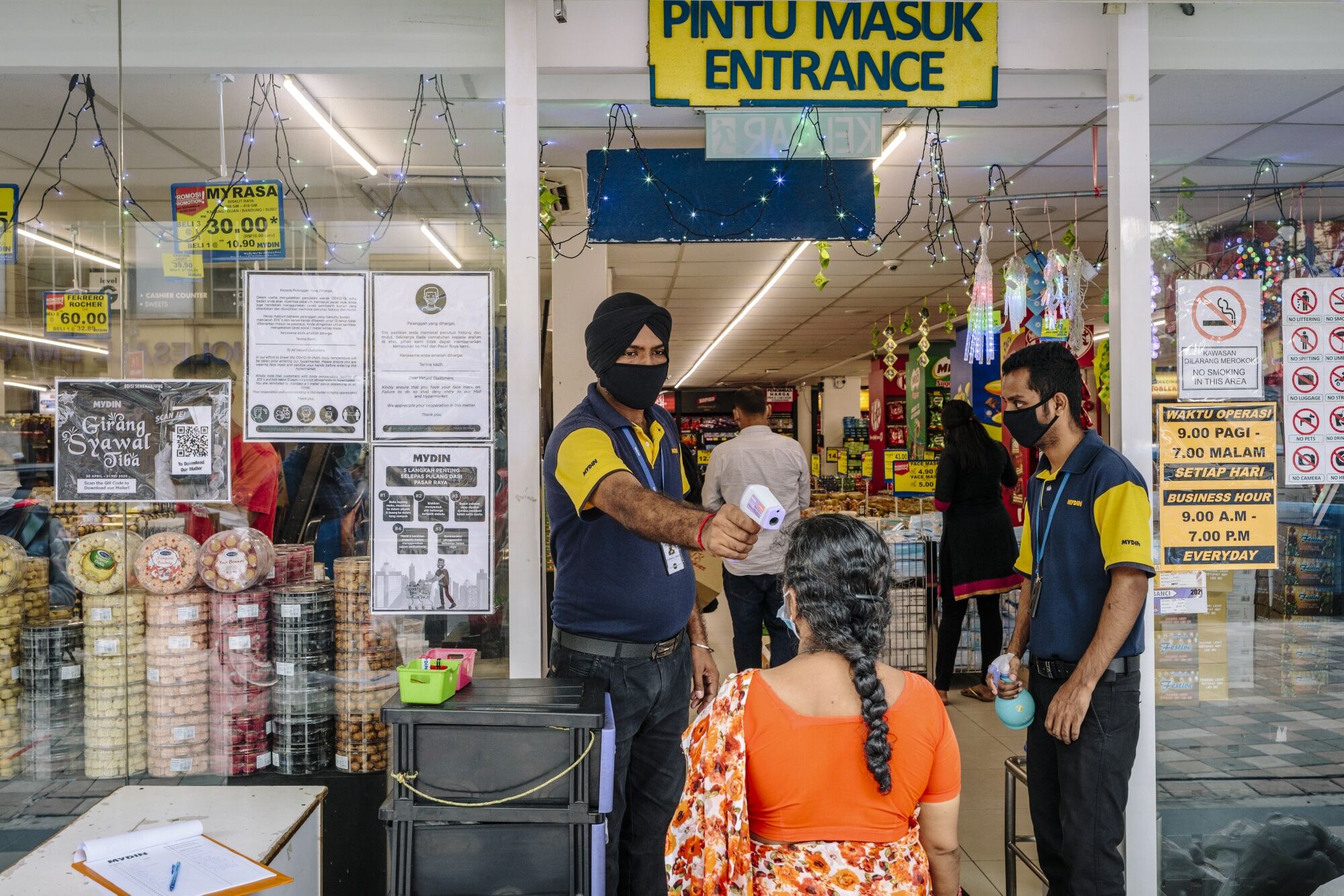
Malaysia reported the smallest increase in new coronavirus cases since March 12, after it saw a surge of infections among migrant workers earlier this week. The country added 15 cases on Wednesday to bring the overall number of infections to 7,619 with 115 deaths, according to the health ministry. The country added a total of 359 new cases on Tuesday and Monday, most of which were found among foreign workers at immigration detention centers as the government stepped up testing.
EU Will Propose 750 Billion-Euro Fiscal Stimulus Package (5:31 p.m.
HK)
The European Union’s executive arm will propose a new fiscal stimulus package of as much as 750 billion euros ($823 billion) in an unprecedented push to overcome the deepest recession in living memory, according to a tweet by European Commissioner Paolo Gentiloni. Of the total amount, 500 billion euros from the package will be distributed in the form of grants to member states, and 250 billion euros could be available in loans, according to an official, who asked not to be named, in line with policy.
To fund the package, the EU would borrow up to 750 billion euros on financial markets.
Second Swiss Wave Could Be Slower (5:26 p.m. HK)
A second, slower spreading wave of Covid-19 infections could claim as many as 5,000 lives in Switzerland, up from the 1,915 deaths recorded so far. A model developed by ETH Zurich’s Dirk Mohr, professor of computational modeling of materials, and Fadoua Balabdaoui, a senior scientist, shows that even if the reproductive number should exceed 1, a second wave is unlikely to reach the high levels of infections seen in early March.
“That means the authorities will have more time than they did during the first wave to take action and to adapt measures as the situation evolves,” Mohr said.
This would also reduce the risk of an overload of the country’s healthcare system. “This is good news, but it’s also deceptive,” he said, adding that a very slow second wave with a reproductive number just above 1 “would be particularly insidious.”
U. K. Weighs Local Lockdowns (4:44 p.m. HK)
Individual U. K. businesses, schools, hospitals and housing estates could be isolated on a local level if coronavirus flares up, under Prime Minister Boris Johnson plan to relax lockdown rules.
Housing Secretary Robert Jenrick said the new track, trace and isolate plan would have a “very local element to it.” The measures which include hiring 25,000 contact tracers to monitor the spread of the virus, are due to come into operation next week, although a mobile phone app to help track the spread of infections has been delayed.
“If there is a flare-up in one particular community — and that could be applied on a small scale, like a particular workplace or school — then measures can be introduced, which hopefully the public will get behind, to enable us to control the virus in that locality,” Jenrick told BBC News on Wednesday.
Separately, figures showed total government support to businesses and households reached 49.3 billion pounds ($60.3 billion) as of May 24, up from about 39 billion pounds last week.
U. K. public finances will take years to recover from the massive spending spree designed to limit the damage inflicted by the coronavirus pandemic, according to a survey of economists released by the Treasury this month.
France Ends Clearance for Hydroxychloroquine (4:26 p.m. HK)
France removed hydroxychloroquine from a list of medicines that can be used to treat patients with Covid-19 after consultation with scientific advisers.
An advisory body reviewed data on the old malaria medicine, including an article published in the Lancet, and advised against using hydroxychloroquine, alone or in combination, to treat Covid-19.
The drug, touted by U. S. President Donald Trump as a treatment, has been linked to an increased risk of death and heart ailments.
Russia Covid-19 Recoveries Exceed New Cases (4 p.m. HK)
Russia had 8,338 new confirmed coronavirus cases over the past day, taking the total in the country to 370,680.
Figures showed 11,079 people had recovered in the same period, the second straight day that number exceeded new cases. The death toll rose by 161 to 3,968.
Data showed earlier that Russia’s retail sales plunged the most since records began in the latest sign that the government’s cautious stimulus program has done little to soften the economic blow from the coronavirus lockdown.
Economy Closer to ECB’s Worst-Case Estimates (3:50 p.m.
HK)
The euro-area economy is facing a contraction this year in line with the European Central Bank’s more pessimistic forecasts, according to Christine Lagarde. Output in the region is likely to shrink between 8% to 12%, the ECB president said in an online question-and-answer session targeted at European youth. Estimates for a mild scenario are “out of date.”
“We’ll have a better sense in a few days as we publish our numbers in early June, but it’s likely we will be in between the medium and severe scenarios,” she said.
The ECB is due to update its official projections for growth and inflation next week, when the Governing Council also decides on policy.
U. K. Proposes One-Year Delay for Climate Talks (3:46 p.m. HK)
The U. K. is proposing that the United Nations climate conference scheduled for Glasgow in November this year is delayed by 12 months. The talks are one of the world’s largest diplomatic gatherings, with over 26,000 attendees, and were postponed in April due to the coronavirus pandemic.
The U. K., the host country for the COP26 talks, sent a letter to United Nation member states proposing the new date, seen by the Press Association news agency.
Germany Extends Contact Restrictions (3:43 p.m. HK)
Chancellor Angela Merkel’s government and Germany’s 16 states have agreed to keep coronavirus contact restrictions in place until June 29 while allowing some room for increased social activity.
The government urged citizens to continue to observe social-distancing rules, though states have room to allow groups of as many as 10 people to meet in public, as well as contact with two other households.
Merkel’s control of the crisis has been tested by the premier of the eastern state of Thuringia, who has floated plans to abandon restrictions after June 5 and instead rely on local authorities and individuals to maintain hygiene requirements.
A minister in Saxony has said the eastern state may follow suit.
The chancellor is due to hold talks with the premiers of Germany’s eastern states later on Wednesday.
Ryanair Maps Growth With 737 Max Jets (3 p.m. HK)
Ryanair Holdings Plc is planning to rekindle growth after the coronavirus crisis by negotiating incentives with traffic-starved airports and betting on the return of Boeing Co.’s beleaguered 737 Max.
Europe’s largest low-cost carrier is in talks with airports in Germany, Austria, Italy, Spain and Portugal that are facing “severe cuts” in capacity as the Covid-19 pandemic batters air travel, Chief Executive Officer Michael O’Leary said in an interview.
The discussions involve “expanding our growing traffic in their airports over the next 18 months,” he said.
Indonesia Orders Ramp Up of Tests in Java Hot Spot (2:57 p.m. HK)
Indonesia will step up coronavirus testing and isolation of suspected patients in East Java, home to the nation’s second-largest city and a major industrial hub that’s emerged as a new virus hot spot.
President Joko Widodo ordered troops and police to assist local authorities in bolstering efforts to contain a spike in cases in East Java, a province with a population of almost 40 million.
Jokowi, as the president is known, also called on ministers to focus on flattening the virus curve in other regions reporting high rates of new infections.
Johnson Faces More Questions Over Support for Top Aide (1:27 p.m. HK)
Pressure continues to mount on Prime Minister Boris Johnson to fire his chief aide, Dominic Cummings, with polls showing voters think he broke lockdown rules and members of Parliament calling for him to go.
Johnson will face an hour and a half of sustained questioning from the senior members of Parliament who make up the so-called Liaison Committee on Wednesday from 4 p.m.
London time. The subject is his handling of the coronavirus crisis in general, but the opening section will be his relationship with Cummings.
German New Cases Rise, Infection Rate Drops Further (1:21 p.m. HK)
Germany’s new coronavirus cases rose to the highest in four days, though the infection rate dropped further below the key threshold of 1.0.
There were 600 new cases in the 24 hours through Wednesday morning, bringing the total to 181,200, according to data from Johns Hopkins University.
That compares with 272 the previous day and almost 7,000 at the peak of the outbreak in late March. Fatalities increased by 63 to 8,372. The daily death toll has remained below 100 for almost two weeks.
The reproduction factor of the virus dropped to 0.70 on Tuesday from 0.83 the day before, according to the latest estimate from the Robert Koch Institute. This means 10 infected people are estimated to infect an average of seven others.
Thailand Reports 9 Cases, May Shorten Curfew (1:15 p.m.
HK)
Thailand reported nine new coronavirus cases, all of them in state quarantine after returning from the U. S., Qatar and Saudi Arabia, according to Taweesilp Witsanuyotin, a spokesman for the Covid-19 center.
The new infections come as Thailand’s National Security Council will consider details of a third stage of easing its lockdown later Wednesday, include shortening a curfew and allowing inter-provincial travel, Somsak Rungsita, secretary-general of the council, told reporters in Bangkok.
The government is scheduled to start the third stage of easing from June 1.
Japan to Unveil Another $1 Trillion in Stimulus (12:17 p.m. HK)
Japan will unveil new economic stimulus worth more than $1 trillion, its second major package in just over a month to keep businesses and households afloat amid the deepening coronavirus recession, a document obtained by Bloomberg showed.
The 117 trillion yen ($1.1 trillion) package includes a raft of loan guarantees and private sector contributions along with 31.9 trillion yen in fresh government spending that will be paid for with new bond issuances, according to the document.
Quarantine-Free Flights From Australia to Be Considered (12:14 p.m.
HK)
An air-travel corridor between Australia and New Zealand could be trialed within weeks, a key test of how international flights worldwide can resume while the coronavirus threat remains.
Draft guidelines of how quarantine-free flights can safely operate between the countries will be handed to both governments in early June, according to the Australia New Zealand Leadership Forum, which is coordinating a group of government agencies, airports, airlines and health experts working on the plan.
Quest to Offer Employers Virus Tests (12:10 p.m.
HK)
Quest Diagnostics Inc. is offering services to large employers geared at getting their employees back to work safely, including testing for the novel coronavirus, analytics to monitor symptoms and hotspots, and services like temperature monitoring, the company announced Wednesday.
The Quest program joins similar ones from Laboratory Corp. of America Holdings and health providers like primary-care clinic One Medical, showing how reopening efforts have created a new way for health-care companies to market their services.
South Korea Reports Most Cases in 7 Weeks (10:19 a.m.
HK)
South Korea reported 40 new coronavirus cases in 24 hours, the biggest increase since April 8, according to data from Korea Centers for Disease Control & Prevention website.
Thirty-six of the cases were linked to a distribution center for online retailer Coupang, and the government expects more cases to emerge from the outbreak. South Korea has also been monitoring the spread of infections linked to nightclubs in Itaewon, Seoul.
Cases tied to that outbreak grew to 259 as of noon.
The country has been reopening schools in stages, as new cases have hovered between 12 and 35 for the last three weeks.
Los Angeles to Open Retail Stores, Religious Services (9:08 a.m. HK)
Los Angeles Mayor Eric Garcetti said all retailers in the second-largest U. S. city may open for in-store shopping as of Wednesday, with 50% capacity.
Places of worship can resume services at 25% capacity or a maximum of 100 people, whichever is lower.
While the moves are in line with guidelines outlined by California Governor Gavin Newsom, Los Angeles County has generally had stricter measures than the rest of the state. The county has almost 46,000 confirmed cases of the coronavirus, nearly half of California’s total.
For more articles like this, please visit us at bloomberg.com
©2020 Bloomberg L.
P.