
ECB’s Centeno Says Downside Risks for Economy Are Materializing
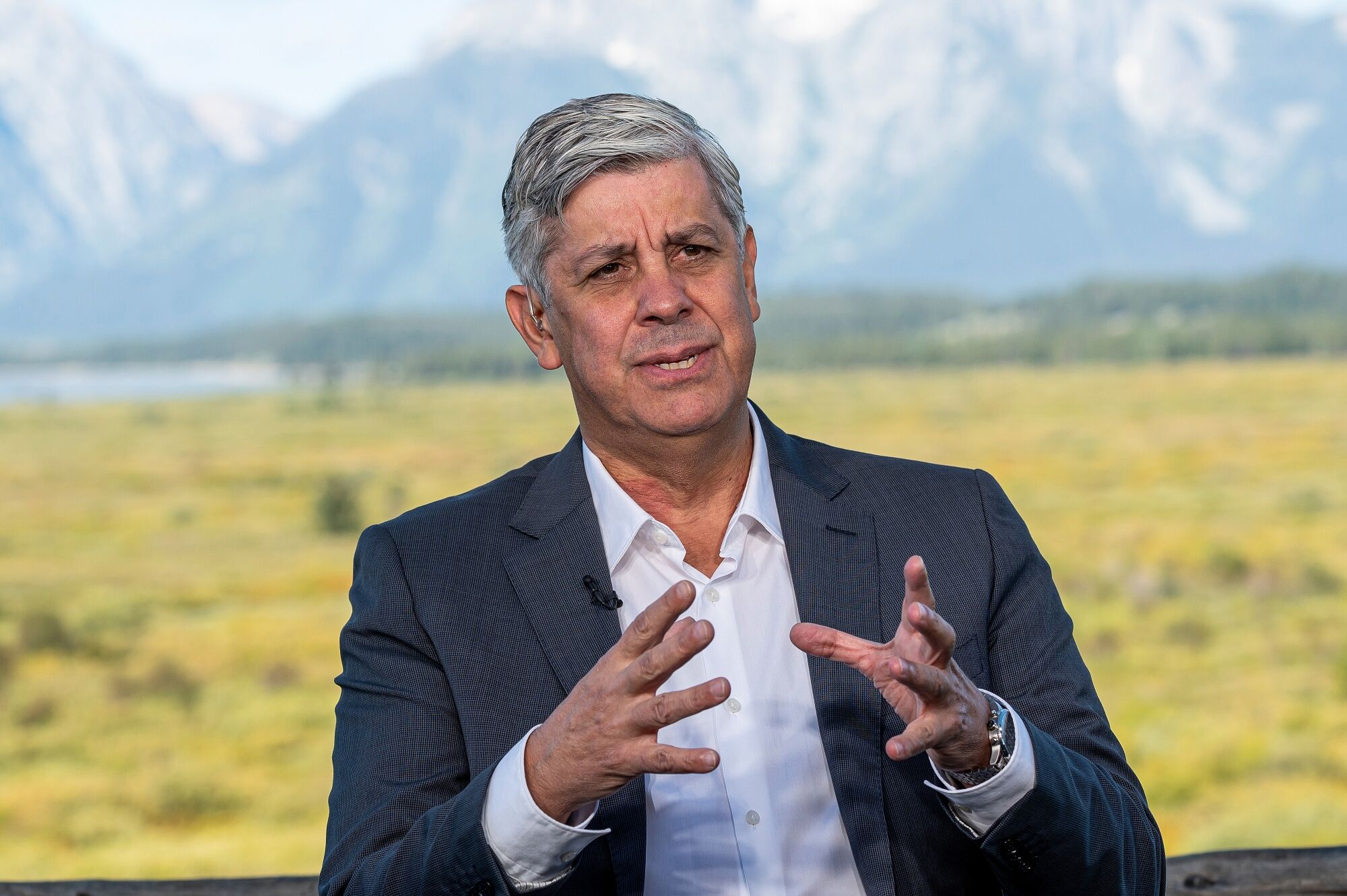
(Bloomberg) — European Central Bank Governing Council member Mario Centeno said officials should be cautious in deciding on the next steps as risks for the economy that have previously been identified are now becoming reality.
The transmission of the ECB’s monetary tightening campaign is “up and running” and inflation’s retreat has been faster than its rise, Centeno told Bloomberg TV at the annual Jackson Hole symposium in Wyoming.
A key question that officials must answer is how much of the impact is yet to unfold, he said.
“We have to be cautious this time around because downside risks that we identified in June in our forecast have materialized,” said Centeno, who also heads Portugal’s central bank. “This is an inversion of what happened throughout the pandemic recovery because usually we have been surprised on the upside.”
The comments come as ECB officials ponder whether to hit pause on a historic campaign of interest-rate increases or whether another move is warranted when they next convene in September.
The economic outlook for the 20-nation euro area has deteriorated lately, suggesting that the 425 basis points of hikes delivered since July 2022 are having an impact.
While the bloc has so far dodged a recession, Germany — the region’s biggest economy — is failing to gain any momentum after suffering a downturn over the winter.
Economic Stabilizer
A survey of euro-area purchasing managers released this week showed an intensifying contraction in private-sector activity in August, leading investors to bet that the ECB will pause next month.
“We need to understand that monetary policy needs to be a stabilizer in the economy,” Centeno said. “We need to take those numbers into account.”
There’s also growing evidence that underlying inflation, the ECB’s preferred measure of price gains at the moment, has peaked.
Inflation that strips out items like energy and food held at 5.5% in July, with this month’s reading due Aug. 31.
“There’s plenty of data still to be made available until the September decision,” said Centeno, who’s among the Governing Council’s more dovish members. “We have a new forecast. That forecast will tell us precisely how we see this transmission of our decisions into inflation and the economy.”
Several officials have cautioned that even if the ECB doesn’t raise borrowing costs for a 10th straight time on Sept. 14, it could still do so in the following months.
Chief Economist Philip Lane has said the ECB will be “very data dependent” and “hunting for clues.”
The focus for policymakers has turned to domestic pressures such as higher wages and company profit margins, shifting away from external shocks like the spike in energy prices that followed Russia’s invasion of Ukraine.
ECB President Christine Lagarde may offer hints of the likely policy path when she gives a speech in Jackson Hole on Aug. 25.
–With assistance from Joao Lima and Jana Randow.
More stories like this are available on bloomberg.com
©2023 Bloomberg L.
P.