
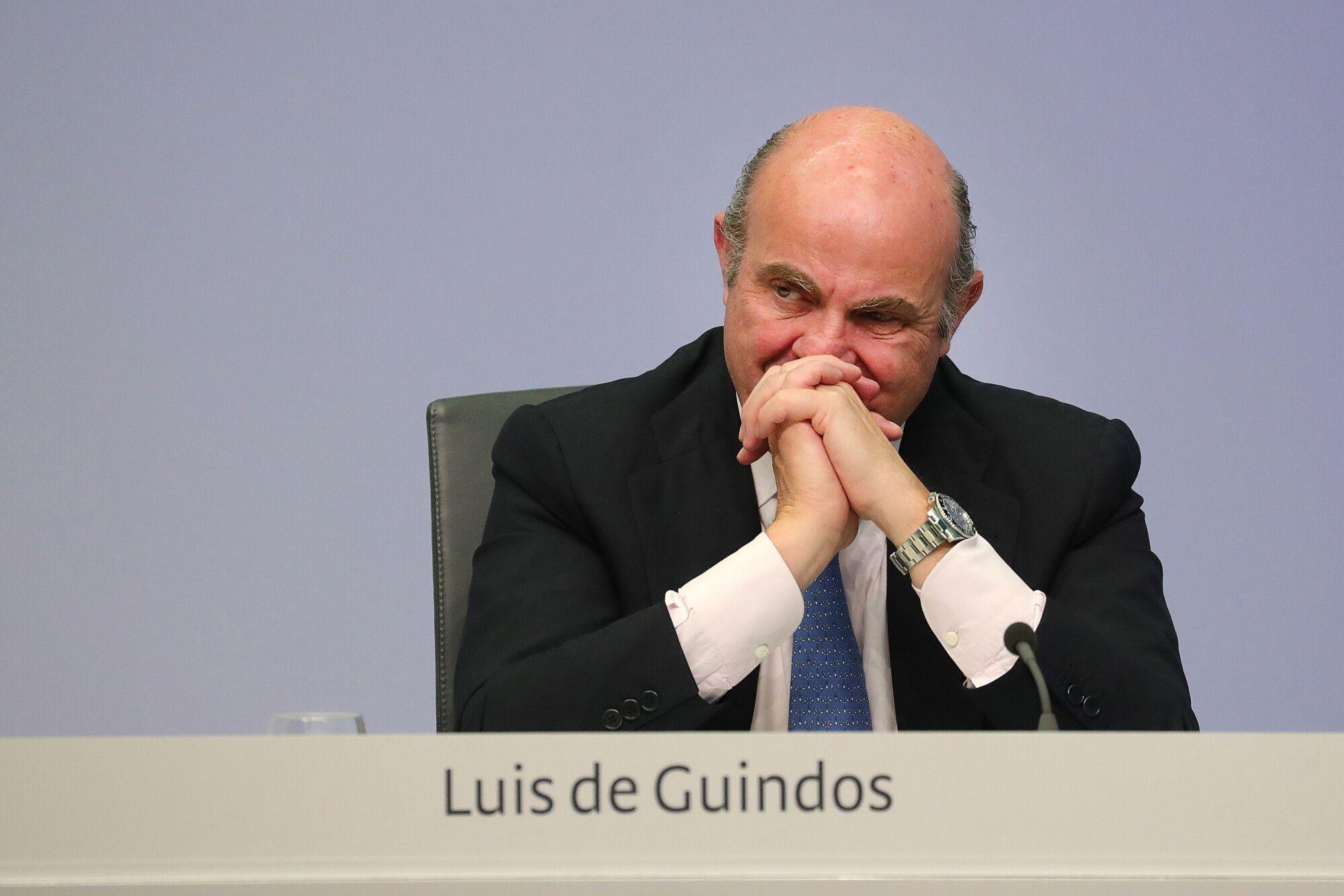
(Bloomberg) — The euro zone’s upcoming consumer-price report will matter for the European Central Bank’s next decision as officials confront inflation that’s likely to stay “elevated” for months, according to Vice President Luis de Guindos.
“In the past, we have had a lot of negative surprises,” Guindos told Bloomberg Television on Wednesday in Frankfurt. “Let’s see what happens in November,” he said, referring to data due on Nov. 30.
Speaking after a financial-stability assessment that observed the damage caused by surging inflation and slowing economic growth, Guindos warned that consumer-price increases won’t significantly weaken any time soon — even if they may soon peak.
The last reading in October was at 10.7%, a record in the history of the euro area.
The comments follow a flurry of financial-market-shifting inflation data in recent days. While a US report last week showed a range of measures slowed more than expected, UK statistics on Wednesday revealed a 41-year high in consumer-price gains.
“It’s very important that we take into consideration that in the short term, over the next months, inflation is going to be hovering around the present level, that is a little bit above 10%,” Guindos said. “Inflation is going to stay elevated clearly above our target in the first half.
So inflation will be hovering around 6 or 7%.”
The decline in the headline measure “will not make our inflation rate converge towards our price-stability definition,” he said. “Lower growth is not going on its own to reduce inflation. I think that monetary policy has to make a contribution.”
Two of Guindos’s ECB colleagues maintained their tough line on inflation on Wednesday.
Estonia’s hawkish central bank chief, Madis Muller, urged another “substantial” rate hike of 50 or 75 basis points next month after October’s record inflation reading.
His more dovish Portuguese counterpart, Mario Centeno, said inaction “is not an option” as a prolonged bout of elevated price growth would in itself trigger a recession.
There was some pushback, however — namely from Italy’s Ignazio Visco. The case for a less aggressive monetary-policy approach is gaining ground even though rates will need to keep rising, he told lawmakers Wednesday in Rome.
Guindos highlighted that the Dec. 15 decision will feature new quarterly economic forecasts, which themselves will reflect the Nov. 30 data.
“We have to finalize the projections,” he said. “We will have an additional figure, that will be inflation for November, that is relevant.”
–With assistance from Max Ramsay, Ott Tammik, Alessandra Migliaccio, Joao Lima and Henrique Almeida.
More stories like this are available on bloomberg.com
©2022 Bloomberg L.
P.