
(Bloomberg) — The European Central Bank should get interest rates to near 2% by year end with sharp increases before taking a more flexible approach and potentially embarking on a cautious shrinking of its balance sheet at a later stage, Bank of France Governor Francois Villeroy de Galhau said.
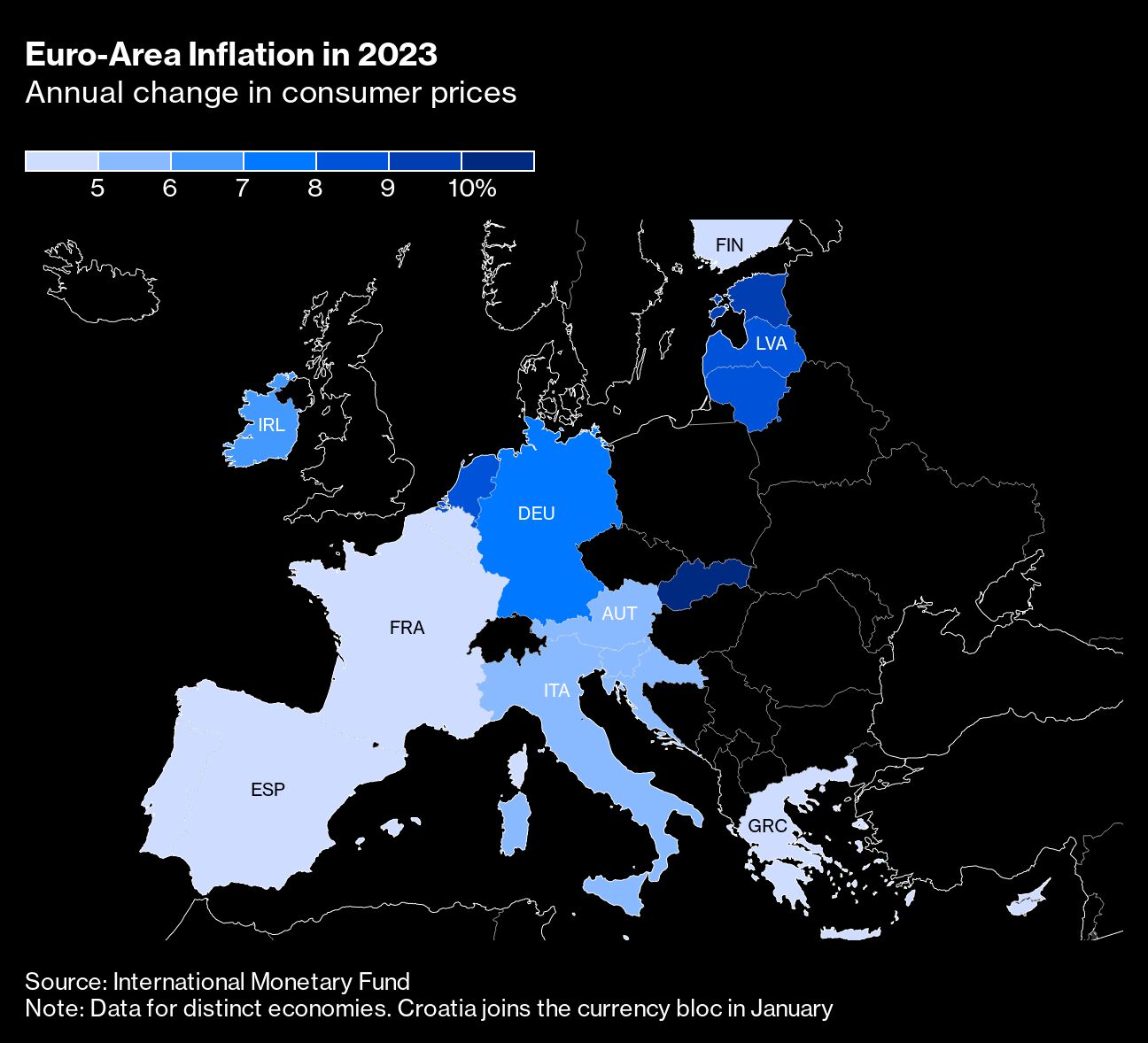
With inflation at a record high of 10% in the euro area, the ECB must not let fears of recession “derail” its plans to get rates from 0.75% to a neutral setting — deemed to neither stimulate nor slow the economy — of “a bit less than 2%,” the French policy maker said.
While reaching that end-of-year target probably won’t mark the end of rate hikes, he called for a subsequent shift to a more flexible and possibly slower pace based on a precise economic assessment.
Once moving above neutral, it would also be consistent to begin reducing the nearly €9 trillion euros ($8.8 trillion) of assets the ECB amassed during the years when it was trying to stir inflation, Villeroy said.
The French central banker’s comments give investors a glimpse of how the ECB may navigate a combination of still high inflation with the risk of a sharp economic slowdown or even recession.
It is also the first time Villeroy has hinted at how the ECB would reduce its stock of assets — a process that has already begun in the U. S. but has not yet been discussed at ECB policy meetings.
“But we should have an orderly use of our palette of instruments: first, interest rate hikes, with a rapid increase toward neutral and then a possibly more flexible pace,” Villeroy said in a speech at Columbia University in New York. “Second, and at some later stage, balance sheet normalization, with a more cautious start followed by a gradual amplification.”
Villeroy said the ECB would look at four key indicators when it decides on future rate hikes:
- Actual inflation data, with a focus on a range of indicators of underlying inflation
- Inflation expectations in financial markets and of businesses and households
- “Any sign of stronger de-anchoring would call for a stronger monetary reaction”
- The state of the economy and projections for growth and employment
- A benchmark measure of the degree of tightening, which could be medium-term forward real interest rates
Villeroy gave four principles that could guide the ECB unwinding its balance sheet:
- Interest rates would remain the primary instrument for monetary policy, with balance sheet adjustments used as a complementary tool, “whose effects are more difficult to calibrate or fine-tune”
- A sequencing regarding different programs, starting with reimbursing the TLTRO loans.
Maturing assets in the covid program known as PEPP will be reinvested until the end of 2024, while shrinking the APP holdings could start earlier “maintaining partial reinvestments but at a gradually reduced pace”
- “The phasing out of the asset portfolio should be orderly, announced cautiously and well in advance”
- Balance sheet reduction should not be entirely on “automatic pilot”
- “Starting slowly, assessing markets reaction, and gradually accelerating is a better way”
More stories like this are available on bloomberg.com
©2022 Bloomberg L.
P.