
(Bloomberg) — The European Union agreed to press ahead with a set of emergency actions to address the bloc’s energy crisis, with Germany yielding to pressure from other member states to pave the way for a temporary price cap on natural gas prices.
“We sent also a clear signal to the market,” European Council President Charles Michel said at a news conference early Friday. “It means that we are ready to act together, that we are able to work together and there’s strong political willingness.
I’m confident that there will be an effect very soon.”
German Chancellor Olaf Scholz came into the meeting firmly opposed to more radical interventions in the gas market, even as a majority of the bloc’s 27 nations were seeking a political endorsement of a price cap.
After hours of intense negotiations, the leaders agreed to ask the EU’s executive arm to propose a “temporary dynamic price corridor on natural gas transactions to immediately limit episodes of excessive gas prices,” the leaders agreed to say in their joint statement.
They also said they would pursue a temporary framework to cap the price of gas in electricity generation, including a cost and benefit analysis.
“We will develop a complementary new index to reflect better the LNG price situation and for the meantime we will establish a market correction mechanism to limit episodes of excessive gas prices,” European Commission President Ursula von der Leyen said at a news conference. “We will work with energy ministers to submit a legal proposal to operationalize the market mechanism.”
Leaders also agreed to ask for steps to avoid extreme price spikes in energy derivatives and to use their joint purchasing power as leverage in negotiations with global gas suppliers.
Countries including France, Italy and Poland had been pushing hard to limit the cost of gas, which is roiling economies and fueling inflation as the region heads for a winter with drastically reduced shipments from Russia after its invasion of Ukraine.
If the bloc can’t agree on significant enough steps, it risks having national government take diverging routes to address the fallout.
Michel called it a “moment of truth” for the bloc as it faces the toughest winter in decades, with its economies staggering under the double blows of high inflation and record energy prices.
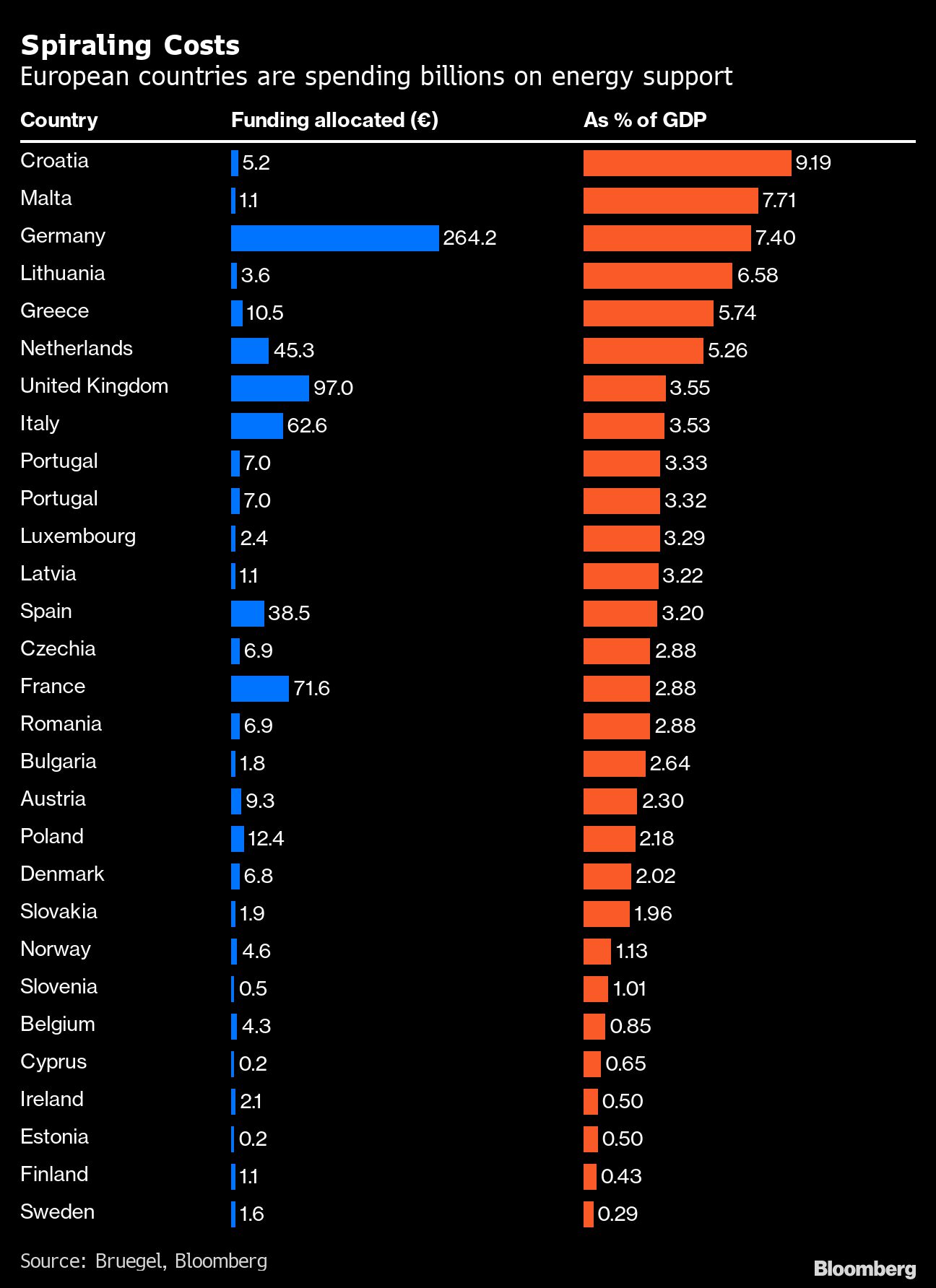
Read more: Europe Racks Up $700 Billion Energy Tab as Fiscal Battle Rages
European natural gas prices have declined by more than 60% since the peak in August, with strong flows of liquefied natural gas helping to replace Russian supplies and fill up storage sites.
A mild start to the winter heating season has also helped damp demand but temperatures are set to drop as winter kicks in and gas prices are likely to rise in the coming months.
Industry and households’ ability to cut consumption in response to high prices will be key to managing shortages. On the supply side, Europe needs to continue attracting LNG cargoes ahead of buyers in Asia.
–With assistance from John Ainger, Slav Okov and Alberto Nardelli.
More stories like this are available on bloomberg.com
©2022 Bloomberg L.
P.