
Five Key Charts to Watch in Global Commodities This Week
(Bloomberg) — Oil markets tightness, growth prospects for the solar industry and the outlook of a key crop to the world’s food supply will be top of mind for commodities markets in the next week. A buildup of Russian aluminum stockpiles is also expected to be a key topic when more than 400 executives from across the aluminum supply chain gather at a conference in Spain. Meanwhile, there is talk of new tariffs aimed at excess steel output from China and other nations.
Here are five charts to consider as the week gets under way.
Oil
In the latest sign of tightening oil markets, US crude stockpiles have dwindled to the lowest level since December following four straight weeks of declines.
The drawdown comes as Saudi Arabia and Russia have extended production cuts through the end of the year. That leaves the world with a thin supply cushion heading into the Northern Hemisphere winter. A shortage of oil would mean more expensive fuel around the world, which could fan inflation and burden consumers, especially in places where fuel is heavily used for winter heating. Global oil benchmark Brent futures held above $90 a barrel on Monday, while US gasoline prices have reached their highest in a decade for this time of year.
Grains
Grain buyers will be closely watching for the latest insights from the US Department of Agriculture.
The agency is widely expected to trim its domestic corn yield estimate for a third straight month in Tuesday’s World Agricultural Supply and Demand Estimates report. That’s after the Pro Farmer crop tour in August showed corn fields to be in poorer condition than anticipated. Analysts expect the USDA to pare estimates to 173.5 bushels an acre for America’s most dominant crop. While this year’s harvest is seen to be bigger than in 2022, disappointing yields will mean tighter American supplies given last year’s shortfall.
Corn is key to the global food supply, and a disappointing US harvest could have ripple effects on global markets.
Read More: The US Is Losing Its Title of Top Corn Exporter to Brazil
Metals
Annual supply negotiations for aluminum will kick off at a Fastmarkets conference in Barcelona this week, and for a second year fraught discussions about Russian metal sales will dominate proceedings.
There are no blanket sanctions that outlaw trading in Russian aluminum since the country’s invasion of Ukraine last year, but some buyers and traders have sought to avoid the supplies on ethical grounds, or because it’s harder to organize logistics or financing. That has led to a buildup of Russian aluminum in London Metal Exchange stockpiles, and they now make up the bulk of inventory. Some rival producers say the rising volumes risk distorting global prices.
Aluminum futures on the LME have fallen 7.4% this year on deteriorating demand and rebounding supply in China. Russia is the world’s second-largest producer of the ubiquitous lightweight industrial metal used in everything from airplanes and automobiles to consumer packaging and construction.
Steel
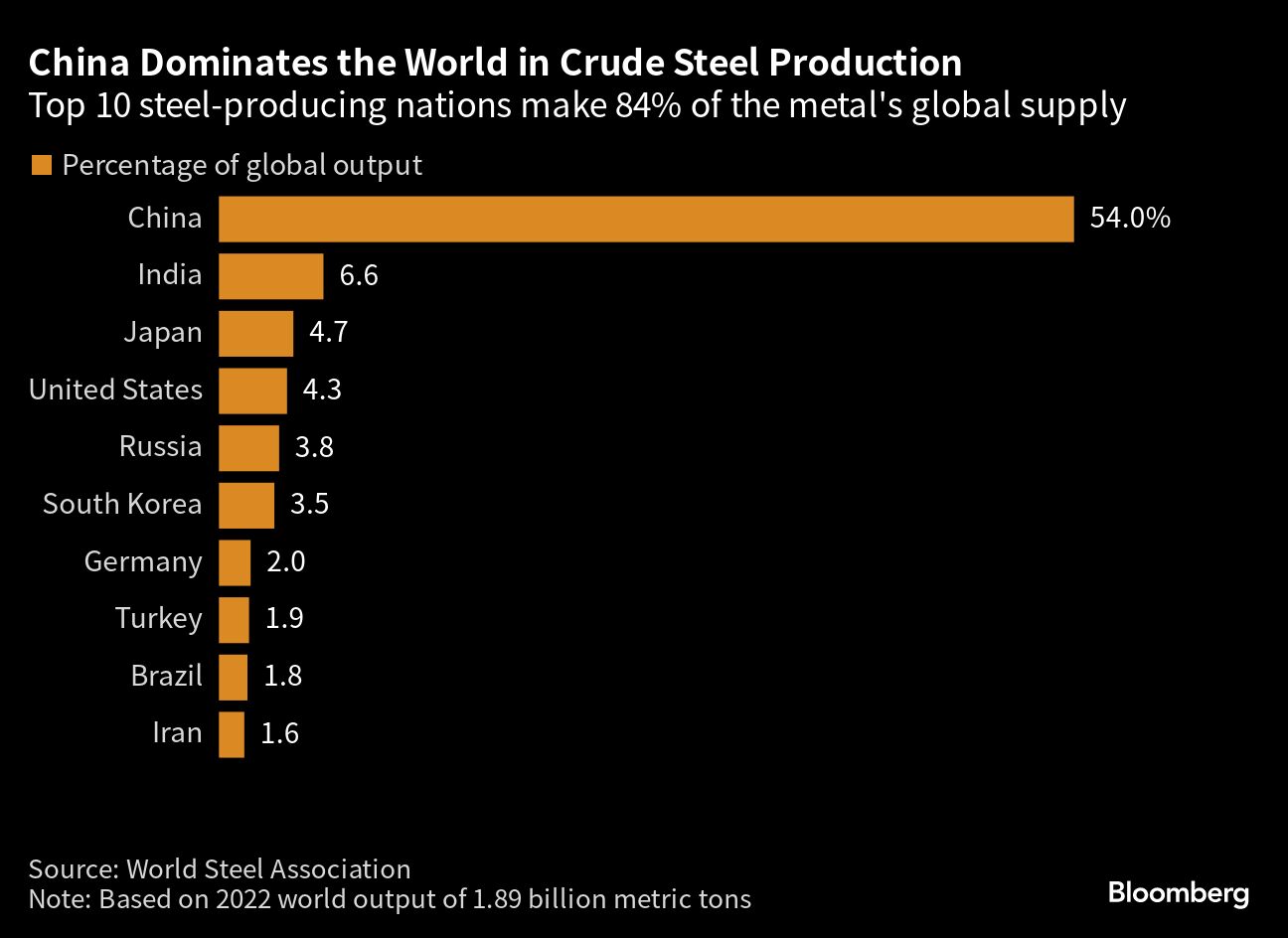
The US and European Union are working on an agreement that would introduce new tariffs aimed at excess steel production from China and other countries, according to people familiar with the discussions.
The agreement would be part of the so-called Global Arrangement on Sustainable Steel and Aluminum that the EU and the Biden administration have been negotiating since 2021. Any new tariffs would deal a blow to Chinese steelmakers, which have been shipping increasing volumes this year due to weak demand at home. China is by far the world’s largest producer, accounting for more than half of the global crude steel making.
Renewables
Growth opportunities in solar energy will be top of mind for industry professionals converging this week in Las Vegas at RE+, North America’s largest renewable energy event this year.
Solar developers are anticipating a big boost from US tax incentives in President Joe Biden’s Inflation Reduction Act, which is designed to hasten the country’s shift away from a fossil-fuel powered economy. That’s already leading to bullish projections for one of the world’s biggest solar energy users. A new report by the Solar Energy Industries Association and Wood Mackenzie Ltd. forecasts that the US will add a record 32 gigawatts of capacity this year — equal to about 30 new nuclear reactors — followed by five years of increasing growth.
Such expansion is presenting new challenges for states like California and Texas, where grid operators are finding supplies running short when solar ramps down during the evening.
–With assistance from Mark Chediak, Chunzi Xu, Mark Burton, Joe Deaux, Dominic Carey and Michael Hirtzer.
(Updates oil and aluminum prices.)
More stories like this are available on bloomberg.com
©2023 Bloomberg L.
P.