
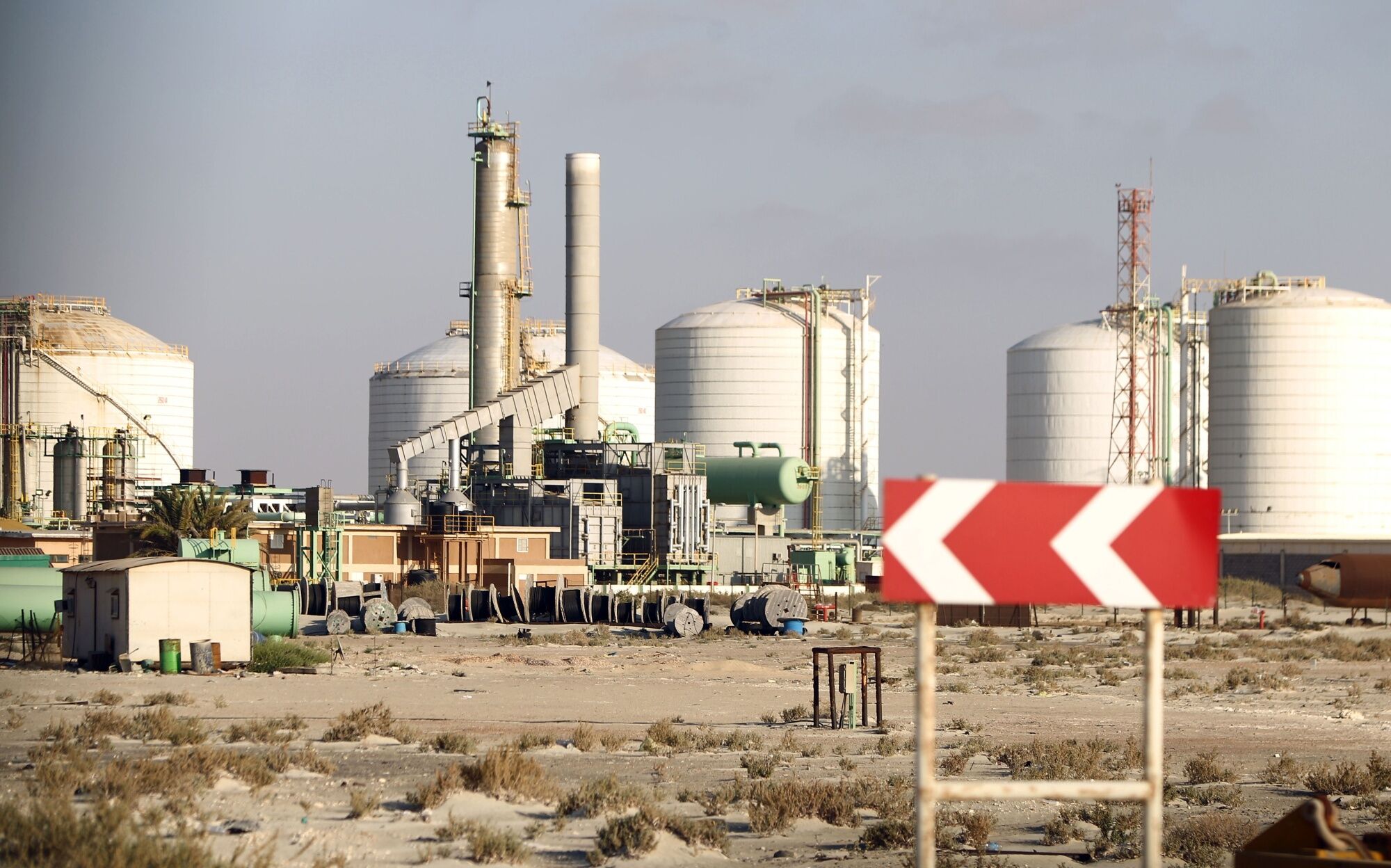
(Bloomberg) — A French navy frigate hailed a tanker as it was on its way to load refined petroleum products from an eastern Libyan port, preventing the ship from reaching its destination and leaving it loitering offshore for almost a week, four Western diplomats told Bloomberg on Thursday.
The French Cassard class frigate Jean-Bart was on a European Union mission called Irini that aims to enforce a weapons embargo on Libya and block illicit oil sales that could finance the warring parties in that country’s conflict, the people said, asking not to be named because the information hasn’t been made public.
The Jean-Bart approached the Jal Laxmi tanker on May 22 after Irini received information that it was headed to the port of Tobruk, as part of a sale of refined products to a company registered in the United Arab Emirates, the diplomats said.
The tanker did not continue on its voyage but remains in the area, they added.
Along with the frigate’s contact with the Jal Laxmi, the U. S. and United Nations also exerted pressure behind the scenes to block the shipment, three of the diplomats said. The UN’s Panel of Experts and sanctions committee have warned all parties involved that they were violating an embargo, one of the diplomats said.
France’s defense ministry didn’t respond to requests for comment on the incident.
The UN also didn’t immediately comment when contacted by Bloomberg.
The State Department on Thursday said it knew of reports on the Jal Laxmi but referred reporters to the EU and France.
UN Security Council Resolutions specify that the the Tripoli-based National Oil Corporation is the only entity authorized to export Libyan oil and the U. S. reaffirms that Libya’s hydrocarbon resources must remain under the exclusive control of the National Oil Corporation, the spokesperson said.
A military commander from eastern Libya, Khalifa Haftar is at war with the internationally recognized government in Tripoli.
Haftar has been supported by the UAE, Russia and Egypt, while the Tripoli government is primarily supported on the ground by Turkey. Haftar controls most of the country’s oil fields, which tap into Africa’s largest reserves.
In an effort to pressure his opponents in the nation’s capital in January, Haftar allowed loyalists to shut down oil production. The Tripoli-based National Oil Corporation, which is in charge of output, said on Thursday that losses from the shutdown have cost the war-torn nation more than $4.9 billion in revenue.
The war took a turning point over the last month when Turkey’s military intervention forced Haftar’s self-styled Libyan National Army and hundreds of Russian mercenaries to withdraw from much of the territory they’d seized since starting their offensive in April of last year.
The U. S. said earlier this week that Russia has sent 14 fighter jets to support Haftar, in a sign of more direct Russian involvement in a conflict that has killed at least 2,000 people.
(Updates with State Department comment, in sixth paragraph)
For more articles like this, please visit us at bloomberg.com
©2020 Bloomberg L. P.