
(Bloomberg) — Hedge funds have cut portfolio leverage this year in a conservative turn that has sucked borrowed money from global markets, adding selling pressure to stocks and bonds.
Net leverage, a measure of industry risk appetite that takes into account long versus short positions, has fallen almost 20 percentage points to a year low of 66%, according to data earlier this month from Goldman Sachs Group Inc.’s prime brokerage.
Separate figures from Morgan Stanley’s prime brokerage show a similar decline to 41% among US long-short equity hedge funds, a level reached on only a small number of occasions over the past decade.
The data, which was seen by Bloomberg News, provides one of the broadest snapshots of the sector. Goldman Sachs and Morgan Stanley have the world’s two largest prime brokerages, serving around 5,000 hedge funds each, according to the latest ranking by Convergence, a research provider.
Prime brokerage executives from two other global investment banks said the drop in leverage was driven by defensive positioning among funds as interest rates have climbed and markets have fallen.
They declined to be named discussing private matters.
Hedge funds want to “make sure they are not getting too close to levels that would force them to sell,” said Charles Lemonides, chief investment officer of Valueworks, a New York Hedge fund.
“A further market decline is going to stress that at some point. With every month that the Fed says they’ll get tighter and tighter, you resolve yourself to the fact we may enter one of those big liquidity-driven sell offs,” he said.
Another hedge fund manager who oversees more than $500 million and has reduced leverage this year said rising interest rates, persistent inflation and geopolitical instability had heightened the risks facing investors.
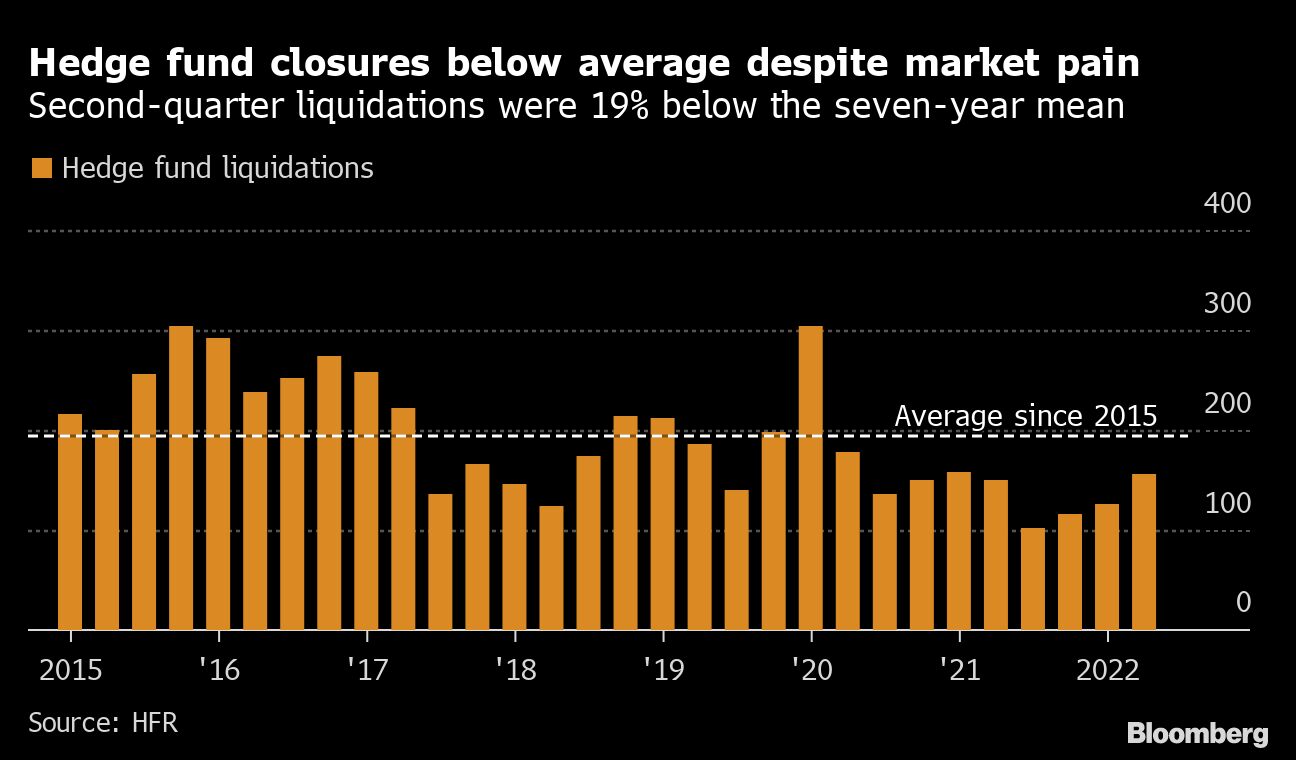
An index of hedge funds tracked by HFR has vastly outperformed stocks and bonds this year and separate data from the research provider showed fund liquidations in the second quarter remained well below average of recent years.
Belt-tightening
The decline in leverage also reflects belt-tightening among investment banks as interest rates rise and the outlook for the global economy dims.
Morgan Stanley Chief Executive James Gorman said during a third-quarter earnings call this month that the bank had reduced its margin book in a “conservative shift” over the past year. “We looked across our whole prime brokerage platform and we pulled in a little bit with certain clients,” he said.
Morgan Stanley was among the prime brokers that suffered large losses from the collapse of Archegos Capital Management last year.
The flame-out was driven by the excessive use of derivatives.
Since then, prime brokers have improved their oversight of client exposures across asset classes, according to the two prime brokerage executives.
They have also focused on maximizing the income earned on portfolio assets that hedge funds borrow against. This helps prime brokerage units reduce reliance on their parent bank’s balance sheet, better managing capital requirements, the two executives said.
The cost of leverage has also increased.
Prime brokers charge leverage as a percentage — 25 basis points is a typical spread — above interbank overnight borrowing benchmarks. Although the spreads have not increased, the underlying benchmarks have jumped this year alongside higher interest rates in a break from the low-rate environment since the financial crisis.
“It really costs you money to borrow today,” said Lemonides. “It was almost free for a long time.
That is going to have an impact on the profitability of hedge funds.”
–With assistance from Lu Wang.
More stories like this are available on bloomberg.com
©2022 Bloomberg L. P.