
(Bloomberg) —
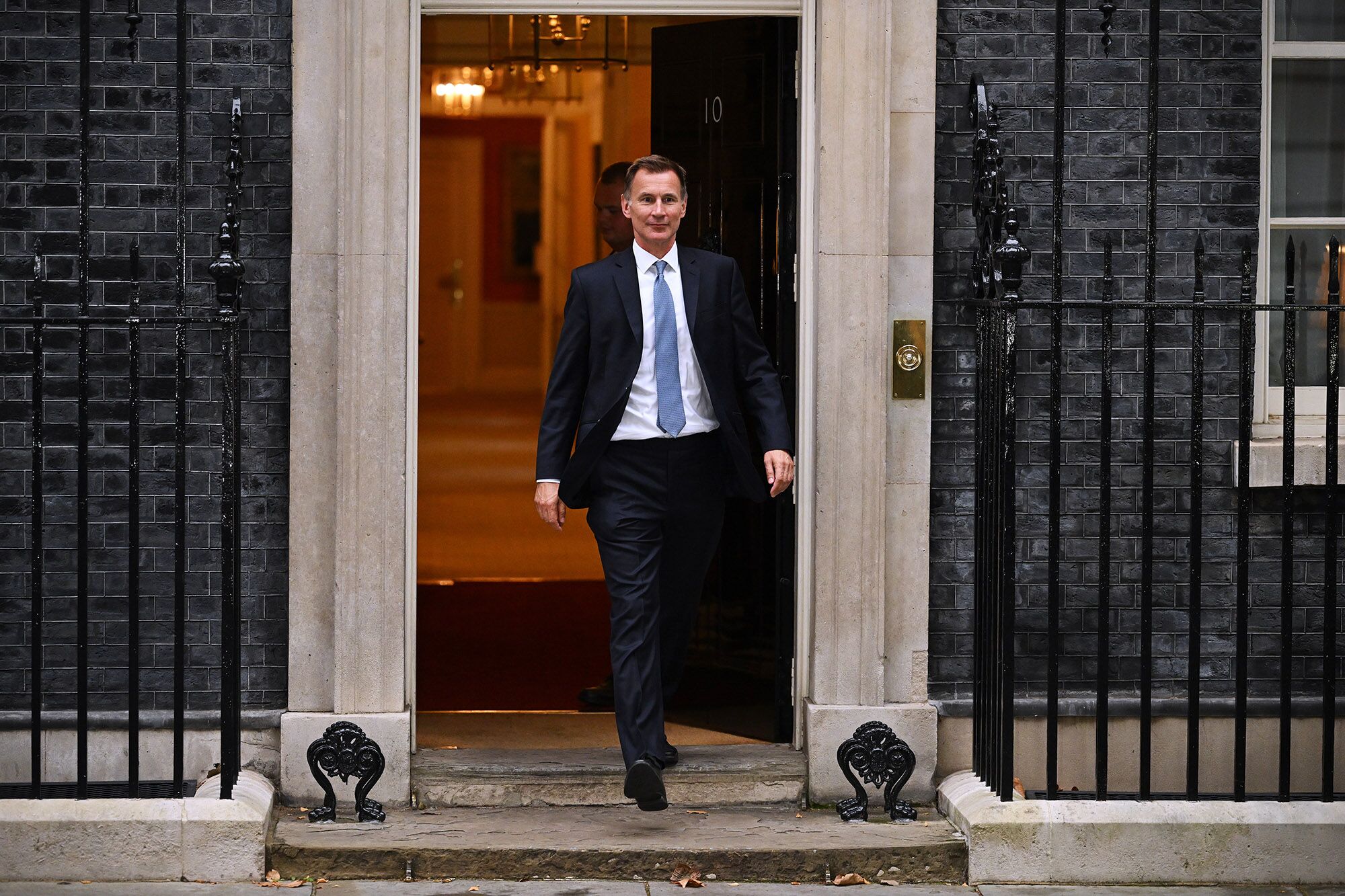
Chancellor of the Exchequer Jeremy Hunt said that there are tough choices ahead on tax and spending as he seeks to calm financial markets, after weeks of chaos since Prime Minister Liz Truss came to power.
“We have some very difficult decisions ahead,” Hunt said on Saturday in a Sky News interview. “The thing that people want, the markets want, the country needs now is stability.
No chancellor can control the markets. But what I can do is show that we can pay for our tax and spending plans.”
Hunt replaced Kwasi Kwarteng in charge of the UK’s purse strings on a dramatic Friday in which Truss sacked her longstanding ally and made a another major U-turn on her economic strategy in a desperate bid to rescue her premiership.
Desperate Bid to Save UK Premiership Lands Truss in More Trouble
While Hunt said he agrees with the underlying thrust of Truss’s aim to seek growth, he also criticized the prime minister and his predecessor for their “mistakes,” including on trying to cut taxes for the UK’s highest earners — an idea they were forced to abandon after a ferocious political backlash.
The new chancellor faces a huge challenge to calm markets.
While Truss said canceling her plan to freeze corporation tax will raise £18 billion ($20 billion) a year, Bloomberg Economics estimates about £24 billion more savings or revenue raising is needed to put debt back on a sustainable track.
Tax Warning
“Spending will not go up as much as people want and there’ll be more efficiencies to find,” Hunt said. “We won’t have the speed of tax cuts we’re hoping for and some taxes will have to go up: that’s the reality of the very challenging situation we face.”
While Hunt said that all government departments would have to find “efficiencies,” he denied that there would be a return to austerity on the level imposed by the Conservative-led coalition government in the early 2010s.
Truss Brings in Rival Who Could Steady the Ship, or Take Her Job
Hunt’s was a marked change in tone from Truss and Kwarteng, who had staked their political reputations on an all-out push for growth through the biggest set of tax cuts in half a century.
Truss’s rival for the top job in the Tory leadership contest, former Chancellor of the Exchequer Rishi Sunak, spent the campaign warning that Trussonomics would trigger market turmoil.
That prediction was borne out as Truss and Kwarteng failed to convince financial markets their plan was credible. Their Sept. 23 package triggered a selloff that sent the pound to an all-time low against the dollar and forced the Bank of England to intervene in the gilts market to prevent a key part of the pensions industry from collapsing.
After his own leadership bid was cut short, Hunt had backed Sunak — and there are echoes of the former chancellor’s argument — that growth policies should wait until after public finances are in good order — in what Hunt said.
‘Mistake’
“It was a mistake when we’re going to be asking for difficult decisions across the board on tax and spending to cut the rate of tax paid by the very wealthiest,” Hunt told Sky. “It was a mistake to fly blind and to do these forecasts without giving people the confidence of the Office for Budget Responsibility saying that the sums add up.”
Truss’s double maneuver on Friday of sacking Kwarteng and saying corporation tax will now rise to 25% from 19% next year as had been previously planned by her predecessor, Boris Johnson, failed to steady the ship, with the pound and gilts both falling after she spoke.
High Priests of Trussonomics ‘Sad, Angry and Frustrated’
“We do not expect financial concerns to abate,” Citigroup Inc. economists Benjamin Nabarro and Jamie Searle said in a report to clients. “Instead, we believe further market instability likely lies ahead.
Truss may struggle to remain in post, but more broadly the UK now faces a period of heightened market uncertainty without a clear policy strategy.”
That leaves Hunt with a job to do — especially as the central bank’s intervention in the bond market ended on Friday. The new chancellor has just over two weeks to come up with a package of measures that will convince the markets that he has a handle on the UK finances.
On Oct. 31 he’s due to deliver a medium-term fiscal strategy to spell out how the government will start to bring down the national debt as a proportion of output, and at the same time, the OBR, the government’s independent fiscal watchdog, will produce a set of economic forecasts.
(Updates with further comment from Hunt, context, starting in fifth paragraph)
More stories like this are available on bloomberg.com
©2022 Bloomberg L.
P.