
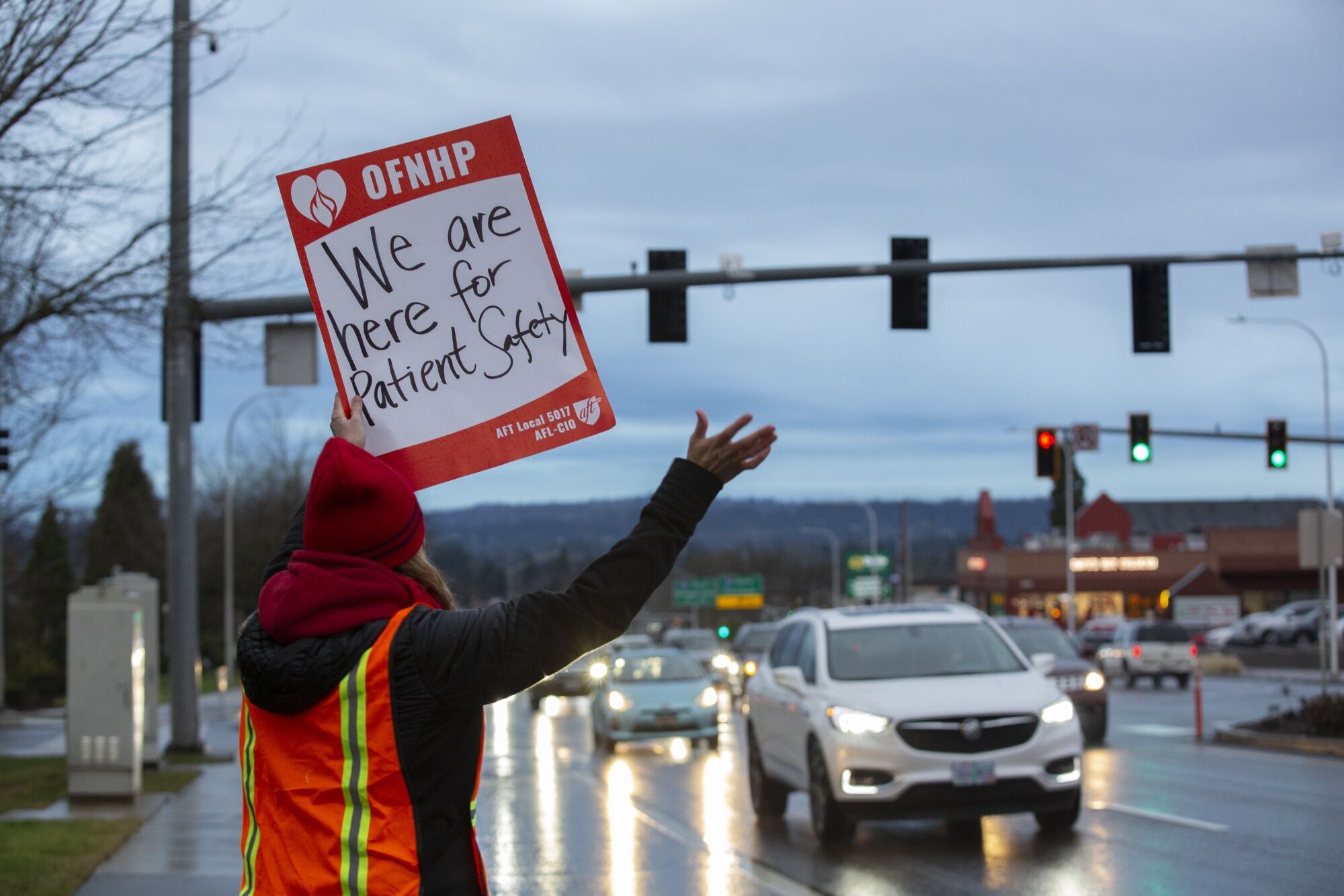
Kaiser Permanente Workers Prepare for Six-State Strike
(Bloomberg) — More than 75,000 health care workers are preparing for the largest health care strike in US history after talks between Kaiser Permanente and a coalition of employee unions have so far failed to produce a resolution.
The strike could interrupt health services for nearly 13 million people, primarily in western states where Kaiser Permanente’s presence is largest, as well as the Mid-Atlantic and Washington, D.
C., area. The three-day walkout will limit nonessential services such as routine checkups and pharmacy orders. Hospitals and emergency services will remain operational, the company said.
The Coalition of Kaiser Permanente Unions has accused management of negotiating in bad faith over a chronic staffing shortage that began during the Covid-19 pandemic. The union has said the dearth of workers created unsafe conditions for patients, and caused widespread burnout among employees.
“With hours left before our strike, both management and union negotiators are on stand-by waiting for Kaiser executives to resolve their internal debate about whether to do what it takes to reach an agreement or force the largest healthcare worker strike in US history,” Caroline Lucas, Executive Director of the Coalition of Kaiser Permanente Unions, said in an emailed statement late Tuesday.
The health care strike would be the largest in the US by at least 20,000 workers, according to Bloomberg Law’s database of work stoppages dating to 1990.
The next-largest strike involved 54,000 workers at the University of California in 2018. Kaiser Permanente has been involved in five of the 15 largest strikes recorded.
It’s the latest in a string of high-profile labor disputes fueled by a tight labor market, high inflation and record corporate profits that has left workers both resentful and emboldened. The United Auto Wokers, on strike in Sept. 14, are demanding pay raises as high as 40%.
Writers Guild of America last week reached a tentative agreement ending a five-month strike over artificial intelligence and streaming pay.
Actors represented by SAG-AFTRA remain on strike. In Las Vegas, more than 50,000 hospitality workers could walk off the job at a moment’s notice over staff cuts and increased workloads.
The health-care group said it offered across-the-board wage increases of at least 12.5% over four years, and state-by-state minimum wages of $21 to $23 an hour.
“In some places, like in Southern California, a Kaiser Permanente employee leaving for a similar job at another organization would on average face a 20-plus percent pay cut and lower benefits,” company spokesman Wayne Davis said in a statement Monday.
–With assistance from William Jeremiah, Derek Wallbank, Aradhana Aravindan and Andrea Tan.
More stories like this are available on bloomberg.com
©2023 Bloomberg L.
P.