
(Bloomberg) — Sign up for the New Economy Daily newsletter, follow us @economics and subscribe to our podcast.
Bank of Japan Governor Haruhiko Kuroda said he will stick with monetary easing, signaling no change in stance after the yen continued its rapid slide this week and dropped to a fresh 32-year low.
“The BOJ considered it appropriate to continue with monetary easing, to support the economy, to ensure a shift in norms and to ensure the price stability target in a sustainable and stable manner,” Kuroda said at a Group of Thirty seminar in Washington on Saturday.
Kuroda reinforced his message on policy following a turbulent week for the currency, with his earlier comments on holding at ultra-low interest rates helping weaken it further.
The country’s top currency chief, Masato Kanda, signaled Friday that chances are rising for authorities to intervene to support the yen, following a similar action last month.
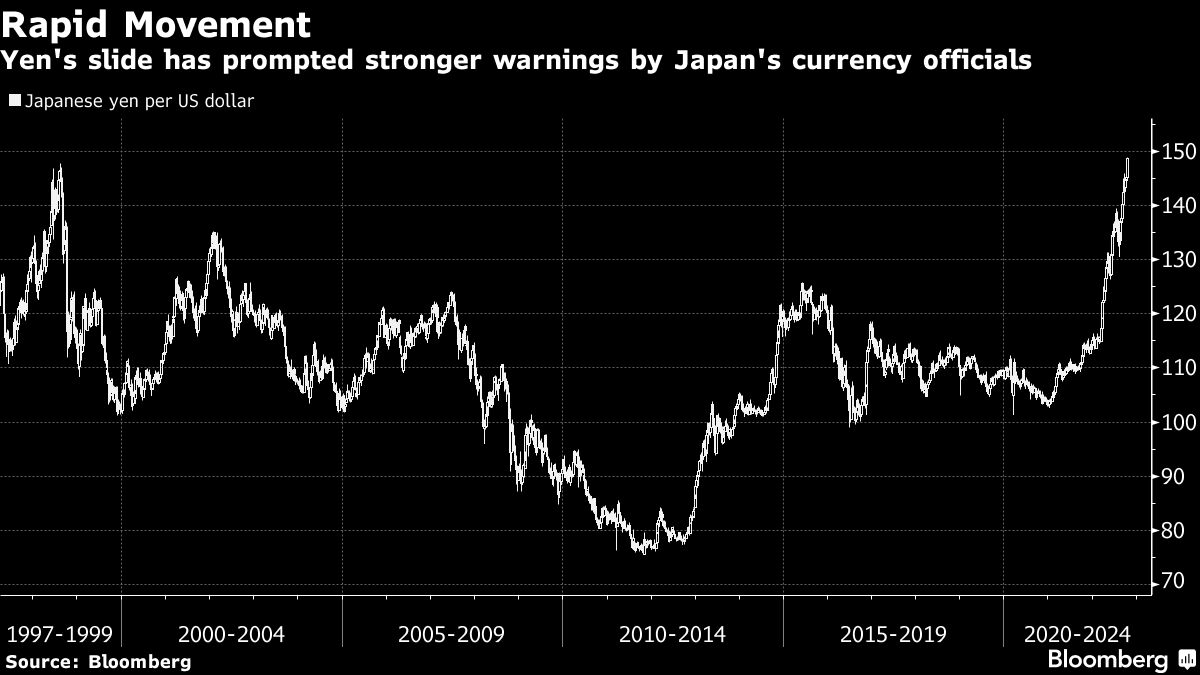
The yen touched a low of 148.86 versus the dollar Friday, the weakest level since August 1990, before ending the session at 148.67. Whiplash moves earlier in the day sparked market chatter of potential intervention.
Japan’s inflation is much weaker than US and Europe, with its latest key measure at 2.8%.
That’s still the highest level in 31 years, and fueling concerns among households who are used to a prolonged deflation.
Kuroda stressed the importance of supporting signs of change in Japanese mindsets about rising prices, citing as an example that base salaries have been rising for almost a decade, and repeating his prescription for a “virtuous cycle” of rising incomes and prices.
The central bank delivers its next policy decision on Oct. 28, and most BOJ watchers don’t expect a pivot to tighten policy before the governor steps down in April.
Kuroda also reiterated his view that Japan’s slow recovery from the pandemic warrants support through monetary easing.
More stories like this are available on bloomberg.com
©2022 Bloomberg L. P.