
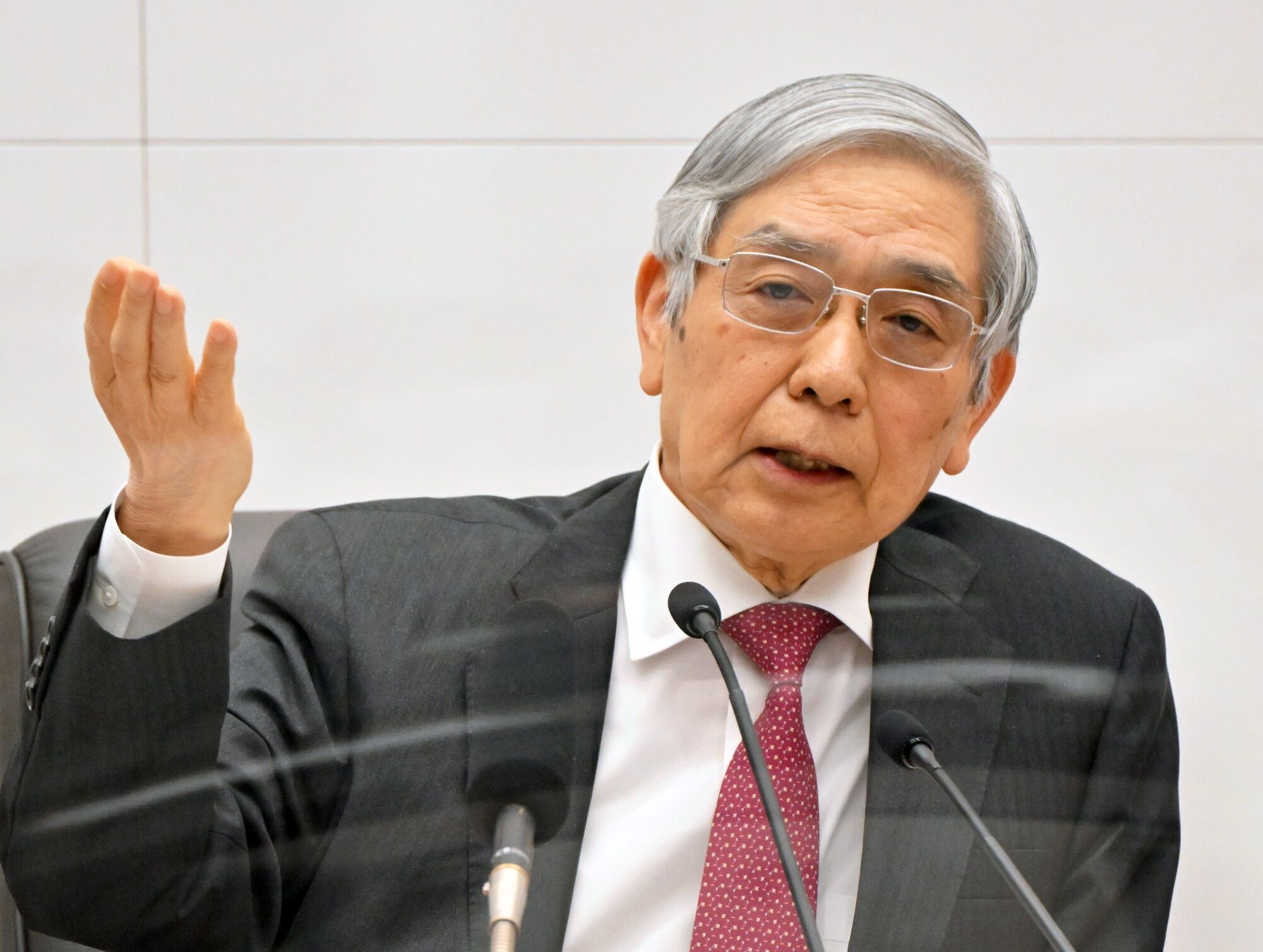
(Bloomberg) — The Bank of Japan maintained its easing stance, sending the yen weaker, as Governor Haruhiko Kuroda held his final meeting at the central bank after a decade of massive stimulus.
The BOJ kept its policy settings for its negative interest rate and yield curve control program unchanged, according to its statement on Friday. The decision was in line with the view of almost all 49 economists surveyed by Bloomberg.
The yen weakened following the decision, briefly hitting 136.97 against the dollar from 135.96.
Kuroda underscored his dovish stance at the end of his record-breaking run at the helm, in sharp contrast with the Federal Reserve, which could re-accelerate the pace of its rate hikes this month.
The BOJ results may temper the market view that the side effects from yield curve control need to be addressed soon.
Shortly before the BOJ announcement, Japan’s parliament formally approved Kazuo Ueda to succeed Kuroda from April 9. Leading up to the meeting, multiple BOJ watchers had warned of the risk that Kuroda might adjust or scrap the yield control program to pave the way for a fresh start for Ueda.
The BOJ signaled its continued concern over the economy by downgrading its view on exports and production, though it left its overall economic assessment unchanged.
Despite lingering speculation that the BOJ will have to tweak the YCC framework at some point, this time the bank didn’t face the kind of intense market attack it saw in the run-up to the January meeting.
The BOJ bought a record amount of government bonds that month to defend its 10-year yield target band, after the BOJ unexpectedly widened it in December.
While BOJ officials continue to see distortion in the shape of Japan’s yield curve, the central bank still needs time to look at the impact of various measures taken since December, people familiar with the matter told Bloomberg earlier.
Almost two-thirds of BOJ watchers expect a monetary policy change by the middle of this year with June being the most popular timing, according to a Bloomberg poll that followed Ueda’s first parliamentary confirmation hearings.
In the period through to the April 27-28 gathering, the BOJ will go through major leadership change.
Two deputy governors will step down on March 19, replaced by one of Kuroda’s key policy architects Shinichi Uchida, and former Financial Services Agency chief Ryozo Himino.
(Adds more details of market moves)
More stories like this are available on bloomberg.com
©2023 Bloomberg L. P.