
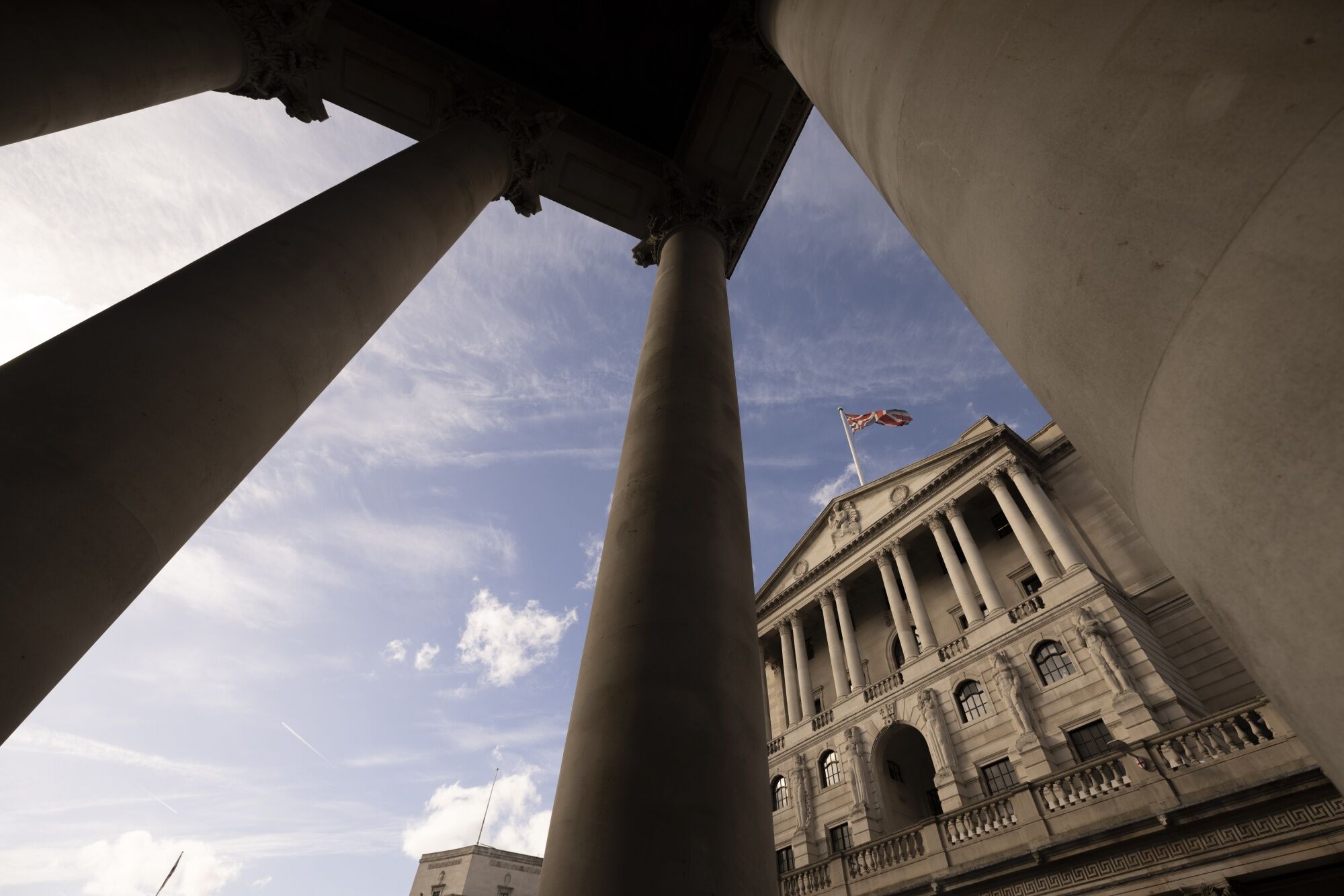
(Bloomberg) — UK bonds rallied across the curve on Wednesday, an early sign that the Bank of England may have pulled off its plan to revive active bond sales without triggering yet more market turmoil.
The yield on 30-year gilts — which will be exempt from the sales for now — closed below 4% for the first time since Oct. 3. Even shorter-dated notes gained, reversing an earlier selloff as investors digested the announcement.
No-one’s expecting it to be plain-sailing for the UK bond market from here, particularly given ongoing political ructions and the huge wave of supply that lies ahead.
Still, the moves may signal a turning point after the historic volatility and sky-high yields seen in recent weeks.
“The Bank of England will be pleased that its latest announcement on gilt sales has been digested smoothly so far,” said Hugh Gimber, global market strategist at J. P. Morgan Asset Management. Its actions have also shown financial stability outweighs any desire to shrink the balance sheet, which has reassured investors, he added.
“The market is now increasingly confident that support from the bank would be forthcoming if market volatility spikes again,” Gimber said.
Read more: Sign up for John Stepek’s Money Distilled newsletter for the biggest developments in the world of markets and economics, and what it all means for your money.
Gilts collapsed in the wake of the government’s mini-budget announced on Sept. 23, which has since been reversed.
The BOE had to step in with a temporary bond-buying program as pension funds, big holders of index-linked and long-dated notes, faced a liquidity crisis due to margin calls.
Deputy Governor Jon Cunliffe told the Treasury Committee in Parliament earlier that British politicians at the top of government were the cause of the market chaos. That followed a letter Tuesday, in which he wrote that the funds impacted have raised enough capital to withstand further shocks.
BOE’s Cunliffe Says UK Market Panic Was Caused by Politicians
The long-end’s out-performance reflects that progress as well as “the market’s perception of how much more they might or might not need to sell,” said Imogen Bachra, head of UK rates strategy at NatWest Markets.
Inflation Pressures
The Bank of England has amassed a more than £800 billion ($902 billion) portfolio after years of purchases aimed at lowering borrowing costs in the wake of the credit crisis and the pandemic.
The pace of planned sales is slow.
When it announced quantitative tightening, the BOE said it aimed to reduce its balance sheet by around £80 billion a year through active sales and redemptions, a pace that implied about £10 billion of sales per quarter.
By selling only shorter tenors for now, the Bank of England can push ahead with efforts to reduce its bloated balance sheet, especially after UK inflation data showed a return to a 40-year high reached in July.
“Given conditions look good enough to withdraw the temporary liquidity backstop, then they are arguably good enough to proceed with QT,” Citi strategists including Jamie Searle wrote in a note. “The BOE will be keen to underline its independence and not be seen to be helping the government fund itself.”
–With assistance from James Hirai and Naomi Tajitsu.
(Updates throughout.)
More stories like this are available on bloomberg.com
©2022 Bloomberg L.
P.