
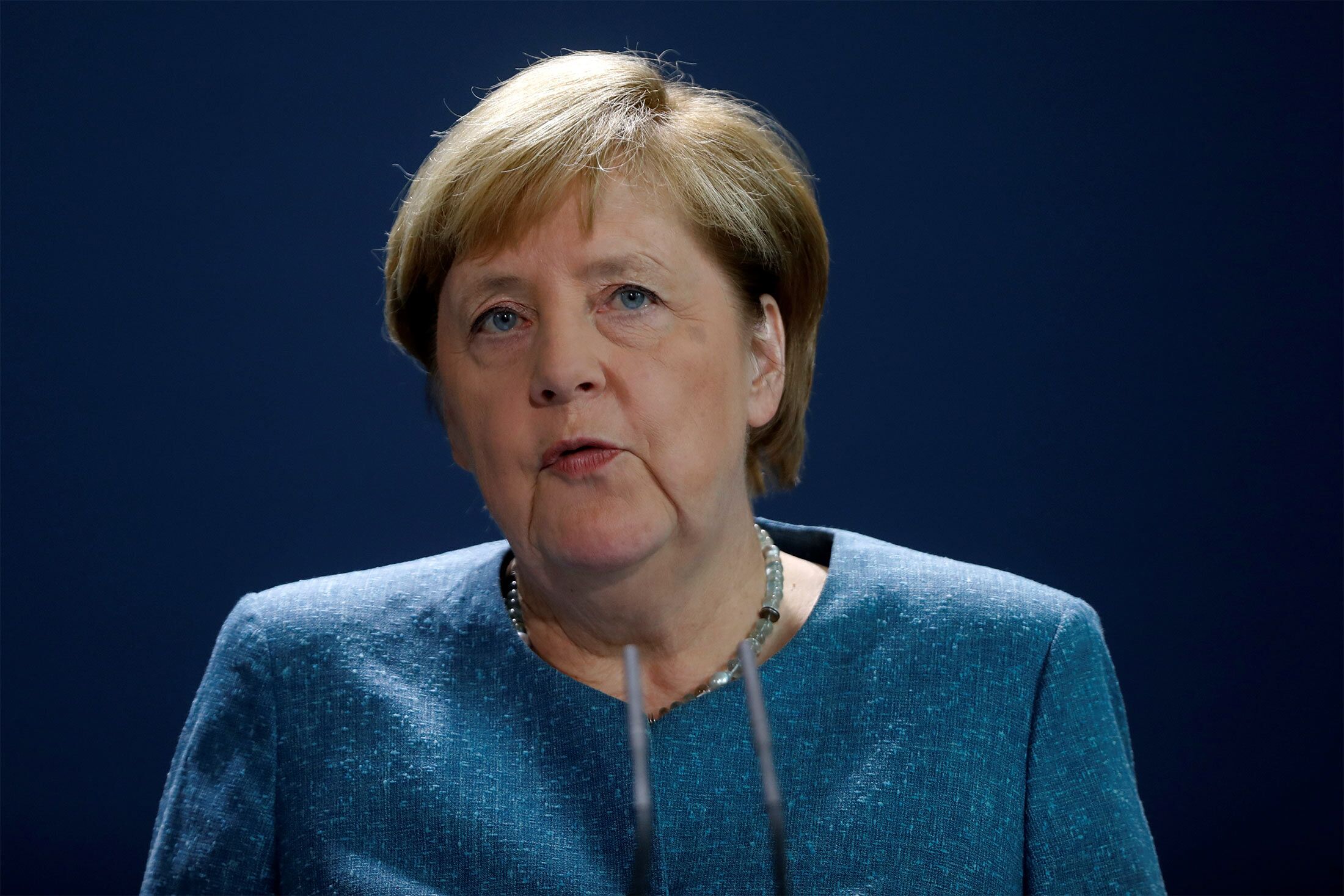
(Bloomberg) — German Chancellor Angela Merkel’s parliamentary caucus has backed plans allowing for further extraordinary deficit spending next year as the coronavirus continues to batter Europe’s biggest economy.
The ongoing crisis requires continued room for budgetary maneuver, lawmakers from Merkel’s Christian Democrat-led bloc agreed at a meeting Wednesday in Berlin. As part of a massive stimulus push, Germany in March abandoned its long-standing policy of running balanced budgets and temporarily suspended constitutional limits designed to keep debt in check.
That paved the way for new borrowing this year of around 218 billion euros ($257 billion).
Ralph Brinkhaus, the head of Merkel’s caucus, said expensive programs like job-preserving subsidies — which the government last month agreed to extend until the end of 2021 — are necessary at the moment, but should not be continued “for too long.”
“It’s about finding a balance, and that also goes for the budget,” Brinkhaus said Thursday in an interview with ARD television. “We have budgeted well in recent years and it was right to spend the money now in the crisis,” he added. “But it would be wrong to continue spending so much forever.”
Partly thanks to the government’s stimulus program, German activity has staged a strong rebound after collapsing in the second quarter, and companies have turned slightly more optimistic that it will continue to accelerate into next year.
Including programs to guarantee company liquidity, the government has made more than 1.3 trillion euros available — the most in the European Union by far.
The government forecast this week that the economy will shrink by a smaller-than-expected 5.8% in 2020.
While that still represents one of the worst recessions since the end of World War II, it’s a smaller contraction than an April prediction of 6.3%.
Still, Germany’s recovery next year will be less robust, with growth of 4.4%. That’s lower than the previous projection of a 5.2% expansion, and Economy Minister Peter Altmaier said that pre-crisis levels won’t likely be reached until 2022.
Merkel last week indicated that she favored continuing to keep as much budgetary flexibility as possible given the uncertainty the country is facing.
Some in her party had been pushing for greater fiscal restraint already in 2021.
In her annual summer news conference, the chancellor warned that the coronavirus crisis will get worse before it gets better and that the fallout will test Germany’s finances for months, if not years.
“In retrospect, I’m happy we didn’t succumb to the sweet poison of borrowing in good times,” Merkel said, adding that this had given Germany more resources to fight the crisis now.
Finance Minister Olaf Scholz reiterated Thursday that Germany should aim to get its finances back to “normal” in 2022 after the “crisis-fighting budgets” for this year and for 2021.
“We will again next year have to take on more debt beyond the usual limits,” Scholz, who will unveil his 2021 budget later this month, said during a virtual banking conference. “After that, we will try to get back to a normal situation.”
Scholz is the Social Democrats’ chancellor candidate for the national elections due in September next year.
(Updates with Scholz comments from 12th paragraph)
For more articles like this, please visit us at bloomberg.com
©2020 Bloomberg L.
P.