
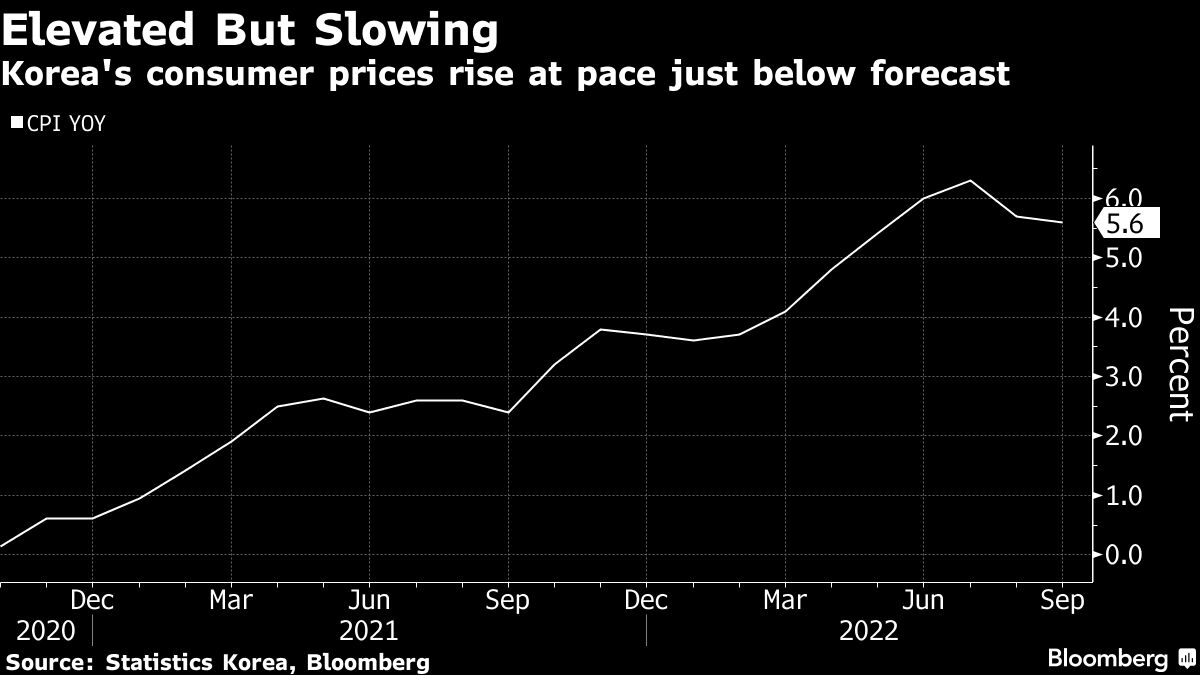
(Bloomberg) — South Korean inflation slowed a touch in September in a sign that policy tightening is beginning to weigh on demand, a result that’s likely to intensify debate over whether to deliver an outsized interest-rate increase next week.
Consumer prices advanced 5.6% from a year earlier, easing from August’s 5.7% that was also economists’ median estimate, statistics office data showed Wednesday.
The Bank of Korea is under pressure to raise rates by a half percentage-point to try to bridge a gap that’s opened up with the Federal Reserve.
The BOK, which began its tightening cycle in August last year, has fallen behind the Fed as the US hikes aggressively to rein in spiraling inflation. The rate gap has sent the won tumbling to a 13-year low, boosting import costs and threatening to amplify inflation pressures.
The BOK sees consumer-price growth holding in a 5%-6% range for some time.
Policymakers meet Oct. 12 and convene again in November before the end of the year. The key rate currently stands at 2.5%.
Inflation has been fueled this year by a jump in consumer demand for dining and travel as the grip of the pandemic eased on the economy. Unemployment also remains low as consumption drives service sectors, the biggest generator of jobs in the country.
Rising consumer prices encourage workers to demand higher pay, feeding a wage-price spiral.
Korea is already set to increase its minimum wage by 5% next year.
Slowing exports and high household debt remain risks as the BOK considers picking up the pace of tightening. Business confidence among manufacturers is deteriorating while the consumer outlook remains under threat from higher rates.
Today’s report also showed:
- From the prior month, prices rose 0.3% in September, slower than economists’ estimate of 0.4%
- Korea’s core inflation came in at 4.5% from a year earlier, slightly above the median forecast of 4.4%
- Food and beverage prices climbed 7.8% from a year earlier; transportation costs advanced 7.6%; and prices at restaurant and lodging facilities increased 8.8%
- Among the 12 major categories of goods and services tracked by the government, five showed prices falling from a month earlier, compared with just one in August.
They included entertainment, healthcare, household goods and liquor
(Adds details, chart)
More stories like this are available on bloomberg.com
©2022 Bloomberg L. P.