
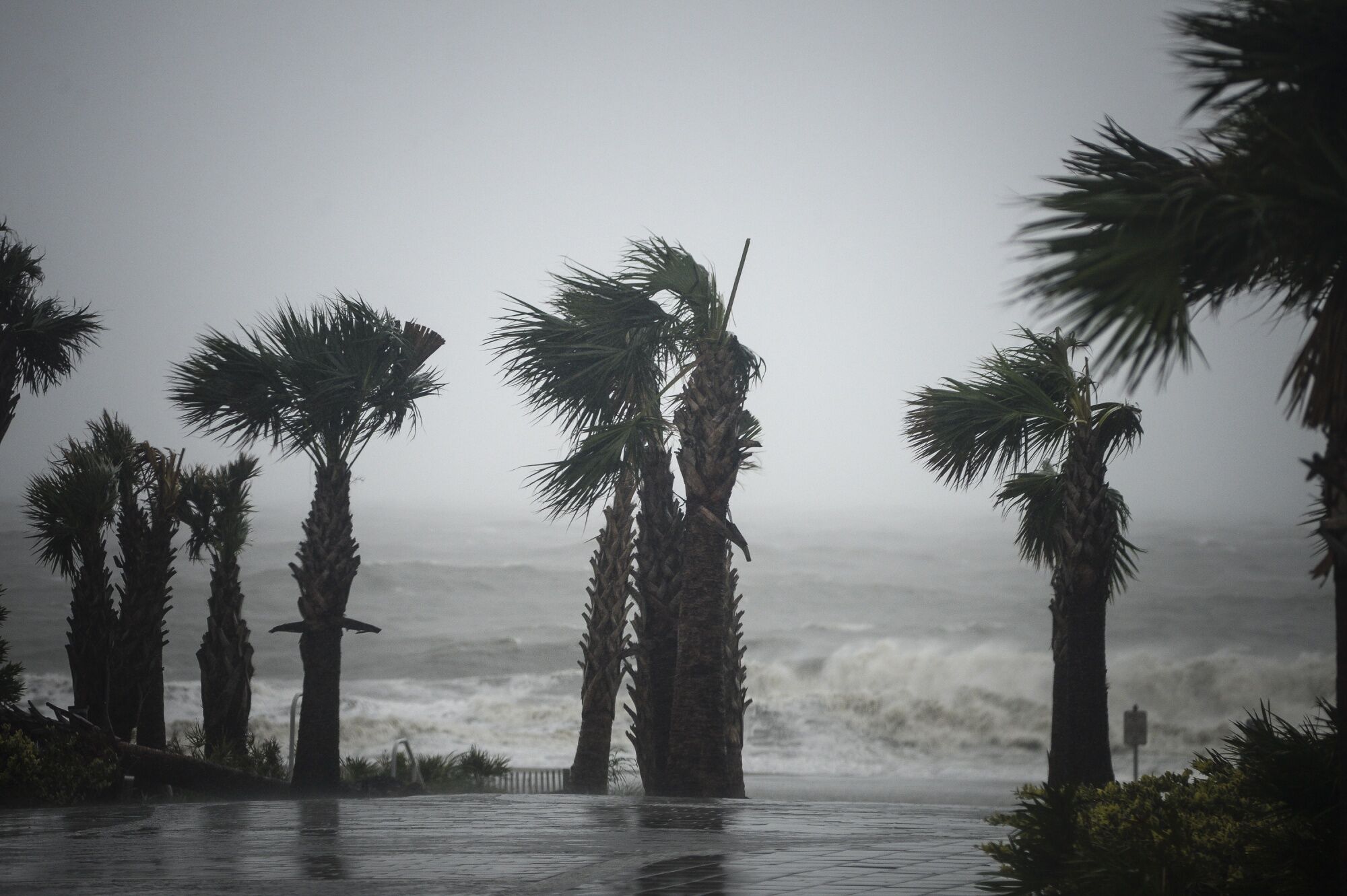
(Bloomberg) — Cristobal, now a tropical depression, will untangle itself from the Yucatan Peninsula late Friday and move north across the Gulf of Mexico, gathering strength as it heads for the Louisiana coast.
Tattered by its trip over land, the storm probably won’t have enough time to become the season’s first hurricane, with the main threat to the U. S. being “extensive heavy rains from the Sabine River Pass to the Florida Panhandle,” according to Jim Rouiller, lead forecaster at the Energy Weather Group LLC.
The Yucatan hills tore at Cristobal’s structure, weakening its top winds to 35 miles (56 kilometers) per hour, just below tropical-storm strength, the U.
S. National Hurricane Center said in an advisory. As it moves back over water, the storm’s strength is expected to increase, and a tropical storm watch and a storm surge watch have been issued for coastal areas from Louisiana to Florida.“The good news is it won’t have too much over-water time to rejuvenate itself,” Rouiller said. “It does not look like it will be a hurricane, but it could be a high-end tropical storm.”
On its current track, Cristobal will pass through the eastern side of U.
S. offshore energy fields, where some companies have already evacuated non-essential workers. The storm will then likely slam into Louisiana late Sunday or early Monday, according to the hurricane center.
At that point, tides could rise four feet above normal and Cristobal’s top winds are expected to peak reach 60 mph.
Offshore Platforms
Offshore platforms account for 16% of U.
S. crude oil production and 2.4% of natural gas output, according to the Energy Department. Additionally, more than 45% of U. S. refining capacity and 51% of gas-processing capacity is located on the coast.
BP Plc said Wednesday it was removing offshore personnel and ramping down production at its Thunder Horse, Atlantis and Na Kika oil and gas platforms. It also said non-essential workers were being evacuated from the Mad Dog platform, though production remained unaffected.
Energy prices are reacting in the U.
S., with Houston benchmark gasoline moving higher as traders secure supply. Cristobal could push the average retail price of a gallon of gasoline over $2, according to AAA. The U. S. crude complex has also come under pressure, with the storm potentially affecting logistics in the Gulf and causing a backup of supplies, according to market participants.
Rouiller said Cristobal will move fast and he expects energy companies to be back in operation by early next week.
Central U.
S.
After Cristobal moves north through Louisiana, what is left of it will head through the central U. S. dragging a tail of tropical moisture that is expected to bring heavy rains. By the middle of next week, the remnants of the storm will likely be over Chicago.
The rain could in some cases be a good thing, at least for agriculture. The region where the most rain is expected to fall “is currently in a moderate to severe drought,” Jeff Masters, a meteorologist with Scientific American, said by email. “So widespread major flooding is unlikely.”
Cristobal is the third storm to form in the Atlantic this year, marking the fastest start to hurricane season on record.
With the season off to a quick start, many meteorologists have forecast this to be an above-average season. On Thursday, Colorado State University increased its seasonal forecast to 19 storms from 16 in April.
For more articles like this, please visit us at bloomberg.com
©2020 Bloomberg L. P.