
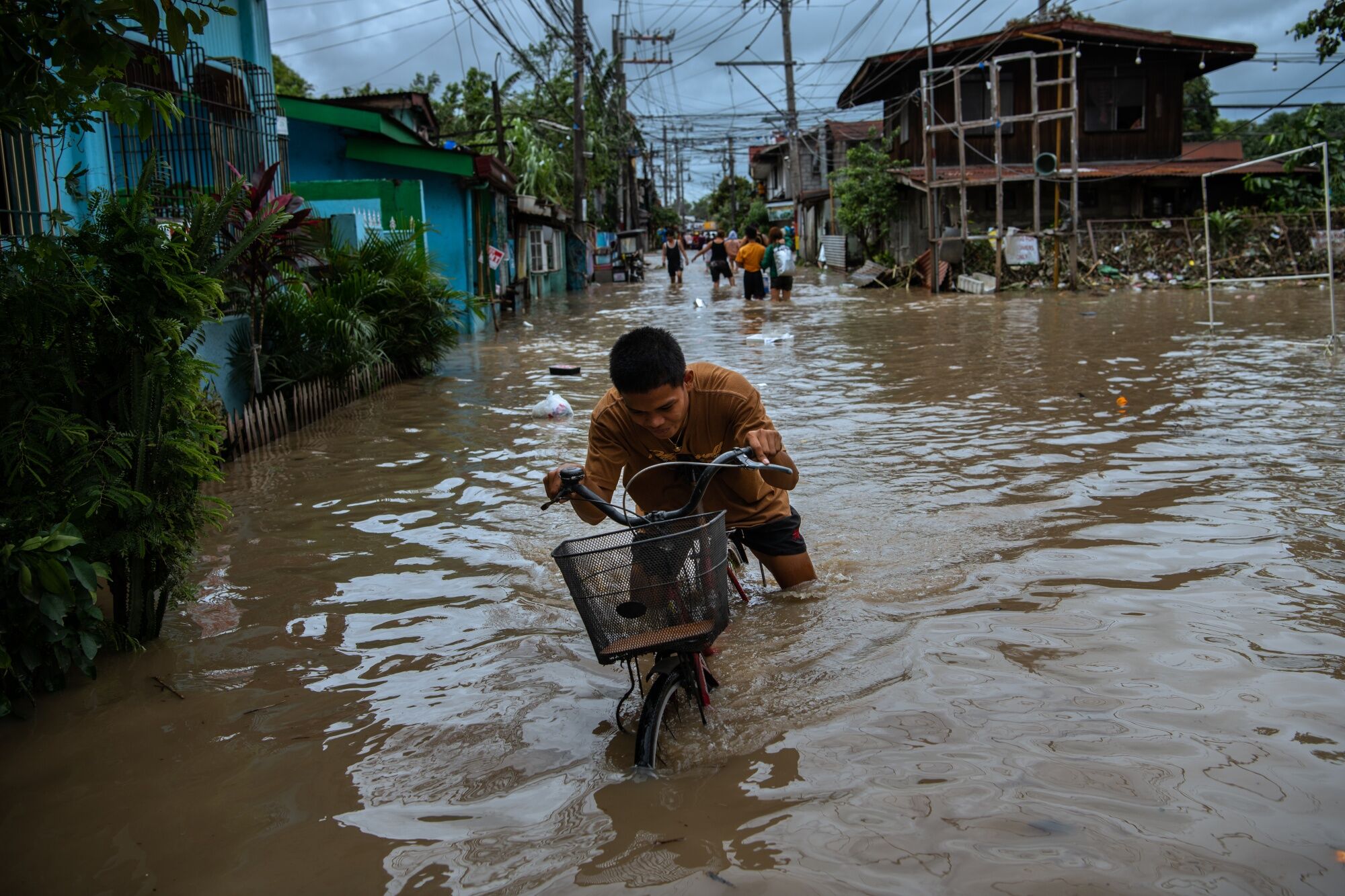
(Bloomberg) — The Philippines said 110 people died from flooding and landslides triggered by storm Nalgae, which displaced hundreds of thousands of residents in the latest example of the risks of climate change.
About 2.4 million individuals were affected by Nalgae and related flooding, including 866,000 forced to flee homes in one of the most destructive storms to hit the country this year, the National Disaster Risk Reduction and Management Council said on Tuesday.
Agriculture losses are estimated at 1.3 billion pesos ($22.4 million) while the cost of damaged infrastructure is about 760 million pesos, it said. The death toll has risen from 98 reported on Monday.
Science and Technology Secretary Renato Solidum said the nation must brace itself for more intense tropical cyclones due to climate change, noting that their actual impact will depend partly on several factors including risk management.
“If we look at the long-term trend, yes, indeed, tropical cyclones will get stronger, but we have to separate the character of the typhoon versus the exposure,” Solidum said in a phone interview. “Independently, the typhoon can have very strong winds or can carry with it a lot of rain but how the impact will be is dependent on the exposure, the number of people, the area, the preparedness, or the vulnerability.”
Scientists say climate change will cause more extreme rainfall, which can trigger worse floods.
But flooding can also be exacerbated by the shallowing of the rivers and the denuding of upland areas that lead to deadly mudslides, Solidum said.
“In the long term, the land use will be critical,” the nation’s chief scientist said. “We need to restrict where our people should be staying because otherwise every time there’s extreme rain, for sure their lives will be placed at risk.”
How Global Warming Makes Extreme Weather More Likely: QuickTake
Storm Nalgae, locally called Paeng, has since left the Philippines and is forecast to approach the coast of southern China, the state weather bureau Pagasa said.
A new, less powerful storm entered the Philippines on Monday but has since further weakened, it said.
About 20 cyclones pass through the Philippines each year, causing fatalities and damage to agriculture, homes and infrastructure.
(Adds interview with science and technology secretary.)
More stories like this are available on bloomberg.com
©2022 Bloomberg L.
P.